I’m Bob Christian; a husband, father, grandfather and cat dad. I’m a dyslexic poet. I am on the Autism Spectrum and I started writing poetry, or scribbles as I’ve always referred to them, to help me to process my thoughts and emotions. It’s also helped with my PTSD. It’s gone from there and after over 20 years is still going strong, I’m now finally dabbling in to photography as I’ve been told I have a good eye.
There are a few objects that quietly anchor my days, the small things that make life feel stitched together. My phone is the first—less a gadget and more a pocket‑sized notebook where half‑formed poems land before they drift away. Then there are my comic books, those bright-paper portals that let me step out of the world for a while and into somewhere louder, stranger, and wonderfully unreal. And finally, the constants: my wife and my cat. They’re not objects, of course, but they’re the companions who turn the ordinary into something worth coming home to.
What experiences in life helped you grow the most?
The experiences that helped me grow the most were the ones that came closest to undoing me. The easy chapters never asked much of me, but the hard ones stripped life down to its bare truth, the way a brief moment of stillness can clear the mind just enough to see what’s real. In the middle of loss, upheaval, and the quiet fear that I might not make it through, I learned what I was clinging to and what I needed to release. Those moments revealed strength I didn’t know I had and tenderness I didn’t know I was allowed to keep. In a way that echoes a small thread of Buddhist thought, the suffering wasn’t a punishment but a teacher — not gentle, but precise. The things that tried to destroy me became the very forces that shaped me into someone steadier, clearer, and more awake to my own life.
“I’m not sure if the universe has a plan, but it certainly has a sense of humour. I joined the Army on what would turn out to be my future wife’s birthday, long before I knew her. Then we met because of a book on string theory. If that’s not destiny having a bit of fun, I don’t know what is.”
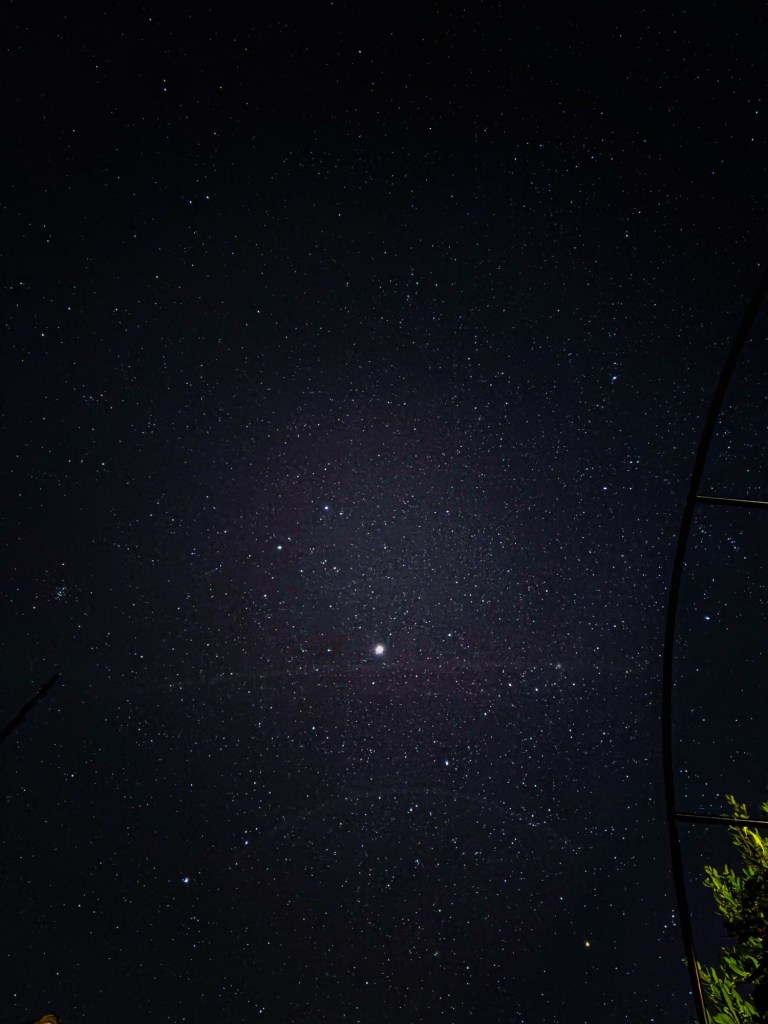
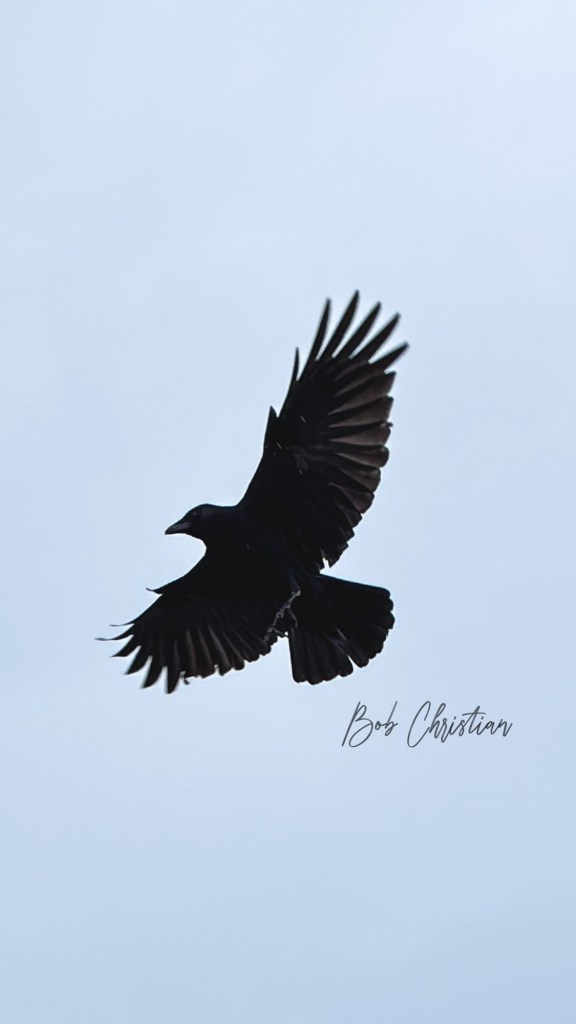
This weekend I’ve been playing with both my new daily driver (phone cam) and my trusty old Pentax K-X (12mp) I’ve bagged some cracking shots, here’s the results.
Pentax K-X Sigma 400mm telephoto Waxing gibbous Camera phone standard mode (48mp)Cam phone Phone cam (night mode x3)
Describe a phase in life that was difficult to say goodbye to.
One of the hardest things I’ve ever had to do was let go of a version of my life that looked perfect on paper.
Everything made sense. I knew my role. My relationships felt clear. My path felt mapped out. It was structured. It was safe. It was familiar. It was mine.
And that’s exactly why walking away felt so heavy.
I used to think I was grieving the season itself. But really, I was grieving my attachment to it. In Buddhist thought, we’re taught that suffering doesn’t come from change — it comes from clinging. I wasn’t in pain because life was shifting. I was in pain because I wanted it to stay.
I wanted permanence in something beautifully impermanent.
But life moves the way breath moves — in and out, rising and falling. Nothing is meant to be held forever. Not roles. Not certainty. Not even the versions of ourselves we once felt so sure about.
Growth doesn’t always arrive as expansion. Sometimes it arrives as release. Sometimes it asks you to loosen your grip before you understand why.
When I stopped resisting the transition and began to meet it with acceptance, something softened. I could see the season for what it was: not a destination, but a teacher. A chapter, not the whole story.
A seed doesn’t become a tree by staying whole. It breaks open. Not because it failed — but because it’s ready.
Letting go wasn’t weakness. It was practice. It was trust. It was choosing alignment over attachment.
That season shaped me deeply. I carry its lessons with gratitude. But it was never meant to contain me.
If you could be someone else for a day, who would you be, and why?
If I could live as someone else for a single day, I’d choose to be my wife, Mrs Bob. Not for the novelty of stepping into another life, but for the chance to understand myself through the eyes of the person who loves me most. She carries a version of me that I don’t always recognise — one shaped by patience, affection, deep love and a kind of steady belief that I sometimes struggle to feel for myself.
There are moments when I doubt; when I fall short in my own mind; when I can’t quite see what’s worth loving. Yet she does. She always does. Spending a day as her would let me witness the small things I overlook, the quiet ways I matter, the reasons she stays close even when I’m not at my best. It would be a chance to see myself without the fog of self‑critique, to understand the warmth behind her choices, and to appreciate the version of me that she holds on to.
One day in her shoes wouldn’t just teach me about her — it would teach me about the parts of myself she’s been seeing clearly all along.
Years ago, I learned some truly shocking statistics about suicide—800,000 lives lost every year. That’s one life every 40 seconds. It’s a deeply uncomfortable topic, but it’s one we can’t keep ignoring.
The truth is, suicide is the leading cause of death for men between 20 and 49. And while this affects all men, over 60% of newly-diagnosed autistic adults report having suicidal thoughts.
These numbers are devastating. We’re finally starting to talk more about mental health, but there’s so much more to be done to prevent people from reaching that point. To remind them they’re not alone.
I nearly became a fucking statistic so many times.
“This Poem Ends Every 40 Seconds”
Every forty seconds someone ends their own life.
Not a metaphor. Not a number on a website. A person. A real human soul punched out like a clock card, because the noise in their head was louder than any help ever offered.
Forty seconds. By the time you finish reading this stanza, someone else is gone.
But we don’t talk about it. Not really. We whisper it behind closed doors, use soft words like “passed away,” or “lost them,” as if they just wandered off into the woods and forgot to come home.
Mental illness is still a dirty word. Still something we hide in drawers with old medication bottles and family secrets.
We tell people to “reach out” but give them nothing to grab onto.
We applaud strength but punish vulnerability. We ask, “How are you?” but only want to hear “I’m Fine.”
We romanticize broken artists but ignore the broken people in our inboxes. At our dinner tables. In the mirror.
Some of us scream with silence. Perfectly dressed. Perfectly functional. Perfectly invisible.
The truth is we lose more people to quiet despair than to war or violence. And still, we treat therapy like a confession booth, instead of healthcare. Still, we treat emotion like weakness, and stoicism like bravery.
It’s not brave to bottle the storm. It’s brave to name it. To say, “I’m not okay.” To cry in daylight. To take meds, see a shrink, open the wound and not apologise for bleeding.
If you think this is heavy, good. It’s fucking supposed to be.
Because someone you love is already counting the seconds. And they don’t need a pep talk. They need a world that listens before the silence becomes permanent.
Describe the most ambitious DIY project you’ve ever taken on.
What started as a simple favour for a mate quickly turned into one of those projects that becomes a story you tell for years. My friend William had just converted his garage—thanks to a bit of collective elbow grease—into a bar/lounge complete with DJ kit and the obligatory smoke machine. Naturally, the next step was a new shed to store everything that no longer fit in the garage-turned-nightclub.
The only problem? The local hardware superstore didn’t stock anything close to the size he wanted. So we shrugged, looked at each other, and decided: Fine, we’ll build one ourselves.
We hired the kit, prepped the ground, and poured a concrete base before the mountain of timber and materials arrived. There was a lot of it—far more than any of us expected—but that became part of the fun. Over two weekends we grafted, laughed, sank a few beers, and even entertained ourselves by shooting empty cans with the nail gun (not recommended, but undeniably satisfying). Each day ended with a BBQ and a bit of a party, because what’s the point of a DIY project if you can’t celebrate the chaos?
The best part? Twenty years on, that shed is still standing strong—watertight, sturdy, and now fully kitted out with running water and electricity. Not bad for a couple of weekends’ work and a group of friends who mostly just wanted an excuse to hang out.
If you could permanently ban a word from general usage, which one would it be? Why?
If I could erase a single word from everyday language, it would be one of those slurs designed solely to wound — the kind of word that has no purpose except to dehumanize. Every culture has at least one. You don’t need me to repeat it; you already know the one that makes your stomach tighten when you hear it.
What makes these words so corrosive isn’t just their history, though that history is heavy. It’s the way they linger in the air long after they’re spoken, how they can turn a room cold in an instant. A slur isn’t just a collection of letters. It’s a weapon. It’s a reminder of violence, exclusion, and the idea that some people are “less than.”
Language evolves — beautifully, creatively, chaotically — but hate‑words don’t evolve. They calcify. They drag the worst parts of our past into the present. And while banning a word won’t magically fix the systems or attitudes that created it, removing it from casual usage would at least take away one of the easiest tools for causing harm.
Imagine a world where the laziest form of cruelty simply… didn’t exist. Where people had to confront their prejudice without the shortcut of a single toxic syllable. That’s a world I’d like to help build.
Words shape reality. So if I get to ban one, I’ll choose the kind that was never meant to build anything at all.