Old Sci-Fi, New Memories

What’s a book, movie, or TV show that you wish you could experience again for the first time?


That’s actually an easy one for me because it’s both a book and a TV show, so it’s two birds with one stone.

Without a doubt, it would be The Red Dwarf Omnibus, which contains the novels Infinity Welcomes Careful Drivers and Better Than Life.

These were fantastic books and, of course, they led to one of my all-time favourite TV series, Red Dwarf. If you’ve somehow never come across it, it’s the story of Dave Lister, the last human alive, travelling through space with a hologram, a creature that evolved from a cat, and a rather sarcastic computer. It sounds ridiculous when you describe it like that, but it worked brilliantly.

The books expanded on the universe in ways the TV show couldn’t and gave much more background to the characters. I remember being completely absorbed by them and wishing there was more when I’d finished.

The TV series itself brings back some great memories too.

When new episodes were being broadcast, I’d often head over to a friend’s house in the village on a Friday evening. We’d spend a few hours listening to music, chatting about whatever was important to teenagers at the time, and generally hanging out before settling down to watch the latest episode of Red Dwarf on the BBC. Afterwards I’d jump on my bike and cycle home, usually replaying the best bits of the episode in my head all the way back.

Those were good times.

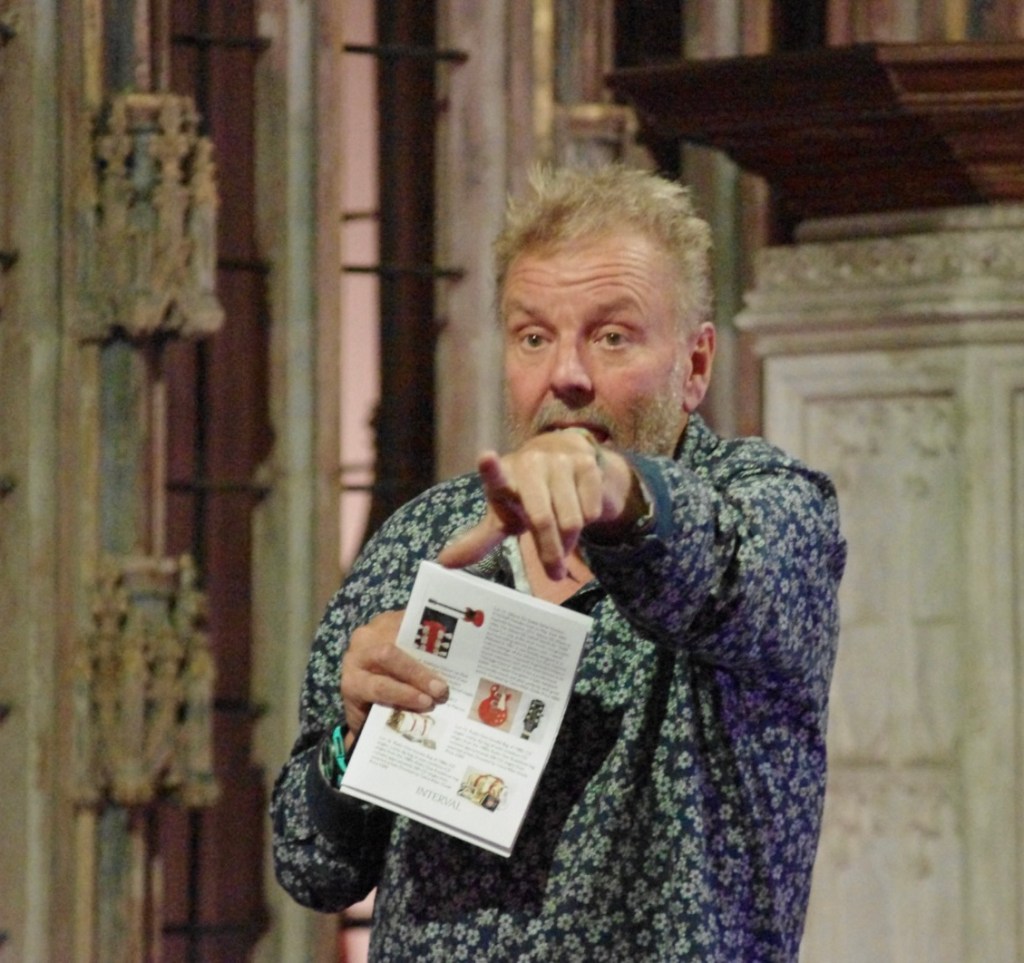
As an interesting side note, many years later I actually got the chance to meet and interview two members of the Red Dwarf cast at a local Comic-Con event. It’s always nice when people connected with something you enjoyed growing up turn out to be as friendly and entertaining in person as you’d hoped.

Myself with Kryten (Robert Llewelyn)

Talking about revisiting old favourites, I did actually manage something similar recently.

When I was younger, I vaguely remembered a science-fiction series that I absolutely loved, but over the years the details became increasingly hazy. Partly that’s just age catching up with me, but a traumatic brain injury when I was 30 certainly didn’t help matters.

The series was called The Invaders and followed architect David Vincent, who accidentally discovers that aliens have infiltrated Earth and are quietly trying to take over the planet.

For a late-1960s television series, I remembered the effects being fantastic. The aliens looked completely human but had no heartbeat, didn’t bleed, and when killed would glow bright red before disappearing into nothingness. Conveniently for them, that made proving their existence rather difficult.

As luck would have it, Mrs Bob bought me the complete box set.

Invaders box set

I’ve recently finished watching the first series and have thoroughly enjoyed it. Yes, some of the action scenes are very much of their time. A quick judo chop to the neck sends the bad guy unconscious, much like classic Star Trek, and some of the fight choreography won’t trouble modern stunt coordinators. But that’s part of the charm.

What’s been fascinating is that I have virtually no memory of seeing it the first time around, so in many ways I really have been able to experience it almost as if it were new again.

And that’s probably why I’d choose Red Dwarf if I could wipe one story from my memory and enjoy it all over again for the first time.

Although having said that, rediscovering The Invaders has come pretty close.

Stay safe 

Bc

The Little Things Are the Big Things

What’s a common misconception people have about happiness?

One of the biggest misconceptions people have about happiness is that it arrives with success.

That somehow happiness is parked in the driveway beside the flashy car, hidden behind the front door of the big house, or tucked away in a bank balance that resembles the GDP of a small country.

The truth?

Most of the happiest moments in my life have cost absolutely nothing.

They’ve been the quiet evenings sat on the sofa until 2am with Mrs Bob, not doing anything particularly exciting, just enjoying each other’s company. They’ve been impromptu dances on the beach on a Sunday morning. They’ve been sunny afternoons sat in the shed with Tiddles, listening to the world go by.

No fireworks.

No fanfare.

Just moments.

The trouble is that we spend so much time chasing the next big thing that we forget to appreciate the small things already sitting right in front of us.

Happiness isn’t a destination. It isn’t something waiting for us once we’ve earned enough money, bought enough possessions, or impressed enough strangers.

It’s a state of mind.

A choice to notice the warmth of a cup of coffee, the laughter of someone you love, the comfort of a familiar companion, or the peace of a quiet afternoon.

Life is made up of little moments.

The secret is realising they were the important ones all along.

Stay safe,

Bc

Becoming the Photographer I Pretended to Be

What is one way you have grown this year?

If you’d asked me at the start of the year what I was, I’d probably have answered, “A poet cosplaying as a photographer.”

Photography has always been something I loved, but if I’m honest, I never really took myself seriously. I was happy enough wandering around with a camera, taking pictures of birds, nature, and whatever happened to catch my eye, while quietly convincing myself that “real photographers” were other people.

This year, I decided to change that.

Rather than treating photography as a hobby I occasionally dabbled in, I made a conscious decision to push myself outside of my comfort zone and see what would happen if I actually gave it a proper go.

As it turns out, sometimes the universe rewards you for taking a chance.

Earlier this year, I was offered a place on the photography team at a local event. It might not seem like a huge thing to some people, but for me it was a turning point. It was the moment I realised that perhaps I wasn’t just pretending after all.

Don’t get me wrong, imposter syndrome still likes to whisper in my ear from time to time. It tells me I’m not good enough, that I’m making it up as I go along, and that sooner or later someone will realise I haven’t got a clue what I’m doing.

The difference now is that I no longer believe it.

I’ve learned that growth isn’t about becoming fearless. It’s about taking the next step despite the fear. It’s about backing yourself, taking opportunities when they appear, and accepting that occasionally you’ll stumble along the way.

And if I do fall?

I’ll pick myself up, dust myself off, and try again.

So the biggest way I’ve grown this year is simple.

I’ve finally become the poet and photographer my business cards have been insisting I was all along.

Stay safe,

Bc

To My Younger Self

What is something you wish you could tell your 20-year-old self?

If I could tell my 20-year-old self one thing, it would be this: keep going. Life feels confusing, overwhelming, and at times completely impossible right now, but things do get better.

 The struggles you’re facing aren’t because you’re broken, weak, or failing. The truth is, it’s not schizophrenia or bipolar disorder at all — it’s autism, and understanding that will eventually make so much of your life make sense. 

So stick at it. One day you’ll look back and realise you survived far more than you ever thought you could.

Stay safe,

BC

Becoming the Men Who Built Me

There’s a strange thing that happens as you get older.

You spend most of your youth trying desperately to become your own person — carving out your own identity, your own voice, your own little corner of the world. 

You swear blind you’ll never become your parents, never pick up the odd habits of your grandparents, never start saying things like:

“Don’t leave that light on, it’s like Blackpool illuminations in here.”

And then one day…

You catch yourself doing exactly that.

For me, it happened in the shed.

Now, if you’ve read my ramblings before, you’ll know there’s always a shed somewhere in the story. Like some recurring side character that quietly steals the scene. But sheds aren’t really about wood and nails and rusty hinges, are they?

Not really.

They’re memory boxes.

Little sanctuaries built out of timber, silence, and inherited habits.

When I was younger, both my grandads had sheds — though, much like the men themselves, they were completely different worlds.

My maternal grandad, Walter was a  retired firefighter and gentleman of the old school variety, had a shed that smelled of compost, damp wood, and honest work. Plant pots stacked everywhere. Garden canes leaning in corners. Twine, tools, and jars full of screws that “might come in useful one day.”

There was always an old bit of carpet on the floor.


Always a greenhouse nearby.
Always tomatoes growing somewhere.

His shed wasn’t tidy by modern standards, but it made sense in the way only a working man’s shed can. Every object had a purpose. Every scratch and stain told a story.

And him?

He was happiest there.

Not because it was an escape from life —
but because it was life.

Quietly creating.
Quietly fixing.
Quietly tending.

Then there was my paternal grandfather Sydney — a former Rolls Royce engineer with the larger-than-life personality and a shed that felt more like a workshop for some eccentric inventor. Freezers, tools, cables, bits of machinery, shelves packed with things no child understood but instinctively believed were important.

He approached life like an engineer and a comedian trapped in the same body.

One minute he’d be discussing something technical enough to launch a rocket, and the next he’d be making ridiculous noises or blowing raspberries just to make us laugh.

And somehow, despite being worlds apart, both men found peace in exactly the same place.

A shed.
A chair.
Something to tinker with.
A bit of quiet.

Funny, that.

Now I’m older — older than I ever imagined myself becoming when I was young and invincible — I’ve realised I’m becoming a strange hybrid of both of them.

I’ll spend one afternoon carefully organising tools and muttering about “doing the job properly,” then the next I’m wandering around annoying Mrs Bob with terrible jokes and sound effects like a man who’s escaped supervised care.

I catch myself polishing shoes properly.
Taking pride in appearance.
Pottering in the garden.
Sitting in the shed just listening to the rain on the roof.

And honestly?

I don’t mind it one bit.

Because the older I get, the more I realise inheritance isn’t always money, property, or genetics.

Sometimes inheritance is smaller than that.

It’s habits.

Expressions.

Ways of sitting quietly with yourself.

The understanding that peace can sometimes be found with a mug of coffee in a shed while the world carries on without you for half an hour.

My own shed these days is a mixture of both men.

There’s the practical side — tools, chargers, bits of wood I refuse to throw away because they might become useful in approximately seventeen years time.

Then there’s the softer side.

A chair.
A rug.
A notebook.
A place to write scribbles that occasionally become poetry.

It’s not glamorous.
It’s not Pinterest-worthy.
And it certainly wouldn’t survive one of those minimalist home makeover shows.

But it’s mine.

And somewhere in its walls live echoes of both the men who helped shape me.

The firefighter with soil on his hands and kindness in his heart.

And the engineer with a sharp mind and an even sharper sense of humour.

Maybe becoming your grandparents isn’t something to fear after all.

Maybe, if you’re lucky, it’s something to be grateful for.

Because one day you realise the people you loved never really leave.

They remain in the small things.

In the way you make tea.
In the way you speak.
In the habits you never consciously chose.

Or in the way you smile quietly to yourself while sitting in a shed on a warm afternoon, completely at peace for the first time all week.

Stay safe

Bc

A Poet, Cosplaying as a Photographer

Selfie with one of the fabulous acts

Well, yesterday was my first real photography gig.

I was lucky enough to be asked to be one of the official photographers for Torbay Pride, which was both exciting and slightly surreal if I’m being honest.

So I thought I’d share a little bit about it with you.

Now, side note.

Whenever I’ve performed my poetry in the past, stage fright has absolutely battered me. We’re talking not sleeping properly, not wanting to eat, feeling sick, and generally being a nervous wreck until the event was over.

Yesterday was different.

Apart from an unrelated PTSD wobble, I was surprisingly calm. No sleepless night. No stomach doing gymnastics. No overwhelming urge to hide under a duvet and pretend the world didn’t exist.

Progress, perhaps?

I even broke one of my own unwritten rules and changed my plans on the morning of the event.

Normally I hate doing that.

The original plan was for Mrs Bob to drive me as close to the venue as she could get, despite all the road closures, then either wait around somewhere nearby or drive the fifteen miles home and come back later.

Instead, I looked at the map and realised the train station was practically next door to the venue.

The train was cheaper.

The train was easier.

The train won.

Sometimes common sense sneaks in and catches me off guard.

Once there, I ended up making friends with another photographer who wandered over to chat because of my DSLR.

Pentax K-x

To be fair, it does stand out.

It’s over fifteen years old, has a white body, and looks positively prehistoric compared to some of the modern kit on display these days.

But I love that camera.

It’s a lovely retro beast that keeps delivering photographs I’m genuinely proud of while I work out whether I actually enjoy photography and whether I’m any good at it.

Spoiler alert.

The answer to both appears to be yes.

We ended up choosing similar shooting spots and spent a good while chatting while grabbing some great shots. As I had an official pass, people seemed to assume they did too, which worked out quite nicely for both of us.

Then I got to do my favourite kind of photography.

Walking.

Observing.

Blending into the background like a wallflower with a camera.

I’ve always preferred those genuine moments. The laughter, the conversations, the expressions people don’t realise they’re making. The second people notice a camera, something changes. The moment becomes a performance.

I’d rather capture the story.

One of the highlights of the day was being allowed between the stage and the barriers.

Now that felt special.

A genuine privilege and one I won’t be forgetting any time soon.

Unfortunately, my knees and back are keen to remind me that I’m no longer twenty. So after several hours on my feet it was back to the station, back on the train, and back home to begin the long process of sorting through and editing images.

Which, as it turns out, I enjoyed almost as much as taking them.

I also learned something else yesterday.

As much as I love poetry, I think I’m happier behind a camera or a pen than I am standing on a stage reading my scribbles.

There’s something about quietly creating that suits me better.

So I think I’ll stick with the description I gave someone yesterday.

“I’m a poet, cosplaying as a photographer.”

Stay safe,

BC

Mars: A Destination, Not an Escape Plan

Do you think humans will ever colonize Mars? What would life there actually look like?

The short answer is yes, I think humans will probably establish some form of permanent presence on Mars eventually. Whether that deserves the grand title of “colonization” is another matter entirely.

Human beings have always been explorers. We crossed oceans, climbed mountains, and sailed into places that previous generations thought unreachable. Mars feels like the next chapter in that story. The technology is advancing, the ambition certainly exists, and there are powerful voices arguing that becoming a multi-planet species is essential for humanity’s long-term survival.

But before we get carried away with visions of thriving Martian cities beneath glass domes, it is worth asking a more uncomfortable question:

Why are we so eager to leave a planet we are still struggling to look after?

Earth is not merely our point of origin. It is, so far as we know, the only place in the universe where forests breathe, oceans teem with life, and countless species coexist in an astonishingly complex web. Yet we continue to pollute rivers, destroy habitats, overconsume resources, and alter the climate at a pace that many ecosystems struggle to adapt to.

There is something slightly ironic about dreaming of transforming an entire planet when we have not yet learned how to live sustainably on the one that already supports us.

Mars is often portrayed as a backup plan. In reality, it would be a brutally hostile world. The atmosphere is far too thin to breathe. Radiation levels are dangerous. Temperatures can plunge to extremes that make Antarctica seem welcoming. Even the dust may pose serious health risks. Any early settlers would live inside sealed habitats, dependent on technology for air, water, food, and survival itself.

Life there would probably look less like a science-fiction adventure and more like a permanent research station. Imagine a cross between a submarine, an Antarctic base, and a greenhouse. Every litre of water would be recycled. Every kilogram of food would matter. Every piece of equipment would need maintenance. The simple act of stepping outside would require a spacesuit.

In many ways, Mars would remind us just how extraordinary Earth really is.

Perhaps that is the greatest value of exploring Mars. Not as an escape route, but as a mirror. A stark, red reminder of what a living planet is worth.

I am not opposed to Mars exploration. Scientific discovery has always expanded human understanding, and there is much we can learn from venturing beyond our world. But I am wary of the narrative that suggests we can neglect one planet because another might someday be available.

A species that cannot live responsibly on Earth is unlikely to suddenly become wise and sustainable on Mars.

So yes, I think humans may eventually build settlements there. They may mine ice, grow food under artificial lights, and establish small communities beneath protective shelters. But if we ever reach that point, I hope we do so having first learned the lessons that Earth has been trying to teach us all along.

The future of humanity may indeed include Mars.

But our responsibility begins here.

Stay safe

Bc

Someone Took a Chance

What notable things happened today?

Today is a bit of a milestone for me.

I’ve got my first ever photography job.

Well, I say job — I’m one of the official volunteer photographers for this year’s Pride event in Torbay.

It might not be a paid position, but it’s the first time someone has looked at my photography and thought, “Yes, let’s give him a chance.”

More importantly, it’s an opportunity to learn. I’ll get to experience what happens behind the scenes on a real assignment; taking the photographs, editing them, and delivering the finished images rather than just pretending to be a photographer in my spare time.

Everyone starts somewhere, and today feels like the first real step on that journey.

So, fingers crossed, wish me luck, and let’s see what happens.

Stay safe,

Bc

The Poetry That Saved My Life

What are you passionate about?

People often ask me what I’m passionate about.

The answer usually surprises them.

Sure, I love comic books. I love photography. And I’m definitely passionate about Mrs Bob—but that’s a story for another day.

The thing that truly sets my soul on fire is poetry and mental health awareness.

At first glance, they might seem like two completely different worlds. One is art. The other is survival.

But for me, they’re inseparable.

Because poetry helped save my life.

More than twenty years ago, I wasn’t the happy, well-adjusted bloke many people know today. In truth, I was a mess. My mental health was spiralling dangerously out of control. I was drinking heavily, drowning emotions I didn’t understand, and convincing myself that I had to carry every burden alone.

Like many men of my generation, I believed I had to “man up.”

Keep quiet.

Stay strong.

Don’t talk about it.

But silence can be a dangerous thing.

There were times when the darkness became so overwhelming that I tried to end my life. More than once.

Eventually, after waking up in the resuscitation room of my local hospital following one particularly close call, something shifted inside me. Looking back now, I realise it was a crossroads.

I could continue pretending everything was fine until it killed me.

Or I could ask for help.

I chose help.

Not because I was brave.

Not because I suddenly had all the answers.

But because I looked at my two young children and realised I couldn’t leave them growing up without a father.

For the first time in my life, I stopped trying to fight alone.

One of the professionals helping me suggested I start writing down my thoughts and emotions. The idea was simple: get the chaos out of my head and onto paper so I could begin to understand it.

At first, I filled notebook after notebook with late-night scribbles. Thoughts. Fears. Anger. Pain. Hope. Anything that was bouncing around inside my head.

Then something unexpected happened.

As I read back through those pages, I started arranging some of the words into verses. The emotions were still raw and chaotic, but now they had rhythm and shape.

It wasn’t poetry as I know it today.

It was closer to rap lyrics.

But it was the beginning.

The real turning point came when I wrote a piece for a family member’s naming ceremony. Afterwards, people kept asking me where I’d found the poem.

When I told them I’d written it myself, they seemed genuinely surprised.

And so was I.

For the first time, I allowed myself to think:

Maybe I’m a poet.

Over the following two decades, I spent countless hours learning, practising, refining and developing my craft. Every poem taught me something new—not just about writing, but about myself.

In the early days, poetry was my pressure valve.

A way of releasing everything that threatened to consume me.

My work was dark.

Unflinching.

Sometimes uncomfortable.

I wrote about depression, self-harm, suicide and the realities of living with poor mental health. Topics many people preferred not to talk about.

But those conversations mattered.

They still do.

Today, my writing covers a wider range of subjects. There’s more light alongside the darkness. More hope alongside the pain.

Yet mental health remains close to my heart.

Particularly men’s mental health.

I’ve been inspired by some incredible slam poets and advocates who have used their voices to challenge the outdated belief that men should suffer in silence. The idea that being strong means never showing vulnerability. The lie that asking for help is weakness.

Because it isn’t.

Real strength is speaking up.

Real strength is reaching out.

Real strength is staying.

The truth is that there are countless blokes out there who are fighting battles nobody else can see. Men who smile on the outside while struggling desperately on the inside. Men who believe they’re alone.

They’re not.

And that’s why I keep writing.

Because somewhere, someone might be reading these words and recognising a piece of themselves.

Someone who feels exhausted.

Someone who feels trapped.

Someone who is standing closer to the edge than anyone realises.

If my poetry, my story, or my words can make just one person pause for a moment and choose to talk to someone—anyone—instead of suffering alone, then every difficult chapter of my journey has been worthwhile.

Because poetry didn’t just give me a voice.

It gave me a future.

And if sharing that future helps someone else find theirs, then I’ll keep writing for as long as I have words left to write.

Stay safe

Bc