Which celebrity would you love to meet, and what would you talk about?
There are plenty of celebrities I could name, but if I had the opportunity to sit down with anyone, I think it would have to be the Dalai Lama.
Now, before you all start imagining me sitting there asking deep and meaningful questions about the meaning of life, the universe, and everything, I have a confession to make.
I’d probably say very little.
Not because I’d have nothing to ask him, but because I suspect I’d have far more to gain by listening than by talking.
We live in a world where everyone seems to have something to say. Social media is full of opinions, arguments, and people determined to have the last word. We’re so busy thinking about what we’re going to say next that we sometimes forget to listen to the person in front of us.
So, imagine sitting across from someone who has spent a lifetime talking about compassion, kindness, and finding a little peace in a world that often seems determined to do the opposite.
Would I ask him how we fix the world? Perhaps.
Would I ask him how we learn to be kinder to one another? Probably.
Would I ask him how we find a little peace in our own heads when life gets a bit too much?
Quite possibly.
But I think the most important thing would be to give him the space to talk, without feeling the need to fill every silence with my own words.
I’m not sure I’d come away with all the answers. I’m not even sure I’d know what to say when the conversation ended.
But perhaps that’s the point.
Sometimes, we don’t need to be the cleverest person in the room. We don’t need to impress anyone, offer advice, or turn every conversation into an opportunity to share our own experiences.
Sometimes, we just need to shut up and listen.
And if I could spend an hour doing that with the Dalai Lama, listening to his thoughts on humanity, compassion, and life, I reckon that would be an hour well spent.
After all, you can learn an awful lot when you stop talking long enough to hear what someone else has to say.
I’m sure you’re all aware that, apart from my twenty-odd years as a fully qualified scribbleologist (poet to those who prefer the technical terminology), I’ve also had a longstanding love affair with photography. Words have always been my way of capturing the world, but lately I’ve discovered that a camera can do much the same thing — only with fewer syllables and considerably less punctuation.
And blimey, things seem to be gathering pace!
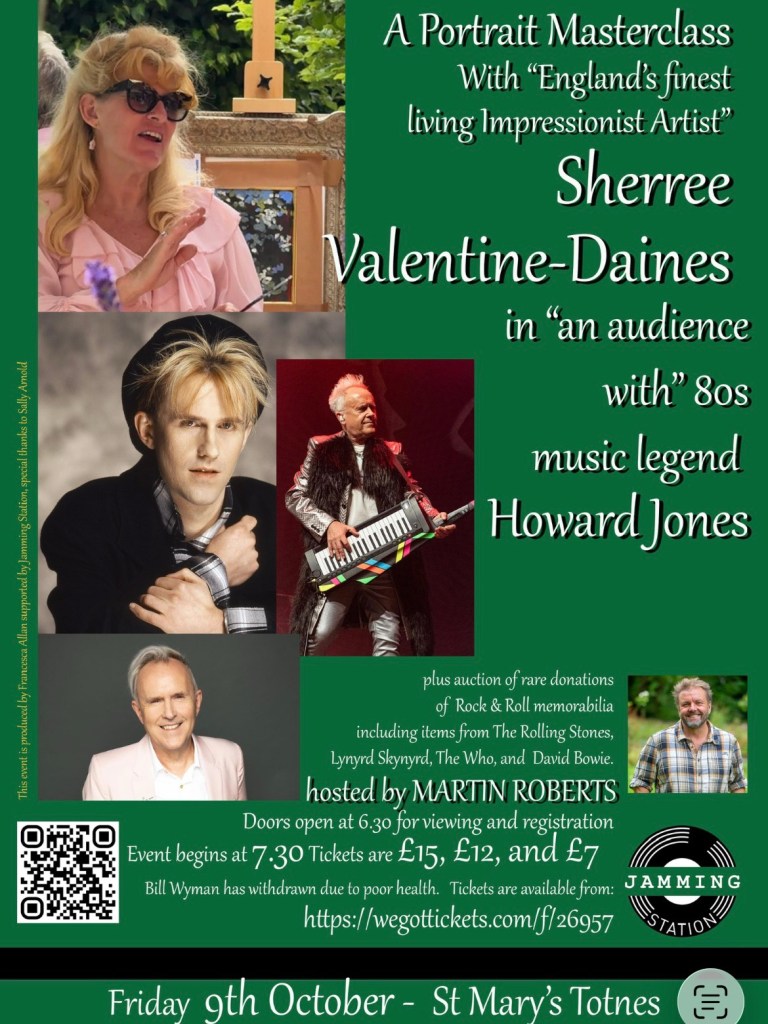
Since buying my first DSLR back in October last year, I’ve photographed a wedding, covered two Pride events (one of them as the main photographer, no less), and had the pleasure of photographing an evening fundraiser featuring the legendary Howard Jones. Yes, that Howard Jones. Eighties musical royalty, and me with a camera trying to look as though I know exactly what I’m doing.
Next up, I’ve another shoot this month at a poetry event hosted by local celebrity Tom Hirons. Which means I’ll be swapping between two of my favourite worlds: the one where people perform their words, and the one where I attempt to capture the moment before it disappears into the ether.
When I bought that camera, I rather fancied I’d take a few photographs, enjoy myself, and perhaps produce the occasional image that didn’t require an apology. I didn’t quite anticipate things moving along quite so quickly.
But here we are. One minute you’re experimenting with a new bit of kit, the next you’re photographing weddings, Pride celebrations and musical legends, with more opportunities popping up on the horizon.
It’s funny how life sometimes opens a door when you’re busy looking through a viewfinder.
So, between scribbling poems, chasing light and trying to remember which button does what, it seems this particular adventure is gathering momentum.
And if there’s one thing I’ve learnt after twenty-plus years of playing with words, it’s this: you never really know where a creative itch might lead you.
I’d better keep the batteries charged, then. It looks like I’m going to need them!
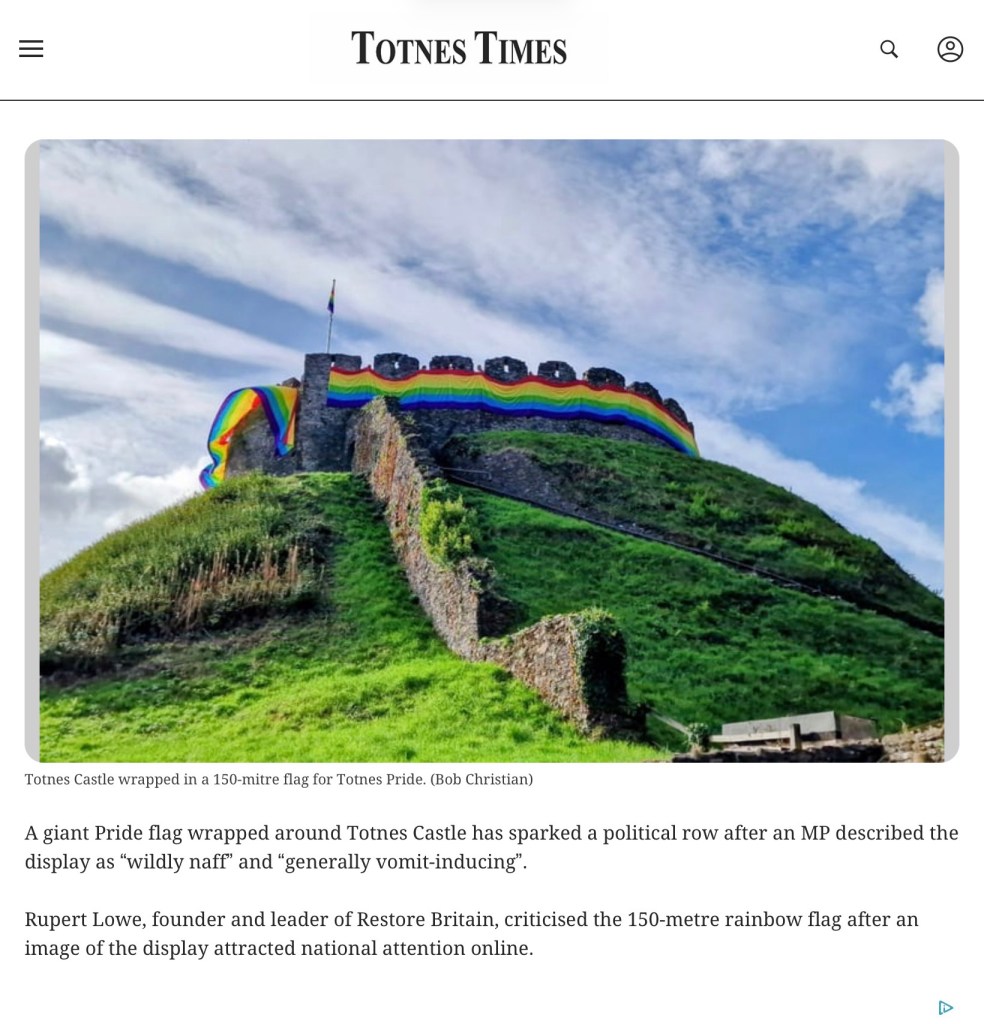
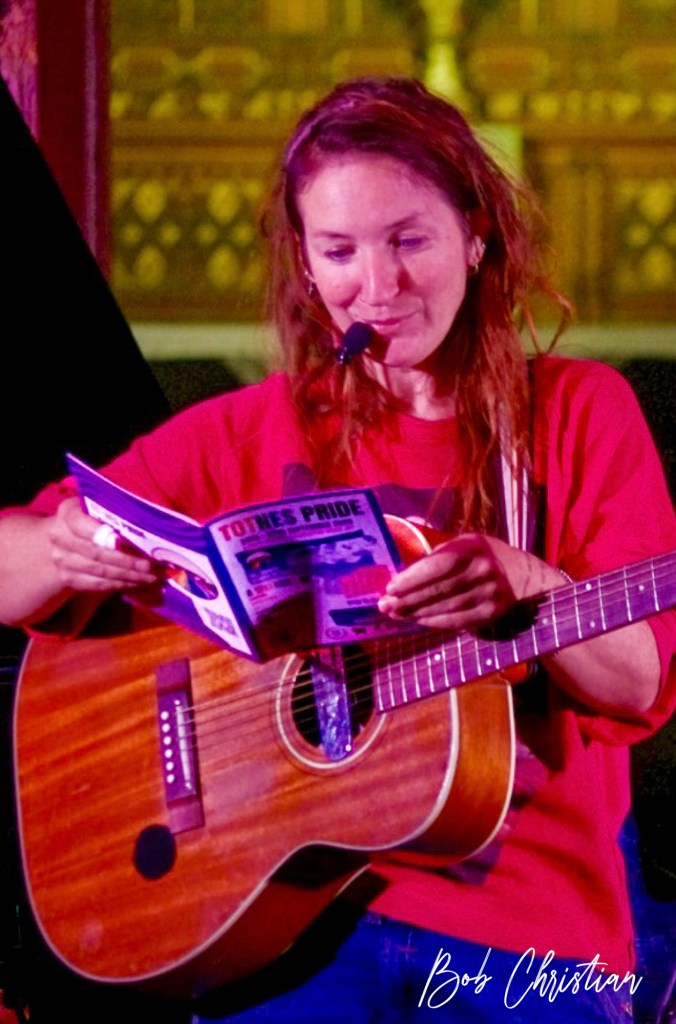
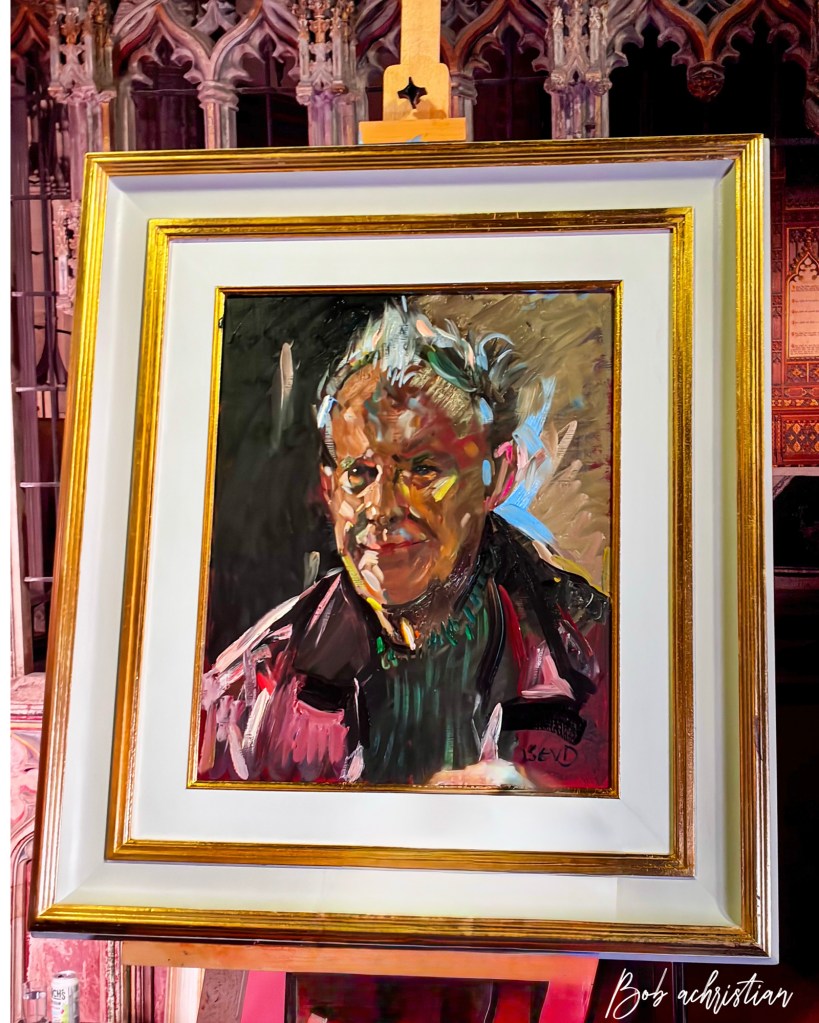
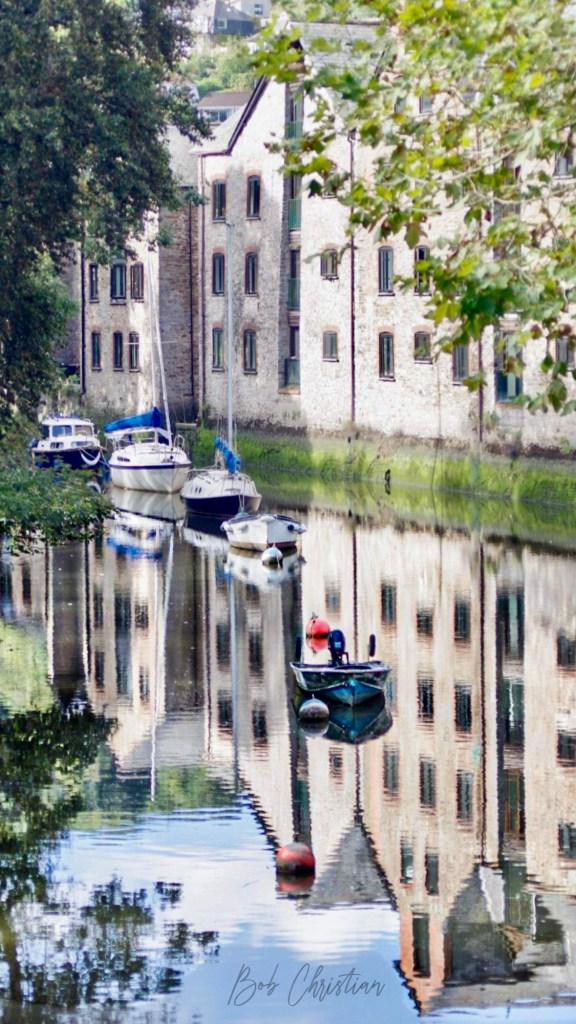
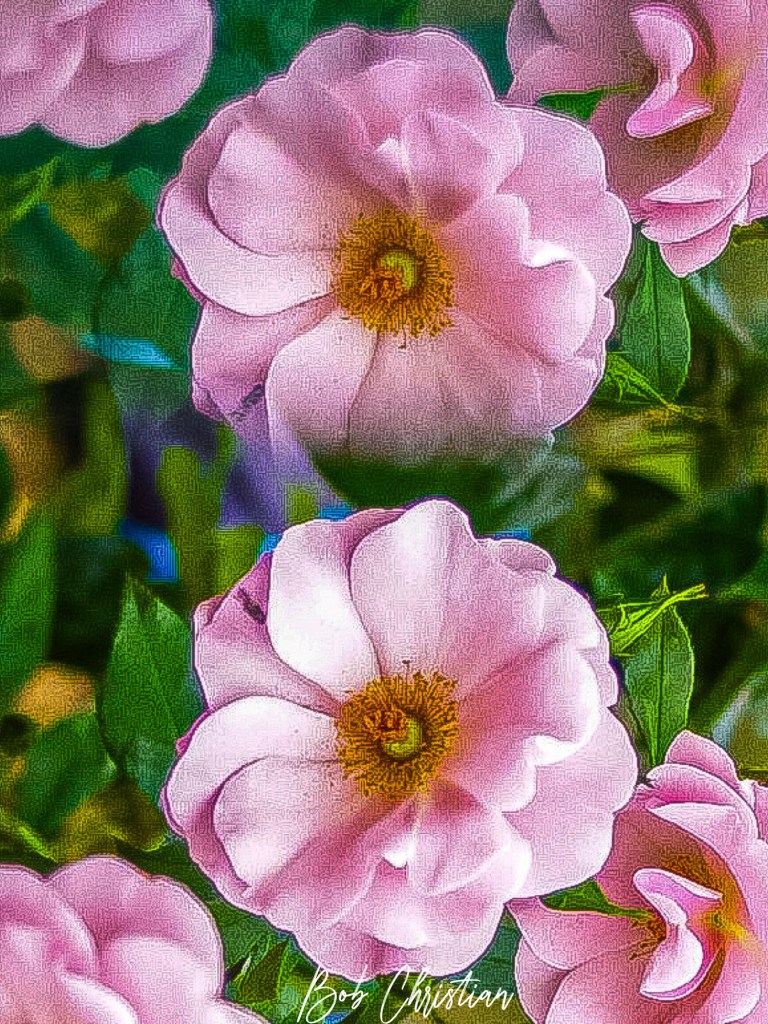
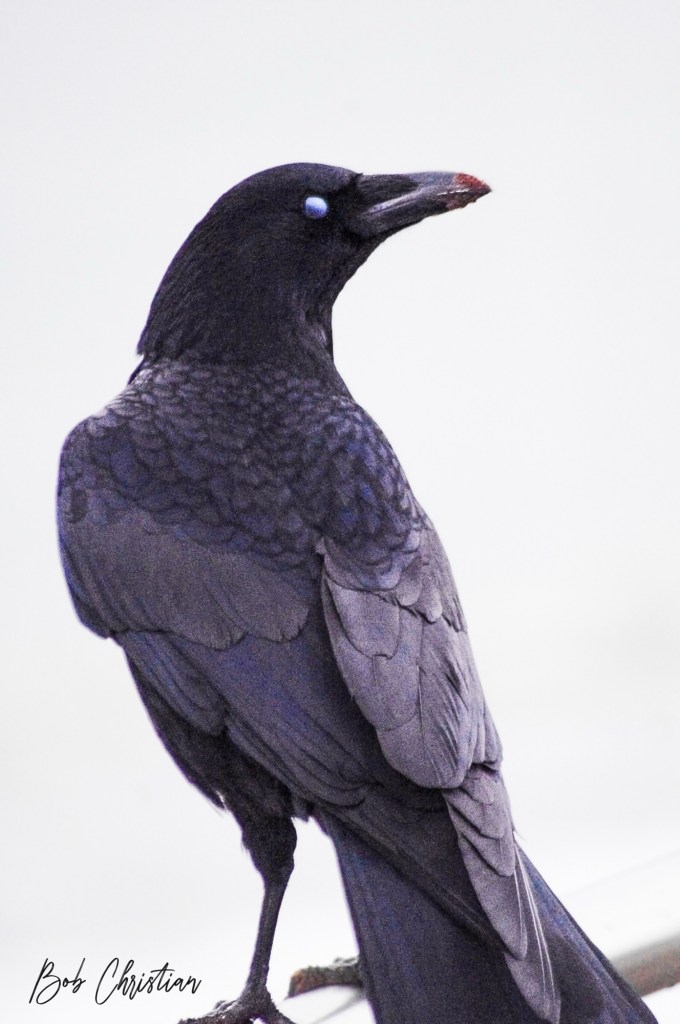
Totnes Castle (Totnes Times)Ruth Theodore Totnes Pride.Portrait of Howard Jones. (Sherree Valentine-Daines) The River Dart (Narnia) Roses (Mirror photography, DSLR)Raven (Paignton beach)
What’s one thing you know now that would have saved your younger self a lot of pain?
If there’s one thing I wish I could sit my younger self down and explain, over a decent brew, it would be this:
You don’t have to carry everything.
Not every injustice needs to be revisited. Not every wrong needs to be replayed in your head a thousand times. And not every person who hurt you deserves to occupy so much space in your life long after they’ve gone.
I spent far too much time holding onto anger.
Replaying conversations.
Thinking about what I should have said.
Wondering why people did what they did.
And, of course, imagining all the wonderfully satisfying things I could say if I ever got the chance to have that conversation again.
Funny thing is, most of those conversations never happened.
But I still carried the anger.
And who was it hurting?
Me.
The people and situations I was angry about weren’t necessarily giving me a second thought. Yet there I was, dragging the past around like an overpacked suitcase I couldn’t bring myself to put down.
It took me a while to understand something rather important.
Letting go doesn’t mean what happened was acceptable.
It doesn’t mean forgiving everyone, forgetting the lessons, or pretending an injustice never happened.
It simply means refusing to let yesterday dictate how you live today.
There’s a little wisdom in Buddhism that I wish I’d understood much earlier. We suffer when we cling too tightly to things, including our anger, our expectations and our need for life to have been different.
The past has happened.
We can learn from it. We can grieve it. We can even be bloody furious about it for a while.
But we cannot change it.
At some point, we have to decide whether we want to keep carrying it.
These days, I try to look at anger a little differently. I acknowledge it, ask myself what it’s trying to tell me, and then try to let it go.
Some days, I manage that better than others. I’m human, after all.
But I’m learning that peace isn’t about winning every argument or getting the apology you deserved.
Sometimes peace is simply deciding that your happiness is worth more than your resentment.
So, to my younger self, if I could pass on just one piece of advice, it would be this:
Feel what you need to feel. Learn what you can. Stand up for yourself when you need to.
But when the time comes, put the bloody suitcase down.
You’ve got places to go, people to love, and a life to live.
Ask ten people and you’ll probably get ten different answers. For me, it comes down to something rather simple: helping others, treating strangers with kindness, and trying to leave the world a little better than I found it.
Nothing revolutionary, is it? Although, given the state of the bloody world sometimes, you’d think kindness was a rare and endangered species.
But here’s the thing. Kindness isn’t weakness, and peace isn’t an inability to fight.
You can be compassionate without being a pushover. You can stand up for yourself and those you love without making aggression your default setting.
It’s why the idea of a demon hand and a Buddha heart resonates with me. Strength tempered by compassion. The ability to confront darkness without allowing it to dictate who you become.
I’ve been trained for war, but that doesn’t mean I want to spend my life fighting. Quite the opposite.
There’s a difference between being unable to hurt someone and having the capability to do so but choosing not to. One is a limitation. The other is restraint.
And restraint, in my opinion, takes a fair bit of strength.
We all have anger, pride and darker impulses. The question isn’t whether those feelings exist, but whether we allow them to control our actions. Just because somebody insults us doesn’t mean we have to respond. Just because we can win an argument doesn’t mean we should have it.
Sometimes, walking away is the strongest thing you can do. Not because you’re frightened, but because your peace of mind is worth more than having the last bloody word.
So, what makes someone a good person?
Not perfection. I’ve yet to meet anyone who has that particular trick figured out.
It’s about trying. Helping when you can. Admitting when you’re wrong. Apologising when you’ve hurt someone. Standing up for those who need it, setting boundaries when necessary, and having the courage to change your mind when life proves you wrong.
We can’t control how others behave, but we can take responsibility for how we respond.
For me, that’s the balance:
It’s known as Demon hand, Buddha heart. Strength without cruelty. Compassion without helplessness. Peace without pretending the world is always peaceful.
I don’t have to be harmless to be kind, weak to be gentle, or blind to the world’s darkness to choose not to add to it.
I can walk a path of peace while being prepared for war. But above all, I can choose to lead with my heart.
Will that change the world overnight? Probably not. I’m not that bloody optimistic.
But if we all made a little more effort to choose kindness over contempt, restraint over retaliation, and understanding over hatred, perhaps we’d make this place a little easier to live in.
I think this last week has probably been the pinnacle of my 2026 journey.
But before we get into that, let’s rewind a little.
At the start of the year I spotted an advert on Instagram looking for volunteer photographers for Torbay Pride.
Now, being me, I thought…
Why not?
So I threw my hat into the ring.
Somehow, they said yes.
And suddenly I found myself being one of the volunteer photographers for Torbay Pride.
My first proper photography gig.
And I bloody loved it.
Something had happened.
That little spark had caught light.
So when my hometown of Narnia announced its own Pride in July, I did what any sensible person would do.
I sent them a cheeky email asking if they needed a photographer.
Apparently, nobody had thought of that.
So, by a mixture of enthusiasm, timing and possibly nobody else putting their hand up, I became the official Pride photographer.
Which brings us to last week.
Totnes Pride.
Another fantastic day. Another camera full of photographs. Another reminder of just how much I love doing this.
And then came the inevitable bit.
The bit where I sat down afterwards and started looking through hundreds of photographs.
Yes, they were in focus.
Yes, they were clear.
But…
Did they have that something?
Probably not.
And when you combine that with a healthy dollop of imposter syndrome and failing to score in a poetry competition, it’s fair to say I was being a little hard on myself.
Then Friday happened.
One of the Pride volunteers contacted me.
She sent me a lovely photograph of me in action with my camera.
Then came the unexpected bit.
She was looking for a volunteer photographer to photograph 80s music legend Howard Jones while he had his portrait painted, followed by an auction raising money for a local youth music charity.
Would I be interested?
Well…
Yes.
Obviously.
I didn’t even need to think about it.
More experience.
More hours behind the camera.
A chance to build my portfolio.
And, quite frankly, an excuse to take photographs.
What’s not to like?
Then, as if the universe was trying to make its point, some of my astrophotography started producing some rather lovely results too.
And suddenly that slump didn’t seem quite so deep.
Perhaps I’d just forgotten something fairly obvious.
I’m still learning.
I’m still finding my eye.
Not every photograph is going to be the photograph.
And that’s okay.
You take the next one.
You learn.
You keep going.
Sometimes you just need to stop judging the last frame long enough to notice that you’re already holding the camera for the next one.
And maybe there’s something to be said for simply being there for that moment, rather than worrying too much about what comes afterwards.
Anyway…
The camera’s charged.
There are more photographs to take.
And apparently, I’ve got a portrait of Howard Jones to go and shoot.
It’s one of those questions that sounds wonderfully simple.
You rub the lamp. The genie appears.
Three seconds later, you’re suddenly faced with the biggest decision of your life.
And I’m guessing most people would go for something fairly obvious.
£100 million in the bank. A mansion. Fame.
Maybe becoming a bestselling author, a world-famous photographer, or whatever else happens to float your particular boat.
And don’t get me wrong, I’d quite happily take the £100 million, but there’s a problem. If I became a successful poet or photographer because some magical blue bloke handed it to me, I’m not sure I’d want it. I want to know that I earned it.
Every poem. Every photograph. Every little bit of progress.
The mistakes. The failures. The hours nobody sees.
That’s where the meaning comes from.
So if the genie stood in front of me today and said: “Bob, you get one wish. Anything you want.” My answer would probably surprise you.
I wouldn’t ask for money. I wouldn’t ask for fame. I wouldn’t even ask for anything for myself. I’d wish for one thing.
I would wish to eliminate child sexual abuse.
Completely. Everywhere. No exceptions. No child ever having to experience it. No teenager carrying a secret they’re terrified to tell anyone.
No adult waking up decades later and realising that something that happened in childhood has somehow followed them through and affected their entire life.
Because I know what it’s like.
I’m a survivor of child sexual abuse.
It happened more than forty years ago.
Forty.
Years.
And yet here I am, all these decades later, still thinking about it. Finally talking about it. Still understanding that something that lasted for a relatively small part of my childhood managed to leave fingerprints all over the man I became.
That’s the thing about abuse.
People sometimes imagine that when the abuse stops, the damage stops too.
It doesn’t necessarily work like that.
The perpetrator might walk away.
The child grows up. Life moves on. People get married. Have children. Build careers. Take photographs. Write books. Stand on beaches. Have therapy.
Laugh. Love… Live.
But sometimes, the past comes along for the ride. It sits quietly in the passenger seat. You might not notice it for years. Then something happens: A smell. A place. A memory.
A conversation.
A particular feeling.
And suddenly that little passenger taps you on the shoulder and reminds you that it’s still there.
That’s why my wish wouldn’t be about making me rich. It wouldn’t even be about erasing my own past. Because if I could magically remove what happened to me, I’d also remove part of the journey that made me who I am today.
And despite everything… I don’t want to erase myself, now.
I want to erase the reason children need to become survivors in the first place.
That’s the difference.
I don’t want a world where we become really good at helping people pick up the pieces.
I want a world where fewer people have pieces to pick up.
I want children to grow up knowing what safety feels like.
I want survivors to know that they will be believed when they find the strength to tell someone what happened, or is happening.
I want them to understand that their bodies belong to them.
That saying no means no.
That adults are supposed to protect children, not exploit them.
And perhaps most importantly…
I want survivors to know that what happened to them wasn’t their fault.
Not then. Not now. Never.
Because shame has a nasty habit of attaching itself to the wrong person: The child carries it. The teenager carries it. The adult carries it. Sometimes, to their grave.
Meanwhile, the person responsible may carry absolutely none of it.
That’s backwards. The shame belongs with the person who caused the harm, not the person who survived it.
So yes, if that genie ever does turn up, lamp in hand, waiting patiently for my answer… I know exactly what I’ll ask for… I’d simply look him in the eye and say:
“Make sure no child ever has to become a survivor of sexual abuse again.”
And if that sounds like an impossible wish… perhaps it is.
But I’ve spent enough of my life being told that some things are impossible. Sometimes impossible just means we haven’t tried hard enough yet.
So until that genie turns up, perhaps the rest of us have a part to play.
Listen. Believe. Protect. Educate.
Speak when silence would make things easier for the wrong person.
And when a survivor finally finds the courage to say those words:
“This happened to me.”
Don’t ask them why they didn’t tell someone sooner. Don’t brush it off with a throwaway comment. Don’t ask what they were wearing. Don’t ask what they did to cause it. Don’t ask why they didn’t fight or scream.
Just listen.
Believe them.
And do remind them of something they may have spent years struggling to believe themselves:
It wasn’t their fault.
Forty years later, I’m still here. Still writing. Still taking photographs. Still telling stories. Still trying to turn some of the darker parts of my life into something that might help somebody else. Perhaps that’s the closest thing I have to magic.Not changing the past, but using what happened to me to try to make somebody else’s future a little safer.
And if I only ever get one wish… That’s the one I’ll choose.
If you could start a new business right now, what would it be?
If I’m being completely honest, the obvious answer would probably be photography.
I love photography.
It’s gone from being something I did with my phone, wandering around taking pictures of anything that caught my eye, to something I genuinely want to get better at.
Nature.
Birds.
Beaches.
People.
Events.
The occasional photograph that makes me stop and think, bloody hell, I actually took that.
I’ve even started doing photography work at events, and there’s something rather lovely about being able to turn something you enjoy into something people are willing to pay you for.
So yes.
If I was being sensible…
A photography business.
Easy.
Except…
I think I’d love to own a comic book shop.
Yep.
A comic book shop.
Because apparently being a bloke in his fifties who already has far too many hobbies, books and bits of geekery apparently isn’t enough.
I need premises.
And stock.
And shelves.
Lots and lots of shelves.
I’ve loved comics and graphic novels for years.
I’ve rambled before about how Watchmen was my first graphic novel and how that started a lifelong love affair with comic books.
And the more I think about it, the more I realise that owning a comic shop wouldn’t really be about selling comics.
Not entirely.
It would be about creating somewhere people actually want to go.
A proper little geeky Aladdin’s cave.
Comics.
Graphic novels.
Maybe some collectables.
Games.
A few bits of nostalgia.
Somewhere you could walk in looking for the latest issue of something and end up having a forty-minute conversation about Batman.
Or Transformers.
Or why the original Teenage Mutant Ninja Turtles were considerably better than they had any right to be.
Somewhere you could discover comics for the first time.
Somewhere adults could rediscover the things they loved when they were younger.
And somewhere people could simply geek out without having to explain themselves.
I think I’d like that.
There’s something quite appealing about having a little shop that feels like your place.
Not some huge corporate business.
Just a little independent shop, run by a bloke who probably knows far too much about fictional characters and not nearly enough about accounting.
So maybe photography is the sensible answer.
It’s something I’m passionate about.
Something I’m already doing.
Something I’m increasingly taking seriously.
But the comic shop?
That’s the one that makes me smile when I think about it.
And perhaps that tells me something.
Because sometimes the business you could build isn’t necessarily the business you’d love to build.
And if I ever do open one…
You’ll probably find me behind the counter with a camera around my neck, a comic in my hand, and absolutely no idea what I’m doing.
Which, if we’re being honest, is pretty much how I approach most things.
That makes them sound as though I’ve discovered some secret formula for life.
I haven’t.
If I had, I’d probably be considerably more organised.
And significantly less likely to walk into a room and immediately forget why the hell I went there.
But over the years, I’ve picked up a few little things that seem to make life slightly easier.
Nothing revolutionary.
No twelve-step morning routine involving seventeen different types of herbal tea.
Just a few things that seem to work for me.
Don’t Carry Everything (The Art of Letting Go)
This is probably the biggest one.
For a long time, I spent an incredible amount of energy carrying things that had already happened, you know.
Arguments.
Regrets.
Things people had said.
Things I wished I’d said.
Things I couldn’t change, no matter how many times I replayed them in my head.
Meditation has helped me with that.
Not by magically emptying my mind.
Anyone who knows me will understand how unlikely that sounds.
Instead, it’s taught me to notice my thoughts without automatically climbing aboard every single one of them.
Sometimes you just have to acknowledge something.
Learn whatever lesson there is to learn.
And then put the bloody thing down.
You don’t have to carry everything just because you once picked it up.
Some things belong in the past.
Leave them there.
Go outside
Another incredibly complicated life hack.
Leave the house.
Go for a walk.
Look at the sky.
Watch the birds.
Stand by the sea.
Get rained on.
Apparently, I’m particularly good at that last one.
There’s something about getting away from four walls and screens that resets the brain.
Sometimes the solution to a problem isn’t another hour staring at it.
Sometimes it’s a walk and a coffee.
Sometimes it’s feeding the crows.
Sometimes it’s standing in the sea with wet shorts and wondering why you thought that was a good idea in the first place.
And sometimes…
that’s enough.
We spend so much time trying to do things that we forget there’s value in simply being somewhere.
Outside.
Breathing.
Looking.
Listening.
Being present.
Write shit down
My brain has always been a noisy place.
So I write.
Sometimes it’s poetry.
Sometimes it’s complete nonsense.
Sometimes it’s a sentence that eventually becomes something.
And sometimes it’s simply a case of getting the thoughts out of my head and onto a piece of paper before they start having a bloody committee meeting in there.
There’s something strangely powerful about seeing a thought written down.
It becomes something outside of you.
You can look at it.
Question it.
Rearrange it.
Understand it.
Or decide that actually, it was rubbish…
…and throw it away.
Writing started for me as a way of processing thoughts and emotions.
Twenty years later, I’m still doing it.
Apparently, I’ve committed to the bit.
And I’m quite glad I did.
Protect you time
We live in a world that seems determined to fill every available second.
Notifications.
Messages.
News.
Social media.
Emails.
Opinions.
More opinions about the opinions.
Sometimes you need to switch the bloody lot off.
Read a book.
Play a game.
Sit in the shed.
Take photographs.
Write.
Watch the birds.
Drink a coffee.
Do absolutely nothing.
And yes, I know that doing nothing sounds like the sort of thing we’re all supposed to feel guilty about.
But doing nothing isn’t necessarily wasting time.
Sometimes doing nothing is exactly what your brain needs.
We don’t have to be productive every minute of every day.
Sometimes the most productive thing you can do is stop.
Fucking ask for help
This one took me far too long to learn.
I’ve still got the scars
I used to think asking for help meant
Not being able to “Man Up”
admitting weakness.
It doesn’t.
Sometimes it means recognising that you’re human.
We aren’t designed to carry everything alone.
If something is too heavy, put it down.
If you don’t know what to do, ask someone who does.
If you’re struggling, tell someone.
That isn’t failure.
It’s being sensible.
There’s a strange idea that we’re somehow supposed to have all the answers.
We’re not.
None of us do.
Sometimes strength isn’t about carrying something until your back breaks.
Sometimes strength is saying:
“I can’t carry this on my own.”
And letting somebody give you a hand.
Finally…
Don’t wait for everything to be perfect before you enjoy your life.
How do you write what people actually want to read?
It’s an interesting question.
And, if I’m being completely honest, I’m not entirely sure I do.
I don’t mean that to sound arrogant.
Quite the opposite.
I’m probably one of the least commercially minded writers you’re ever likely to meet.
I don’t sit down at my keyboard thinking:
Right, Bob. What will the internet like today?
What’s going to get the most clicks?
What’s going to go viral?
What will the algorithm be particularly fond of?
If I did, I’d probably have given up years ago.
The truth is, I started writing for a completely different reason.
I needed somewhere to put the stuff rattling around inside my head.
Twenty-odd years ago, my “poetry” was barely poetry at all.
I called them scribbles.
Still do, actually.
They were thoughts, emotions, anger, fear, confusion and occasionally a bit of hope, thrown onto paper because keeping everything inside clearly wasn’t working terribly well.
Writing became a form of therapy.
The scribbles eventually became poems.
The poems eventually became books.
And somehow, along the way, people started reading them.
Which still amazes me.
Because I never really set out to become a poet.
I certainly didn’t start writing because I thought:
One day, thousands of people might read this.
I was just trying to make sense of myself.
And perhaps that’s the answer to the question.
Maybe you don’t write what people want to read.
Maybe you write what you need to say.
And then you hope that somewhere out there, somebody needs to hear it.
That’s certainly how I approach this blog.
Some days I’ll write about mental health.
Some days it might be something completely ridiculous.
Photography.
A walk.
A memory.
A book.
A film.
Something that made me laugh.
Something that pissed me off.
Something that made me stop and think.
And occasionally, for reasons known only to the universe, I’ll write about bloody crows.
There isn’t necessarily a grand content strategy behind it.
It’s just me.
Rambling.
Hence the name.
And yes, I’m aware that there are probably people who read something I’ve written and think:
What the hell was that bloke going on about?
Fair question.
I’ve asked myself the same thing.
But here’s the thing.
I don’t normally write poetry, scribbles, or these ramblings because I want to be liked.
I don’t write them because I want everyone to agree with me.
And I certainly don’t write them because I expect everyone to enjoy them.
I write because it helps.
It helps me process things.
It helps me understand what I’m thinking.
Sometimes it helps me put a name to an emotion I couldn’t quite identify before.
And sometimes, putting something down on paper means I can stop carrying it around in my head.
That’s why the mental health side of my writing has always mattered so much to me.
There have been times when writing wasn’t just a creative outlet.
It was part of keeping my head above water.
Poetry gave me a way of taking all that internal noise and turning it into something I could actually look at.
Something I could shape.
Something I could eventually put down.
And then something rather lovely happened.
Other people started saying:
“I understand that.”
Or:
“I’ve felt like that.”
Or:
“Thank you for writing this.”
And that’s when you realise that something you wrote purely to help yourself can sometimes become useful to somebody else.
That, to me, is the magic bit.
Not the numbers.
Not the views.
Not the likes.
Not whether something gets shared fifty times on Facebook.
Although, obviously, if you do want to share it fifty times, I won’t complain.
I’m not completely bloody stupid.
But that isn’t why I write.
If somebody reads something I’ve written and gets something from it, brilliant.
If somebody laughs, even better.
If somebody sees themselves in one of my poems and realises they aren’t quite as alone as they thought they were, then bloody hell…
That’s worth more than any number on a screen.
So, how do you write what people actually want to read?
I honestly don’t know.
I suspect there are people far cleverer than me who can explain algorithms, audience engagement, SEO, demographics and all the other mysterious machinery that apparently makes the internet go round.
Me?
I just write.
I write what interests me.
I write what bothers me.
I write what makes me laugh.
I write what hurts.
I write what I’m trying to understand.
And sometimes I write complete and utter nonsense because my brain has apparently decided that’s what we’re doing today.
And if people want to read it?
Well…
That’s a happy little accident.
(Bob Ross would approve.)
The funny thing is, though, perhaps the best writing isn’t created by trying desperately to please an audience.
Perhaps it comes from being honest enough to say the thing you actually wanted to say.
Because somewhere, there might be someone who needed those exact words.
I never expected my scribbles to become twenty years of poetry, six books, guest publications and all the other amazing things that have happened along the way.
I certainly didn’t have a five-year plan.
I had a pen.
A head full of noise.
And a desperate need to get some of it out.
Everything else has been a happy little accident.
And I think I’m quite happy keeping it that way.
So I’ll carry on rambling.
I’ll carry on scribbling.
I’ll carry on taking photographs.
I’ll carry on writing about mental health, life, love, the ridiculousness of being human, and whatever else wanders into my head.
If you enjoy it, thank you.
If something I write helps you, even better.
And if you don’t like it…
Well, there are plenty of other blogs on the internet.
No hard feelings.
I’ll still be here tomorrow.
Probably writing something nobody asked for.
And quite possibly enjoying myself immensely while I do it.
Today was one of those mornings where work didn’t really feel like work.
I headed into town to have a wander around and look at potential locations for an upcoming photography gig for Totnes Pride.
There’s something about photographing an event that makes you look at familiar places slightly differently. Suddenly you’re not just seeing streets, buildings and corners of town, you’re looking for light, angles, backgrounds and those little spots where a photograph might just come together.
Of course, I took the camera with me.
Because apparently I’m incapable of going anywhere without looking at things through a lens these days.
Once the location scouting was done, it was time for the important stuff.
Coffee.
A slow, relaxing coffee morning in the market, with some good friends, and friends I’d just met, absolutely no rushing about and nowhere particularly urgent to be.
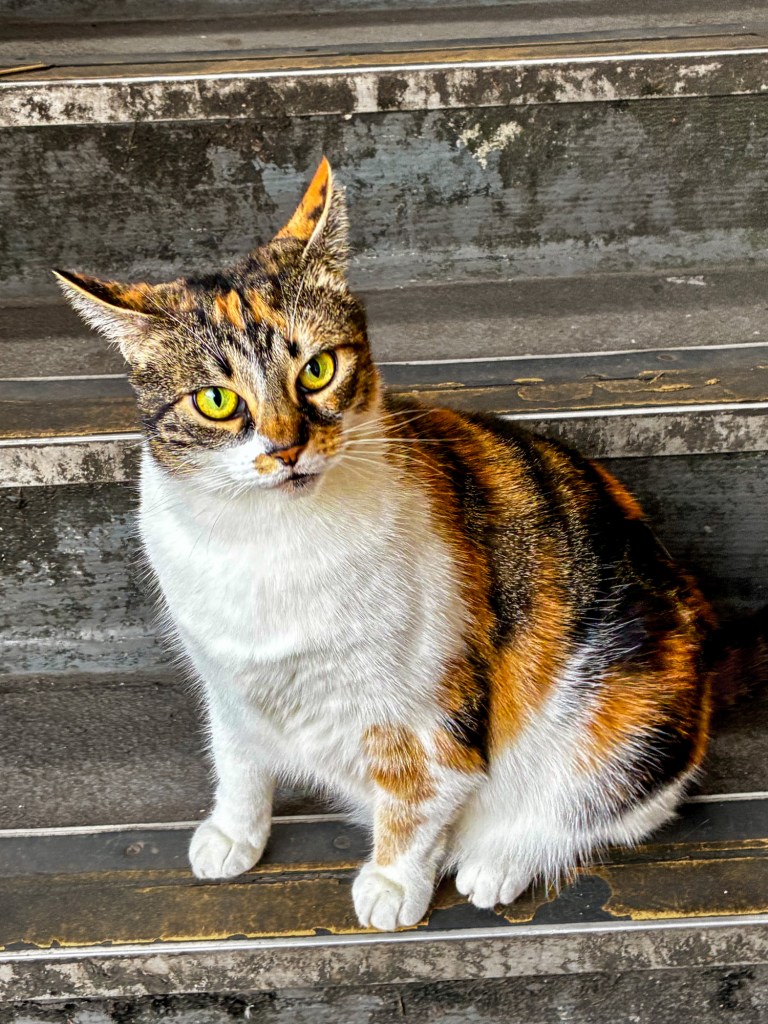
And then, as if The Universe hadn’t already delivered enough, a calico cat wandered down the stairs.
Obviously, I had to say hello.
The cat seemed perfectly happy to accept some fuss, so who was I to argue?
Photography locations sorted.
Coffee enjoyed.
Cat fussed.
All in all, not a bad morning.
Sometimes the best days are the ones where you manage to get a little bit of work done…
…and still find time to stop and enjoy the small stuff.