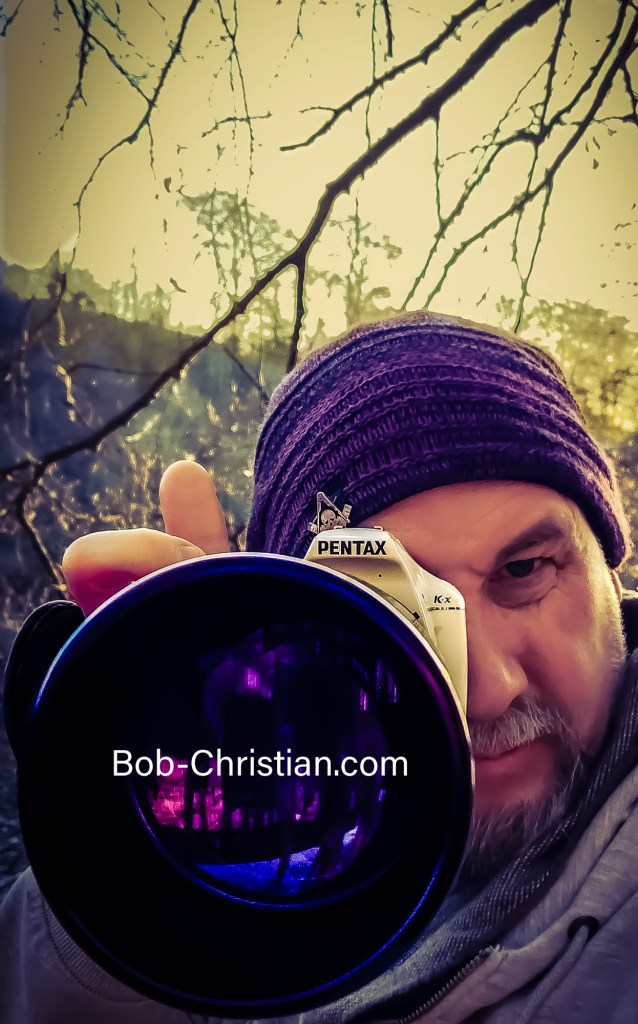
Well, I say job — I’m one of the official volunteer photographers for this year’s Pride event in Torbay.
It might not be a paid position, but it’s the first time someone has looked at my photography and thought, “Yes, let’s give him a chance.”
More importantly, it’s an opportunity to learn. I’ll get to experience what happens behind the scenes on a real assignment; taking the photographs, editing them, and delivering the finished images rather than just pretending to be a photographer in my spare time.
Everyone starts somewhere, and today feels like the first real step on that journey.
So, fingers crossed, wish me luck, and let’s see what happens.
Sure, I love comic books. I love photography. And I’m definitely passionate about Mrs Bob—but that’s a story for another day.
The thing that truly sets my soul on fire is poetry and mental health awareness.
At first glance, they might seem like two completely different worlds. One is art. The other is survival.
But for me, they’re inseparable.
Because poetry helped save my life.
More than twenty years ago, I wasn’t the happy, well-adjusted bloke many people know today. In truth, I was a mess. My mental health was spiralling dangerously out of control. I was drinking heavily, drowning emotions I didn’t understand, and convincing myself that I had to carry every burden alone.
Like many men of my generation, I believed I had to “man up.”
Keep quiet.
Stay strong.
Don’t talk about it.
But silence can be a dangerous thing.
There were times when the darkness became so overwhelming that I tried to end my life. More than once.
Eventually, after waking up in the resuscitation room of my local hospital following one particularly close call, something shifted inside me. Looking back now, I realise it was a crossroads.
I could continue pretending everything was fine until it killed me.
Or I could ask for help.
I chose help.
Not because I was brave.
Not because I suddenly had all the answers.
But because I looked at my two young children and realised I couldn’t leave them growing up without a father.
For the first time in my life, I stopped trying to fight alone.
One of the professionals helping me suggested I start writing down my thoughts and emotions. The idea was simple: get the chaos out of my head and onto paper so I could begin to understand it.
At first, I filled notebook after notebook with late-night scribbles. Thoughts. Fears. Anger. Pain. Hope. Anything that was bouncing around inside my head.
Then something unexpected happened.
As I read back through those pages, I started arranging some of the words into verses. The emotions were still raw and chaotic, but now they had rhythm and shape.
It wasn’t poetry as I know it today.
It was closer to rap lyrics.
But it was the beginning.
The real turning point came when I wrote a piece for a family member’s naming ceremony. Afterwards, people kept asking me where I’d found the poem.
When I told them I’d written it myself, they seemed genuinely surprised.
And so was I.
For the first time, I allowed myself to think:
Maybe I’m a poet.
Over the following two decades, I spent countless hours learning, practising, refining and developing my craft. Every poem taught me something new—not just about writing, but about myself.
In the early days, poetry was my pressure valve.
A way of releasing everything that threatened to consume me.
My work was dark.
Unflinching.
Sometimes uncomfortable.
I wrote about depression, self-harm, suicide and the realities of living with poor mental health. Topics many people preferred not to talk about.
But those conversations mattered.
They still do.
Today, my writing covers a wider range of subjects. There’s more light alongside the darkness. More hope alongside the pain.
Yet mental health remains close to my heart.
Particularly men’s mental health.
I’ve been inspired by some incredible slam poets and advocates who have used their voices to challenge the outdated belief that men should suffer in silence. The idea that being strong means never showing vulnerability. The lie that asking for help is weakness.
Because it isn’t.
Real strength is speaking up.
Real strength is reaching out.
Real strength is staying.
The truth is that there are countless blokes out there who are fighting battles nobody else can see. Men who smile on the outside while struggling desperately on the inside. Men who believe they’re alone.
They’re not.
And that’s why I keep writing.
Because somewhere, someone might be reading these words and recognising a piece of themselves.
Someone who feels exhausted.
Someone who feels trapped.
Someone who is standing closer to the edge than anyone realises.
If my poetry, my story, or my words can make just one person pause for a moment and choose to talk to someone—anyone—instead of suffering alone, then every difficult chapter of my journey has been worthwhile.
Because poetry didn’t just give me a voice.
It gave me a future.
And if sharing that future helps someone else find theirs, then I’ll keep writing for as long as I have words left to write.
If you asked me which season of the year I hold closest to my heart, my answer would come without a moment’s hesitation: autumn.
There is a magic in that turning of the Wheel. Summer’s relentless heat softens, mornings arrive shrouded in mist, and the world transforms into a living tapestry of gold, amber, and crimson. Nature seems to pause, taking a long, slow breath before the hush of winter descends.
I have always found comfort in the cooler air. The oppressive heat of summer gives way to crisp walks through the woods, to the scent of fallen leaves that carries a nostalgia that words can barely touch. Autumn asks us to slow down, to reflect, to reconnect with the rhythms of the natural world that too often pass unnoticed.
But my love for this season runs deeper than the beauty of its colors or the relief from heat. Autumn holds my favourite of the eight Sabbats: Samhain.
For many, Samhain is simply Halloween, a time for costumes and candy. Yet in the Pagan traditions, it holds far more weight. Samhain marks the close of the harvest and the onset of the darker half of the year. It is a transitional season, when the boundaries between worlds thin and the veil between the living and the dead grows fragile. It is a time for remembrance, for reflection, for honouring those who came before us.
There is profound comfort in this. In our modern world, conversations about death are often avoided, yet Samhain asks us to face it, to embrace it as part of life’s natural cycle. It reminds us that those who are no longer physically with us continue to shape our lives through their stories, their wisdom, their love.
Each year, as the nights lengthen and the leaves drift from the trees, I pause to remember my ancestors, family, and friends who have passed. I light candles. I share stories. I offer gratitude. In doing so, I feel tethered not just to those I have known, but to the countless generations who have honoured this season long before my time.
Autumn teaches that endings are not to be feared. The falling leaf is not only a symbol of death but also a promise of renewal. Nature sheds what is no longer needed so that fresh growth may emerge when the time is right. There is wisdom in that, a lesson I carry with me throughout the year.
Every season has its own song, but autumn speaks most clearly to my soul. It is a season of reflection, of gratitude, of transformation. A season of remembrance. A season of quiet mystery.
And as the veil thins and the year leans toward its close, I find myself once more beneath an autumn sky, listening to the whispers of the ancestors riding on the wind.
Not because it’s expensive. Not because it’s the latest model. And certainly not because it makes me look like a photographer.
It’s a luxury because it helps me see.
A camera slows me down. It makes me notice the details most people walk past—the play of light on a wall, a fleeting expression, a quiet moment that would otherwise disappear forever.
The older I get, the more I realise that memories fade, but photographs have a remarkable way of bringing them back to life. They remind us not just what we saw, but how we felt.
So if I had to choose one luxury, it wouldn’t be a watch, a car, or a gadget.
It would be my camera.
Because it doesn’t just capture moments—it helps me appreciate them while I’m living them.
What are the most important things needed to live a good life?
People spend a lot of time chasing the secret to a good life.
More money.
A bigger house.
A better job.
More followers.
More stuff.
Yet the older I get, the more I realise that most of those things are optional.
The foundations of a good life are surprisingly simple.
First, you need a solid moral compass.
Not somebody else’s.
Your own.
A set of values that helps you recognise the difference between right and wrong, especially when nobody is watching. Life becomes a lot easier when your decisions are guided by principles instead of convenience.
The second thing is a good heart.
Good intentions matter.
Treat people with kindness.
Show compassion when you can.
Help where you’re able.
The world already has enough people looking out only for themselves. It never seems to have enough people genuinely trying to leave things a little better than they found them.
Will you always get it right?
No.
None of us do.
We’re human. We make mistakes. We stumble. We learn.
What matters is that you keep trying.
A good life isn’t built on perfection.
It’s built on character.
A solid moral compass.
A good heart.
And the willingness to keep moving forward when life gets messy.
I’ve noticed that the older I get, the smaller my circle becomes.
During the working day, I spend most of my time with two other people. We’re a close-knit team and, after enough hours together, you end up knowing each other’s habits, quirks, and coffee requirements better than you probably should.
Outside of work, it’s mostly Mrs Bob and our cat Tiddles (which, for legal reasons and feline dignity, is not actually her name).
Truthfully, I’m not a particularly social creature.
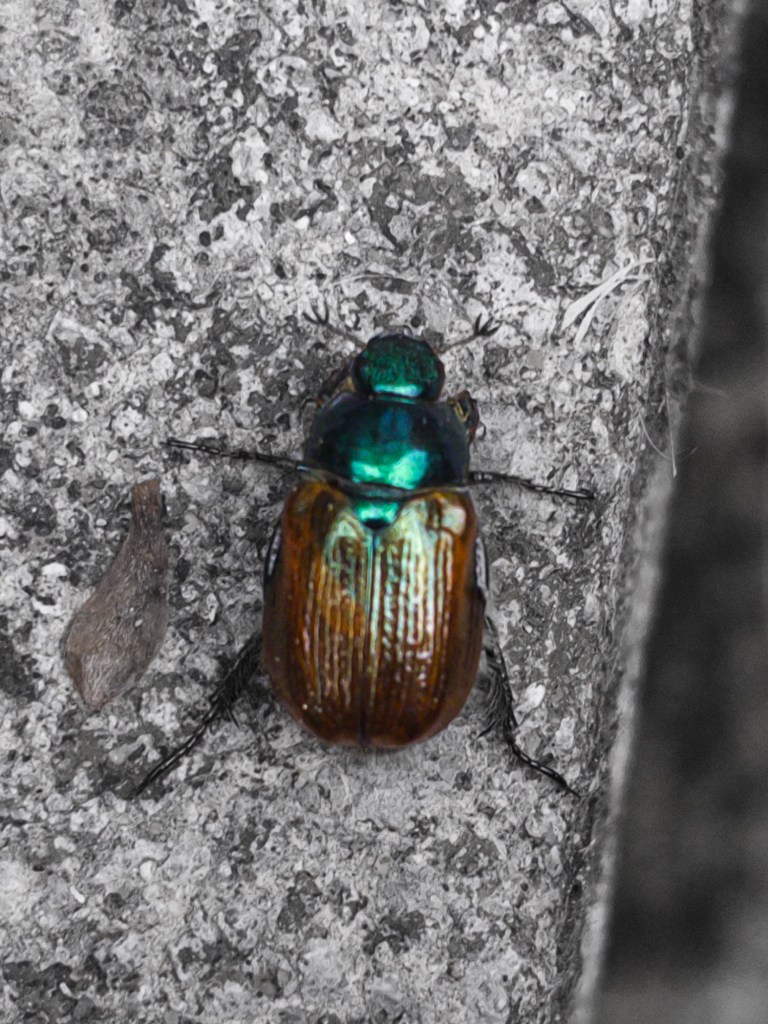
I don’t go out much unless it’s lodge night, Saturday coffee morning, or I’ve wandered off somewhere with a camera looking for birds that refuse to sit still long enough to be photographed.
And I’m perfectly content with that.
So, who do I spend the most time with?
The people who matter.
Because if I’m choosing to spend lots of time with you when nobody is paying either of us to be there, then you’re probably someone rather special to me.
If you had to change your name, what would your new name be?
This is actually a very easy question for me to answer.
In fact, you’re looking at it.
Well, sort of.
You see, I unofficially changed my name years ago when I started writing under a pen name. What began as a practical decision slowly became the name most people know me by.
The full version is Robert Walter Christian, although most people know me professionally as Bob W Christian. I’ve been using that name for the best part of twenty years now, so it feels just as natural as any name possibly could.
Now, before anyone starts digging through birth records and old school registers, no, it isn’t my real name.
That remains a closely guarded secret. Not because it’s particularly exciting, but because when I first started sharing my scribbles, much of what I wrote was deeply personal.
Using a pen name allowed me to create a little distance between the writer and the man behind the curtain.
It gave me the freedom to write honestly.
As for where the name came from, that’s the easy part.
Walter Christian was a man I loved dearly and admired greatly. The kind of man who leaves footprints on your life long after he’s gone. Choosing to carry part of his name felt right.
The “Bob” part is far less dramatic.
I’ve always thought Bob is one of those wonderfully ordinary names. No grand expectations. No airs and graces. Just Bob. A simple, everyday sort of name for a simple, everyday sort of bloke.
So, if I had to change my name, I suppose the answer is that I already have.
Not officially.
Not on any important paperwork.
But in the world of poetry, photography, and the occasional ramblings on the internet, Bob W Christian has been me for a very long time.