These pictures are taken using a technique I’m learning involving a mirror and a DSLR.
Pentax K-x
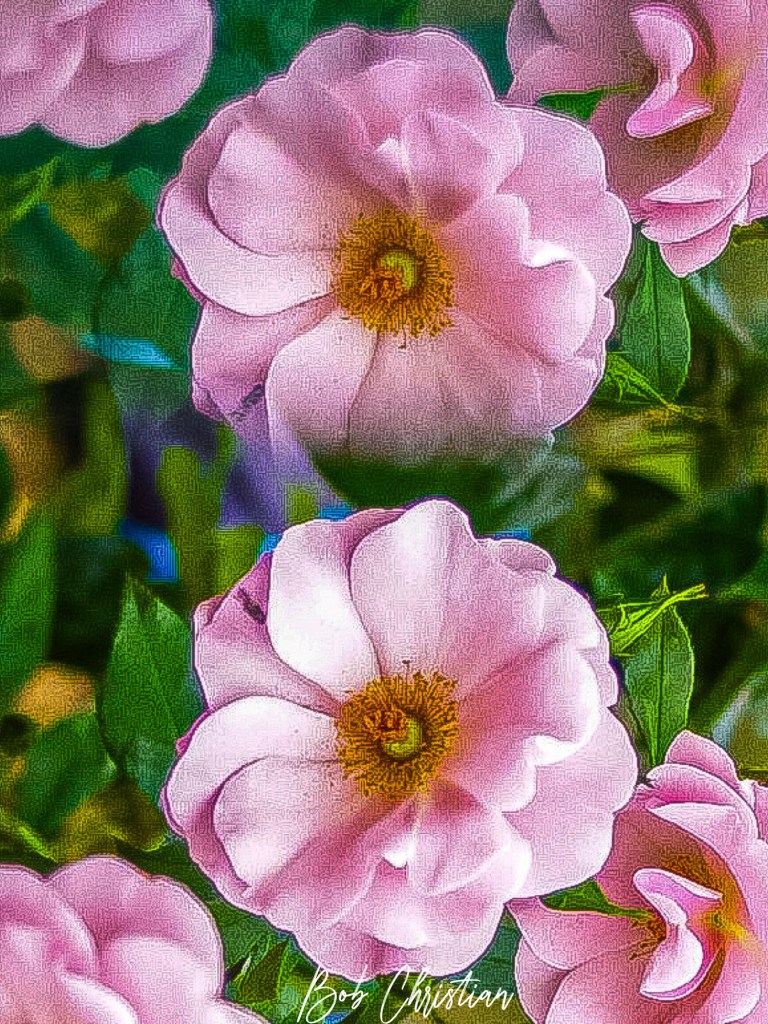
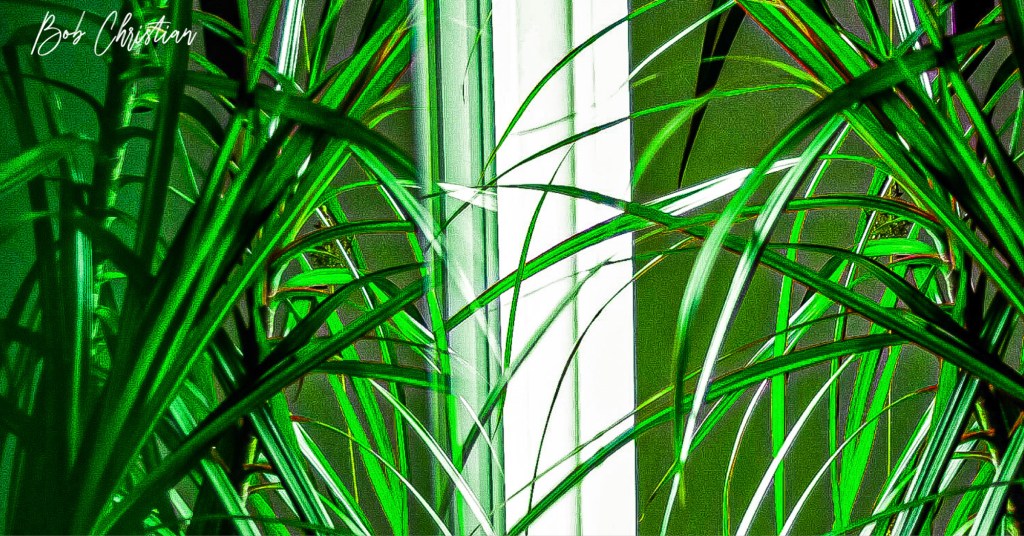
These pictures are taken using a technique I’m learning involving a mirror and a DSLR.
Pentax K-x
What’s a moment when you realized you were officially an adult?
That’s actually quite a difficult question.
You might expect the answer to be something obvious.
Getting your first proper job.
Paying your first bill.
Buying your first house.
Or perhaps that moment when you realise that nobody is going to come along and tell you what you’re supposed to be doing anymore.
For me, though, it was none of those things.
I think it was when I finally learned to let go.
And, perhaps more importantly, when I realised that I actually knew absolutely nothing.
Now, that might sound like a strange thing to associate with becoming an adult.
Surely adulthood is about knowing things?
Having the answers.
Being responsible.
Knowing what you’re doing.
Apparently not.
Because the older I get, the more I realise that I don’t have all the answers.
I probably never did.
I just got better at pretending I did.
When you’re younger, you tend to think adults have everything figured out. Your parents seem to know everything. Teachers know everything. People at work definitely know everything.
Then, one day, you become one of those adults.
And you suddenly realise we’re all just making it up as we go along.
Some of us are just better at looking confident while doing it.
For a long time, I thought I had to hold on to everything.
Old arguments.
Old mistakes.
People who had hurt me.
Things I’d done that I wished I could undo.
The idea that I could somehow control what other people thought, said or did.
And that’s exhausting.
Eventually, I realised that some things simply aren’t mine to carry.
You can’t change the past.
You can’t control other people.
You can’t make everyone understand you.
And sometimes you can’t even make yourself understand why you’ve done something until years later.
So you let go.
Not because it doesn’t matter.
Not because it didn’t hurt.
But because carrying it around forever isn’t going to change what happened.
That’s when I think I finally started growing up.
Not when I got older.
Not when I had responsibilities.
Not when I became a husband, a father or eventually a grandfather.
It was when I stopped believing that adulthood meant having all the answers.
Because perhaps real adulthood is recognising how little you actually know.
And being comfortable with that.
I’m still learning.
I’ll probably still be learning when I’m an old bloke complaining about the price of a pasty and wondering why everything needs an app.
But that’s okay.
Life isn’t a test where you eventually reach the final question and someone hands you a certificate saying:
Congratulations. You are now officially an adult.
There isn’t one.
There are just experiences.
Mistakes.
Lessons.
People who come into your life.
People who leave it.
Things you hold on to.
And things you eventually learn to let go.
And perhaps that’s the real trick.
Not knowing everything.
Just knowing that you don’t.
Stay safe
Bc
People often look at me a bit sideways when they discover I’m both a (lay) Buddhist and a Freemason.
Usually there’s a pause.
You can almost hear the gears grinding.
“Aren’t those two things contradictory?”
Honestly?
No more contradictory than being a poet who also loves archery, or an autistic bloke who can lose himself for hours behind a camera, quietly watching the world through a lens.
Human beings are complicated creatures. We contain multitudes, contradictions, rough edges and unfinished thoughts. That’s part of the beauty of it all.
The truth is, Buddhism and Freemasonry actually complement one another in ways many people don’t realise.
Both are less about blind belief and more about self-improvement.
Both ask uncomfortable questions.
Both encourage reflection.
And neither hands you all the answers wrapped up neatly with a bow.
That part matters.
Because I’ve never trusted anyone claiming to possess absolute truth. History tends to show that certainty often causes more damage than doubt ever did.
Buddhism taught me stillness.
Or at least the attempt at it.
Anyone who knows me personally will probably laugh at the idea of my brain being still. My mind has always felt like several televisions all playing different channels at once. Thoughts colliding with memories, anxieties wrestling with imagination.
But Buddhism introduced me to the idea that I don’t have to fight every thought that enters my head.
Sometimes you just observe it.
Let it pass like weather.
Not every storm needs chasing.
That alone changed a great deal in my life.
Freemasonry, on the other hand, gave me structure.
Not control — structure.
There’s a difference.
It gave me symbolism, ritual, tradition and the reminder that becoming a better man is an ongoing process rather than a final destination. Contrary to all the strange conspiracy theories, most of Freemasonry is far less dramatic than people imagine. It’s ordinary people trying, imperfectly, to improve themselves and help others along the way.
There’s something deeply human about that.
Both paths also share another thing in common:
Humility.
A Buddhist understands suffering is universal.
A Freemason understands no stone is perfectly shaped.
Both acknowledge imperfection not as failure, but as part of the work itself.
And maybe that’s why the two fit together so naturally for me.
Neither demands I hate others for believing differently.
Neither tells me I alone possess divine truth.
Neither asks me to stop questioning.
If anything, both encourage it.
I’ve sat in forests listening to birdsong and felt something sacred.
I’ve stood in lodge during moments of quiet reflection and felt the same thing.
Different rooms.
Same silence.
Same sense of connection to something bigger than ego and noise.
That’s probably the part many people misunderstand about spirituality.
It isn’t always about certainty.
Sometimes it’s about awareness.
Compassion.
Patience.
Trying to leave the world slightly kinder than you found it.
Failing occasionally.
Trying again anyway.
I’m not interested in converting anyone.
Truthfully, I think people spend too much time arguing over whose path is “correct” and not enough time asking whether they’re actually walking theirs with honesty.
Because a belief system means very little if it doesn’t make you kinder.
Or calmer.
Or more understanding toward others.
If your spirituality only teaches you who to hate, you’ve probably missed the point entirely.
For me, being a Buddhist Freemason simply means I’m still learning.
Still building.
Still trying to smooth some of the rougher corners off myself while accepting a few will probably always remain.
And perhaps that’s enough.
Stay safe,
BC
If you had a time machine and could send just one message to your past self, what would it say?
If I could send just one message back to the person I was, it would be this:
No matter how dark life becomes, you’re going to get through it.
There will be times when you genuinely believe the pain will never end. You’ll carry anger, fear, grief and questions you don’t yet have answers for. You’ll have moments when giving up seems easier than taking another step.
But keep going.
You don’t know it yet, but the hardest chapters of your life aren’t the end of your story. They’re the chapters that will teach you just how strong you are, and eventually, how to let go of the things that were never yours to carry forever.
You will find peace.
Not because life suddenly becomes perfect—it doesn’t. But because you’ll learn that peace isn’t about changing the past or controlling everything around you. It’s about accepting what you cannot change, letting go of what weighs you down, and choosing to keep moving forward.
So breathe.
Stay.
Keep going.
There is a life waiting for you that you cannot imagine from where you’re standing now.
And trust me…
“you’re going to be okay.”
Stay safe
Bc
If your future self could send you one sentence, what do you hope it would say?
If my future self could send me one sentence, I think I’d want it to say:
“Congratulations, you made it through everything you once thought would break you, and somehow you became the person you were always meant to be.”
Not you became rich.
Not you became famous.
Not even you got everything you wanted.
Just…
You made it.
Because I think we spend far too much of our lives measuring success by destinations.
The job.
The house.
The money.
The achievements.
The things we can put on a CV and point at proudly.
But perhaps the greatest achievement is simply reaching the other side of the storms that once convinced us we wouldn’t.
Looking back and realising that the mistakes weren’t the end.
The heartbreak wasn’t the end.
The failures weren’t the end.
The days when getting out of bed felt like an achievement weren’t the end.
They were chapters.
Some difficult.
Some ridiculous.
Some I’d happily rip out of the book altogether.
But they were still chapters.
And if future me is reading this, I hope he smiles.
Not because life turned out perfectly.
But because it turned out to be worth it.
So yes, future me…
Congratulations.
You made it.
Now go and enjoy the next chapter.
Stay safe
Bc
What’s a thing you wish schools actually taught?
For me, the answer is pretty straightforward.
Life.
Not all of it, obviously. I’m not expecting a fourteen-year-old to be taught how to navigate a midlife crisis, assemble flat-pack furniture without swearing, or explain to their children why Dad is hiding in the shed.
Although, actually, that last one might be quite useful.
But there are an awful lot of things I was taught at school that, despite having passed exams and presumably being considered important at the time, have rarely been useful to me since.
Pythagoras’ theorem springs to mind.
Now before all the mathematicians come charging at me with their calculators, I’m not saying mathematics isn’t important.
It absolutely is.
But I can’t remember the last time I stood in my garden, looked at two sides of a triangle and thought:
“Hang on a minute, I know exactly what to do here.”
Meanwhile, nobody thought it might be useful to teach me how to balance a household budget.
Or how tax actually works.
Or what all those frightening numbers and boxes on official forms mean.
Nobody sat me down and explained mortgages, interest rates, borrowing, credit scores, insurance or the simple financial reality that earning £2,000 doesn’t mean you’ve got £2,000 to spend.
Those are things most of us eventually have to learn.
Usually by making mistakes.
Sometimes expensive ones.
And then there’s the practical stuff.
How to put up a shelf without it falling off the wall five minutes later.
How to unblock a sink.
How to change a tap washer.
How to find a stud.
How to use basic tools properly.
How to assemble something from instructions without immediately deciding that whoever designed it was a complete bastard.
Even something as simple as changing a wheel on a car.
These are basic life skills.
And yet I don’t remember anyone teaching them.
I actually learnt more about practical things from my brother Tim and my mates than I ever did sitting in a classroom.
I had an old Honda 90cc, and between taking that thing apart, putting it back together and occasionally wondering why I’d ended up with several mysterious bolts left over, I learnt a surprising amount about mechanics.
I learnt how things work.
How to diagnose a problem.
How to use tools.
How to fix something rather than immediately deciding it was broken beyond repair.
More importantly, I learnt that you don’t necessarily need to know everything before you start.
Sometimes you just need to have a go.
Those lessons have stayed with me.
I’ve used them throughout my life.
I’ve fixed things.
I’ve built things.
I’ve taken things apart.
I’ve occasionally broken things while trying to fix them, but that’s part of the educational process too.
And I suspect I’ve used those lessons far more often than I’ve used my knowledge of the mitochondria being the powerhouse of the cell.
Sorry, mitochondria.
You had your chance.
I’m not arguing that schools should stop teaching academic subjects.
Of course they shouldn’t.
Education isn’t simply about producing people who can balance a cheque book and change a tyre.
We need scientists.
Engineers.
Historians.
Artists.
Teachers.
Doctors.
Writers.
Mathematicians.
People who understand literature, politics, science, philosophy and the world around them.
Knowledge matters.
But so does knowing what to do when the washing machine starts making a noise that sounds suspiciously like a small aircraft attempting an emergency landing.
Perhaps education needs a bit more balance.
Teach the theory, absolutely.
But teach us what to do with it.
Give teenagers a basic understanding of money.
Show them how rent, mortgages, bills and household budgets actually work.
Explain taxes.
Teach them how contracts work and why you shouldn’t sign something you haven’t read.
Teach basic cooking.
Basic first aid.
Basic DIY.
Basic car maintenance.
How to change a tyre.
How to safely change a fuse or plug.
How to use a drill without removing a finger.
How to recognise when something is beyond your ability and when you need to call someone who actually knows what they’re doing.
And perhaps most importantly, teach them that asking for help isn’t failure.
Because eventually, every child leaves school.
They become adults.
They get jobs.
They rent houses.
They buy homes.
They have children.
They encounter broken boilers, flat tyres, tax forms, insurance documents, dodgy washing machines and bank statements that seem to have been written in a language known only to accountants.
And suddenly they’re expected to know what they’re doing.
Except nobody actually taught them.
We spend years preparing young people for exams.
Perhaps we should spend a little more time preparing them for the bit that comes afterwards.
Because life doesn’t come with an answer sheet at the back of the book.
Sometimes the answer is simply:
“Right, let’s have a look and see if I can fix it.”
And honestly, that’s probably one of the most useful things my old Honda ever taught me.
Stay safe
Bc

Available now at Dark Poets (link below)
What’s the best piece of advice you’ve ever received?
People occasionally ask me what the best piece of advice I’ve ever received is. They’re usually expecting a memorable quote from a famous person or perhaps something a mentor once said to me.
My answer is a little different.
As I’ve often mentioned before, many years ago a girlfriend gave me a copy of Wicca: A Guide for the Solitary Practitionerby Scott Cunningham. At the time, i couldn’t have imagined how significant that simple gift would become. It wasn’t just another book to add to the shelf; it opened my eyes to a completely different way of looking at the world.
That journey eventually led me to explore both Wicca and Buddhism. While they are very different spiritual traditions, I discovered they shared a lesson that has stayed with me ever since.
The best advice I’ve ever received is this:
Realise that peace comes from within, not from trying to change the outside world.
It’s such a simple idea, yet it takes most of us years to truly understand.
We spend so much of our lives believing happiness will arrive when circumstances improve. We tell ourselves we’ll be content when we find the perfect relationship, earn a little more money, get the promotion, move house or finally tick off the next goal.
But life has a habit of reminding us that there is always another challenge waiting around the corner.
If our peace depends entirely on the world behaving as we’d like it to, we’ll spend much of our lives disappointed.
One of my favourite Wiccan sayings captures this beautifully:
“True peace is kindled within the sacred circle; tend your inner flame, and the world will mirror calm.”
Whether you interpret the sacred circle literally or simply as the space within your own mind, the message is still the same. Before we can bring peace into our lives, we have to nurture it within ourselves.
Years later I found exactly the same wisdom expressed through Buddhism.
The Buddha taught that much of our suffering comes not from what happens to us, but from our attachment to how we think life should be. We exhaust ourselves trying to control people, situations and outcomes that were never ours to control in the first place.
The more we resist reality, the more we suffer.
The more we accept the present moment, while still doing our best to respond wisely, the more peaceful life becomes.
That doesn’t mean giving up or becoming indifferent. It means understanding where our real power lies.
We can’t control every event.
We can’t control other people.
We can’t stop change.
But we can choose how we respond.
Looking back now, I realise that the greatest lesson wasn’t simply found in the pages of Scott Cunningham’s book. It emerged through years of reading, reflection and experience. Wicca pointed me towards the importance of living in harmony with myself and the natural world. Buddhism deepened that understanding by teaching me that lasting peace isn’t something we discover outside ourselves.
It’s something we cultivate within.
So if someone asked me today what the best advice I’ve ever received is, my answer would still be the same.
Don’t spend your life trying to create the perfect world.
Instead, create peace within yourself.
Everything else becomes much easier after that.
Stay safe
Bc
What’s something you used to worry about but don’t anymore?
There are two answers to this.
The obvious one is death.
Most people worry about it, even if they don’t admit it to themselves. It’s the one certainty we all spend our lives trying not to think about.
The difference for me is that I’ve been clinically dead.
That experience didn’t make me fearless or convince me I’m invincible. I still value my life. I still wear a seatbelt. I still look both ways before crossing the road. But it did change my relationship with death.
(Read Hello old Friend)
I no longer see it as something lurking around every corner, waiting to steal today’s happiness.
It’ll come when it comes.
Until then, I’d rather spend my energy living than worrying about the inevitable.
The second answer took much longer to conquer.
Other people’s opinions.
Again, I think most of us care far more than we’re willing to admit. We worry about saying the wrong thing, looking foolish, being judged or misunderstood. We edit ourselves before we’ve even opened our mouths.
I certainly did.
Then, about ten years ago, I started writing honestly on this blog.
Not the polished version of life.
The real one.
The struggles with mental health. Autism. PTSD. Family life. The victories, the failures, and all the wonderfully messy bits in between.
When you spend a decade opening your heart to complete strangers on the internet, something unexpected happens.
You realise the world doesn’t end.
Some people won’t like you.
Some will misunderstand you.
A few will judge you without ever really knowing you.
And that’s perfectly alright.
Because just as you’re free to have an opinion about them, they’re free to have one about you.
Turning fifty probably helped as well.
There’s something wonderfully liberating about reaching an age where you finally understand that you were never going to be everyone’s cup of tea—and you don’t actually need to be.
The people who matter already know who you are.
The people who don’t… probably never will.
Life is far too short to spend it performing for an audience you’ll never satisfy.
So these days I worry less about death.
I worry less about what strangers think.
Instead, I try to focus on something far more worthwhile.
Living a life that feels honest.
If I manage that, the rest tends to take care of itself.
Stay safe,
Bc
There’s a thought that’s been rattling around my head lately.
Dangerous thing, really.
Because once certain thoughts get in there, they don’t politely sit in the corner and wait their turn. They pace. They whisper. They pull up a chair at three in the morning while you’re trying to sleep and say:
“Go on then… explain this.”
And this one goes something like:
What if, when you die, you simply move a fraction of a second forward in time?
Not heaven.
Not hell.
Not ghosts floating around old pubs knocking glasses over for dramatic effect.
Just…
A tiny shift.
A cosmic blink.
A quantum sidestep.
And somehow—you’re still here.
Now before the scientists start throwing textbooks at me and the spiritualists start sharpening crystals into weapons, I’m not saying this is true.
I’m saying it’s interesting.
And sometimes interesting is enough.
Because the more you read about quantum physics, the stranger reality starts to feel anyway. Particles existing in multiple states. Matter behaving differently when observed. Entire theories suggesting reality itself is far less solid than we like pretending it is.
Which raises an uncomfortable possibility:
What if death isn’t the full stop we think it is?
What if consciousness—whatever that truly is—isn’t as fixed to this version of reality as we assume?
There’s a theory called quantum immortality. The basic idea being that from your own perspective, you never actually experience death. Reality simply continues along whatever thread allows consciousness to persist.
Mad idea, isn’t it?
But then again, so is the fact we’re tiny self-aware monkeys standing on a spinning rock, hurtling through infinite darkness while arguing online about pineapple on pizza.
Reality lost the right to demand seriousness a long time ago.
Still…
The idea lingers.
Because haven’t we all had moments that felt strange?
Those near misses.
That split second where things should have gone differently.
The car that almost hit you.
The illness you somehow survived.
The accident that by all logic should’ve ended badly.
And afterward there’s that odd feeling.
Not gratitude exactly.
More like disorientation.
As if some hidden part of you quietly whispers:
“That wasn’t supposed to happen.”
Maybe that’s just psychology.
Maybe the brain struggles to process proximity to death.
Or maybe—and here’s where it gets wonderfully weird—some version of you did die.
Just not this one.
Perhaps consciousness simply slid sideways into the nearest available moment where the story continued.
Not because you’re special.
Not because the universe has a grand plan.
But because existence itself might be stranger than language can hold.
And honestly?
I find that oddly comforting.
Not immortality itself.
That sounds exhausting.
Can you imagine eternity?
Eventually even your favourite songs would start feeling like hold music.
No, what comforts me is the possibility that reality isn’t as cold and mechanical as we sometimes fear. That there may still be mysteries beyond our measuring tools. That science, for all its brilliance, may only be scratching at the wallpaper of something far larger.
Because for all our cleverness, we still don’t truly understand consciousness.
We can describe neurons firing.
Chemical reactions.
Electrical impulses.
But the actual experience of being you?
That inner world?
That strange flicker behind the eyes?
We’re still fumbling around in the dark there.
And perhaps that’s where philosophy and physics awkwardly shake hands.
Both standing at the edge of existence saying:
“Well… this is getting a bit bloody strange.”
The older I get, the less certain I become about anything.
Ironically, that feels healthier than certainty ever did.
Maybe death is the end.
Maybe it’s a doorway.
Maybe it’s just silence.
Or maybe, just maybe…
You move a fraction of a second forward in time.
Enough to keep existing.
Enough to keep wondering.
Enough to still be here reading ridiculous blog posts like this one while the kettle boils in the background.
And if that’s true—
if consciousness does somehow continue—
I hope future-me eventually figures out where I left my glasses.
Stay safe,
Bc

