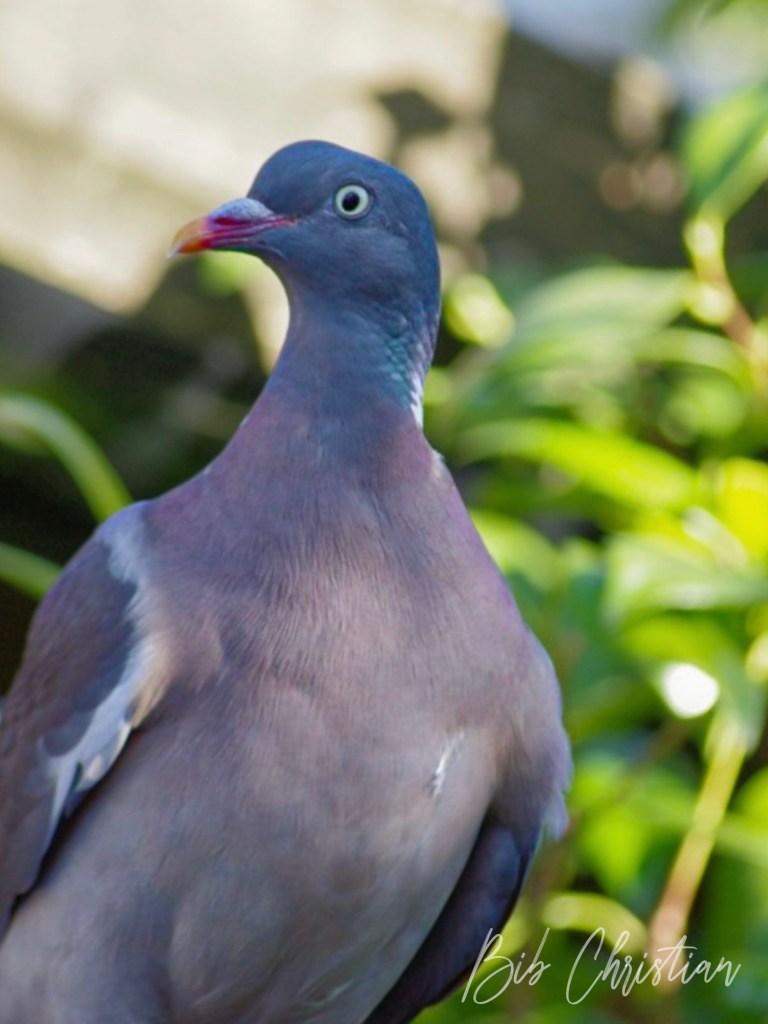
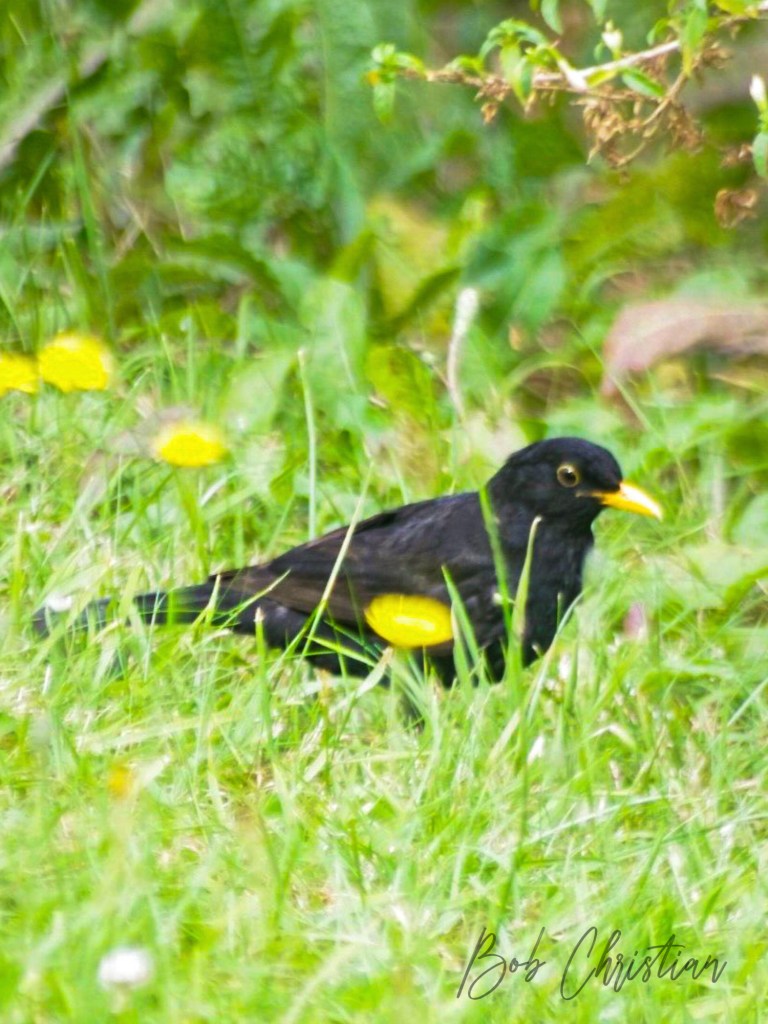
On Friday, with a rare day off, I took the opportunity to spend a little time in the garden. I soaked a handful of mealworms before scattering them across the front lawn and topping up the feeders at the bottom of the garden.
It didn’t take long for word to spread through the local bird community.
Over the weekend, I was fortunate enough to have the camera close at hand as a steady stream of familiar faces—and a few welcome surprises—called in to take advantage of the easy meal. There’s always something special about watching wild birds go about their daily lives, especially when they seem completely at ease, and it’s a privilege to capture a few of those fleeting moments through the lens.
These are just some of the visitors that brightened the garden over the weekend.
What’s a lesson you’ve learned recently that shifted your perspective?
I’ve realised recently that it’s far easier to give up on someone than it is to find a way back to them.
Walking away is easy.
Rebuilding a bridge? That’s the difficult bit.
A little while ago I had a serious falling out with a family member. They’d been rude, self-obsessed and, to make matters worse, £75 disappeared from my bank account. It would have been a lot more had the bank not stepped in. Whether they took it themselves or knowingly allowed someone else to, the trust I’d placed in them vanished overnight.
I confronted them.
They reacted.
I reacted.
Two adults behaving like stubborn children, storming off in opposite directions, both convinced we were in the right.
Now, before anyone starts polishing my halo, let me be perfectly clear.
I’m no saint.
I shouldn’t have flown off the handle. I was angry, hurt and betrayed, and those emotions rarely produce our best work. Looking back, I probably should have left it alone for a couple of weeks, let the smoke clear and the dust settle, then reached out with a simple question.
“Fancy getting the tools out and rebuilding this bridge?”
Maybe the answer would still have been no.
Maybe nothing would have changed.
But at least I’d have known I’d tried.
Life has a habit of reminding us that tomorrow isn’t guaranteed. I’ve promised people I’d see them again, only for life to have other plans. Those are the moments that stay with you, and I’d hate to repeat that mistake because pride got the final say.
Now, don’t get me wrong. Some relationships are genuinely toxic, and walking away is absolutely the right thing to do. This isn’t about putting up with abuse or pretending betrayal doesn’t hurt.
It’s about recognising that not every argument deserves a permanent ending.
Sometimes people make terrible decisions.
Sometimes we say things we wish we hadn’t.
Sometimes we’re both waiting for the other person to make the first move.
The lesson I’ve learned is that forgiveness and reconciliation aren’t signs of weakness. They’re often far harder than anger.
So if you’re in the middle of a row with someone you genuinely care about, perhaps let the dust settle before deciding the bridge needs demolishing.
Because when the emotions have cooled, it’s worth asking yourself one simple question.
In the cold light of day, is this really worth losing someone over?
A good night’s sleep is incredibly important, and I’m sure you’re already aware of many of the benefits. Quality sleep helps bolster your immune system, protects your cardiovascular health, balances the hormones that regulate hunger, and makes it easier to maintain a healthy weight. Mentally, it’s just as important. Sleep consolidates memories, clears waste products from the brain, and improves emotional resilience, helping to reduce stress and anxiety.
So, how do I improve my sleep?
Like many autistic people, I love a good routine, and in this case, I think it has definitely worked in my favour.
About ten or fifteen minutes before I want to go to sleep, I stop whatever I’m watching or doing and put on some calming meditation music. I actually have one particular track on YouTube that I’ve been using for years. Those few minutes allow me to unwind and mentally let go of the day’s frustrations, confrontations and negative thoughts before I even get into bed.
Once I’m feeling more relaxed, I’ll climb into bed and read a few pages from my latest QI Book of Facts. Reading something enjoyable—but not too stimulating—helps signal to my brain that it’s time to switch off.
When it’s finally time to sleep, I ask my smart speaker to play white noise. Personally, I find the sound of heavy rain works best for me. It helps block out background noise and creates a familiar environment that my brain now associates with sleep.
I’ve followed this routine for many years. Is it perfect? No.
I still occasionally wake up screaming or experience night terrors, but I can honestly say that sticking to this routine has reduced both the frequency and severity of those episodes by around 85%. That’s been life-changing for me.
Will this exact routine work for everyone? Probably not. But it’s certainly worth experimenting until you find something that suits you. Sleep isn’t one-size-fits-all, and sometimes the smallest changes make the biggest difference.
The other thing I’ve found incredibly beneficial—and the science backs this up—is keeping a regular sleep schedule.
Going to bed and waking up at roughly the same time every day helps regulate your body’s natural circadian rhythm. Research has shown that consistent sleep patterns can significantly reduce the risk of depression compared with irregular sleeping habits. In fact, maintaining a regular routine is often just as important as getting the recommended seven to nine hours of sleep each night.
For me, good sleep doesn’t happen by accident. It’s something I prepare for.
A simple routine, a calm mind, a good book, the sound of rain, and a consistent bedtime have all helped me sleep better than I ever used to. If you’re struggling with sleep, don’t be afraid to try different approaches until you find your own routine.
Sometimes, the best night’s sleep starts long before your head hits the pillow.
What do you love now, that you hated when you were younger?
This one is surprisingly easy to answer.
When I was younger, weekends were for going out. Loud music, crowded clubs, late nights, and the belief that if you weren’t out doing something, you were somehow missing out.
These days?
You’ll find me happily doing the exact opposite.
Give me a quiet Friday evening in the garden with Mrs Bob, listening to the birds settling down for the night instead of someone shouting over music that’s three decibels short of causing structural damage.
Give me an early night and eight hours of uninterrupted sleep over crawling into bed just as the sun is thinking about getting up.
Give me staying in over clubbing every single time.
Perhaps the biggest surprise of all is that I’ve learned to appreciate my own company. As an autistic bloke, a veteran, and now a proudly grumpy fifty-year-old hermit, I’ve finally realised that peace isn’t something you find in the middle of a crowd.
Sometimes it’s found in silence.
Sometimes it’s found with a mug of coffee, a good book, or simply watching the garden grow.
And more often than not, it’s found sitting beside Mrs Bob, neither of us saying very much, because after all these years we’ve discovered that the best conversations don’t always need words.
It’s funny how the things we once avoided become the very things we treasure.
Maybe that’s not getting old.
Maybe that’s simply learning what happiness actually looks like.
There’s a question that’s been rattling around my head lately.
The sort of question that turns up uninvited while you’re making a brew, staring out the window, or trying to switch your brain off at two in the morning.
It’s this:
If someone breaks the rules… but does it to expose injustice, protect vulnerable people, or force society to confront something ugly it would rather ignore…
Are they still wrong?
Now before anyone starts clutching pearls and screaming “criminal apologist” into the comments section — hear me out.
Because history gets very awkward when we pretend the law and morality are always the same thing.
They aren’t.
They’ve never been.
Women fighting for the right to vote broke laws. Trade unionists broke laws. People hiding persecuted families during wars broke laws. Civil rights protesters broke laws.
And at the time? Society often called them dangerous.
Funny how hindsight turns “troublemakers” into heroes once enough years pass.
Take groups like Anonymous exposing tax avoidance schemes or hacking corporations they believe are exploiting the system. Or activists protesting companies like ATOS over the treatment of disabled people during benefit assessments.
Now, I’m not saying every action taken in those movements was right. Some crossed lines. Some undoubtedly harmed innocent people. Some were driven by anger more than wisdom.
But here’s where it gets morally messy:
If institutions with power refuse to listen peacefully… what exactly are desperate people supposed to do?
Sit quietly?
Wait politely?
Fill out the correct forms while people suffer?
Because one thing life has taught me is this:
People rarely disrupt comfort unless they feel ignored.
Most people don’t wake up one morning and think, “You know what would be fun? Risking arrest.”
Usually there’s frustration behind it. Pain behind it. Sometimes desperation behind it.
And society has an interesting habit of condemning the reaction while conveniently ignoring the cause.
That doesn’t magically make illegal acts morally pure, of course.
Hurting innocent people is still wrong. Destroying lives for “the greater good” is still dangerous territory. Self-righteousness can become its own kind of tyranny if left unchecked.
But I do think there’s a difference between greed-driven crime and conscience-driven disobedience.
One asks: “What can I take?”
The other asks: “How do I force people to look?”
And perhaps that’s the uncomfortable bit.
Civil disobedience embarrasses society. It pulls hidden things into the light. It forces conversations many would rather avoid because they threaten comfort, power, or profit.
The problem is that morality isn’t tidy.
We desperately want clear villains and heroes because ambiguity makes us uneasy.
But real life lives in the grey areas.
A hacker exposing corruption may also break privacy laws. A protester blocking roads may also stop an ambulance. A whistleblower may ruin careers while revealing truths that needed exposing.
Human beings are complicated creatures carrying both good intentions and flawed execution in the same hands.
Personally?
I think intent matters. Consequences matter too.
And perhaps the real question isn’t: “Was the law broken?”
Perhaps it’s: “Why did people feel breaking it was the only way left to be heard?”
Because if enough people are willing to risk punishment just to expose suffering, corruption, or inequality…
Maybe the bigger societal failure happened long before the protest began.
Every morning before the sun stretches itself across my window, before my coffee tastes like anything but bitter, happiness hides.
She’s crouched behind the blinds, folded into the corner of yesterday’s pillow, laughing quietly at me as if I don’t know how to look for her.
I try.
I try like I know her favorite hiding spots, like I know the exact way she breathes when she’s shy, like I can coax her out with half-empty mugs and songs that smell like home.
But she moves.
Slips under the fridge, slides into the cracks of my bathroom tiles, hides in the sound of my keys clattering like she’s daring me to follow.
So I do.
I follow.
And sometimes, just sometimes, she peeks out like a shy smile from a stranger in a crowded street.
For that moment, my chest remembers what it’s like to be full, and I swear I hear the echo of her saying,
you found me again.
Then she disappears.
And I swear I’ll find her tomorrow.
Because happiness isn’t something that knocks politely.
It is a professional hide-and-seek champion, undefeated for as long as I’ve known her.
And me?
I am the kid counting with my eyes closed, hands over my face, promising the dark that I’m still playing.
What’s a piece of media (book, movie, song) that changed how you see the world?
This is a very tough choice, truth be told.
There’s obviously The Watchmen, my first ever graphic novel, which started a lifelong love affair with comic books that’s still going strong today.
Then there’s String Theory for Dummies, the book that accidentally sparked a conversation with what is now Mrs Bob.
Both of those deserve posts of their own, and I’m fairly sure I’ve rambled about them before.
But if I had to choose the one piece of media that genuinely changed the direction of my life, it would be…
Wicca: A Guide for the Solitary Practitioner by Scott Cunningham.
This book came into my life at exactly the right moment.
At the time, my life was an absolute mess. I was going through a particularly nasty breakup, carrying around a lot of anger, hurt and resentment. Looking back, I also realise I was an autistic man who hadn’t yet been diagnosed, trying to make sense of emotions I simply didn’t have the tools to process.
Then someone showed me kindness.
A witch, who had once found comfort in the very same book herself, passed it on to me.
It wasn’t a book about casting spells that changed me.
It was a book about responsibility.
About balance.
About understanding that every action has consequences.
The lesson that has stayed with me happened shortly afterwards.
My ex broke into my home, took a lot of our belongings and trashed much of what she left behind.
The old me would probably have jumped in the car, driven straight over there and made the whole situation infinitely worse.
Instead, something clicked.
For the first time, I understood that anger wouldn’t repair my home.
It wouldn’t replace what had been stolen.
It wouldn’t heal what had happened.
All it would do was make me ill, and give the people who had hurt me the satisfaction of knowing they’d got exactly the reaction they wanted.
Walking away wasn’t weakness.
It was peace.
That one lesson changed everything.
It led me to read more about Wicca, which in turn eventually led me towards Mahāyāna Buddhism. Although they’re very different paths, both encouraged me to slow down, look inward and understand that my mental and physical wellbeing are deeply interconnected.
Those philosophies helped me become a calmer person.
A happier husband.
A better father.
A better grandfather.
They’ve also influenced the way I write, the way I see people, and the compassion I try to show others.
Without that one book…
Without the kindness of the woman who first placed it into my hands…
I honestly don’t know where I’d be.
There’s every chance I’d have let my anger make decisions for me.
And when anger starts making your decisions, the ending is rarely a good one.
Sometimes the books that change your life aren’t the bestselling novels or the classics everyone studies at school.
If you could change the ending of any book, which one would it be?
Honestly, none of them.
Changing the ending sounds simple enough, but stories are a bit like dominoes. Nudge the last piece and, sooner or later, you discover you had to move all the others too.
To reach a different ending, you’d have to change the journey that led there.
Which raises two questions:
A) Would it still be the same book you’d fallen in love with?
B) Could one small change create a plot twist so drastic that the story ends early—or never happens at all?
It’s the literary version of the butterfly effect.
Change the ending, and you might just change everything that made the story worth reading in the first place.
Which languages do you speak and how did that impact your life?
If I’m being honest, I’m not exactly what you’d call a natural linguist.
At school, I struggled with French. Not in a poetic “language is difficult but rewarding” way — more in a “this is not sticking no matter how many times I look at it” way. I dropped it as soon as I was allowed to and never really felt the need to revisit it.
For a while, that was the end of the story.
But then life, as it tends to do, started involving travel.
And when you travel, you eventually realise there are two types of English tourists:
The first speaks only English, slowly and loudly, as if volume is the missing translation layer.
The second attempts a heavily overacted version of the local language, usually with an accent that makes things worse rather than better.
I’ve tried not to be either.
So over time, I started doing something much more modest: learning just enough of a language to not be completely useless when I arrive somewhere.
Norwegian, Italian, Icelandic — the usual holiday mix. Nothing fluent. Nothing impressive. Just enough phrases to order food, say thank you, and avoid looking like I’ve just landed from another planet expecting everyone to accommodate me.
What I found is that people don’t really expect perfection.
They notice effort.
In Norway, for example, I’d try a few badly assembled sentences and get the same reaction almost every time — a brief smile, a correction, and then a switch into perfect English. Sometimes better English than I could manage in my own language before coffee.
But that wasn’t really the point. The point was never fluency. It was participation. Even clumsy participation counts.
Then lockdown happened.
Like a lot of people, I started picking up random new things just to keep the brain occupied. I chose German. No grand reason at the start — it just interested me.
Then I discovered something unexpected: a German relative in the family history, a POW who later married into the family. That shifted it slightly. It stopped being just vocabulary and turned into something with a bit more weight behind it. History you can’t really ignore once you’ve seen it.
I paused for a while, then picked it back up again about two years ago.
I’m still not fluent. I’m not even close. But I can get by if I need to. I think. At least in theory.
And if I’m completely honest, that’s probably where it ends.
It hasn’t changed my life in any dramatic way. I haven’t suddenly become multilingual. I haven’t unlocked some secret version of myself who navigates Europe effortlessly chatting to locals in perfect dialects.
It’s just… there.
A skill in the background. A small advantage that may or may not ever get properly used unless I spend more time in Germany.
There is one unintended side effect, though.
Working with people from all over the world over the years has given me something far less structured than language ability — a patchwork collection of swear words and rude phrases in multiple languages. Completely unplanned. Entirely unofficial. And somehow, far more memorable than anything I’ve learned in a classroom.
So no, I don’t speak multiple languages fluently.
But I’ve learned enough to show willing, enough to get by, and enough to understand that most communication isn’t really about grammar anyway.
It’s about effort. Timing. And not shouting English at people as if it eventually becomes understandable if you increase the volume enough.
Today is Father’s Day here in the UK, and I’d like to use my little corner of the internet to give a huge shout-out to a man who is technically my stepfather.
Although, after nearly forty years of being there, I think we can safely dispense with the “step” part.
Because here’s the thing.
Anyone can create a life and become a dad.
But it takes a different kind of man to step into a child’s life and choose to stay. To take on the responsibility, the worry, the sacrifices, the school runs, the advice, the support, and all the other things that come with raising children who aren’t biologically your own.
That takes character.
It takes commitment.
And it takes love.
The older I get, the more I realise that fatherhood isn’t defined by DNA. It’s defined by presence. By consistency. By being the person who turns up, day after day, year after year, regardless of whether anyone notices or says thank you.
My stepfather did exactly that.
Not only did he help raise me, but he also became the only grandad my own children have ever known. He’s been there through the milestones, the celebrations, the challenges and the ordinary moments that, when you look back, turn out to be the ones that mattered most.
The truth is that parenting can often feel like a thankless job. You invest your time, energy and heart into other people and rarely stop to count the cost. Most of the time you simply get on with it because that’s what love does.
So today, I want to say thank you.
Thank you for sticking around.
Thank you for stepping up.
Thank you for treating me as your own.
And thank you for showing my children what a grandfather looks like.
Father’s Day should be about celebrating the men who choose to be present, whether they are fathers, stepfathers, grandfathers, foster parents or father figures. The title matters far less than the impact.
And finally, a quick nod to all the fur parents out there too. The dog walkers, the cat feeders, the sofa sharers and the treat dispensers. I see you.
Happy Father’s Day to all those who show up, stick around and make a difference.