The Right Book at the Right Time

What’s a piece of media (book, movie, song) that changed how you see the world?

This is a very tough choice, truth be told.

There’s obviously The Watchmen, my first ever graphic novel, which started a lifelong love affair with comic books that’s still going strong today.

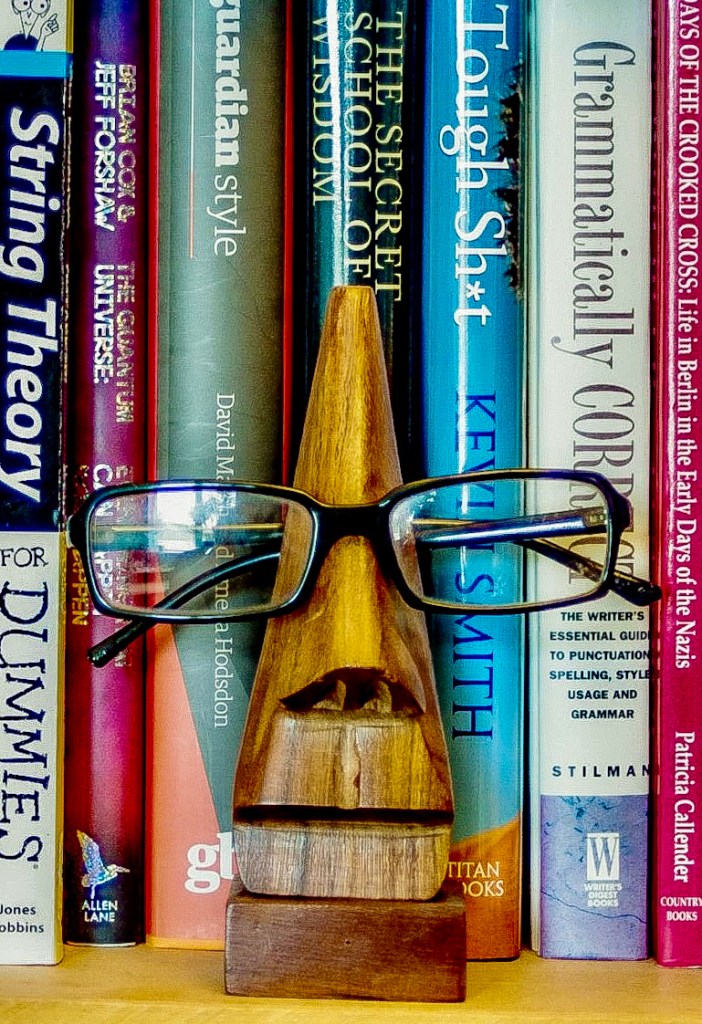
Then there’s String Theory for Dummies, the book that accidentally sparked a conversation with what is now Mrs Bob.

Both of those deserve posts of their own, and I’m fairly sure I’ve rambled about them before.

But if I had to choose the one piece of media that genuinely changed the direction of my life, it would be…

Wicca: A Guide for the Solitary Practitioner by Scott Cunningham.

This book came into my life at exactly the right moment.

At the time, my life was an absolute mess. I was going through a particularly nasty breakup, carrying around a lot of anger, hurt and resentment. Looking back, I also realise I was an autistic man who hadn’t yet been diagnosed, trying to make sense of emotions I simply didn’t have the tools to process.

Then someone showed me kindness.

A witch, who had once found comfort in the very same book herself, passed it on to me.

It wasn’t a book about casting spells that changed me.

It was a book about responsibility.

About balance.

About understanding that every action has consequences.

The lesson that has stayed with me happened shortly afterwards.

My ex broke into my home, took a lot of our belongings and trashed much of what she left behind.

The old me would probably have jumped in the car, driven straight over there and made the whole situation infinitely worse.

Instead, something clicked.

For the first time, I understood that anger wouldn’t repair my home.

It wouldn’t replace what had been stolen.

It wouldn’t heal what had happened.

All it would do was make me ill, and give the people who had hurt me the satisfaction of knowing they’d got exactly the reaction they wanted.

Walking away wasn’t weakness.

It was peace.

That one lesson changed everything.

It led me to read more about Wicca, which in turn eventually led me towards Mahāyāna Buddhism. Although they’re very different paths, both encouraged me to slow down, look inward and understand that my mental and physical wellbeing are deeply interconnected.

Those philosophies helped me become a calmer person.

A happier husband.

A better father.

A better grandfather.

They’ve also influenced the way I write, the way I see people, and the compassion I try to show others.

Without that one book…

Without the kindness of the woman who first placed it into my hands…

I honestly don’t know where I’d be.

There’s every chance I’d have let my anger make decisions for me.

And when anger starts making your decisions, the ending is rarely a good one.

Sometimes the books that change your life aren’t the bestselling novels or the classics everyone studies at school.

Sometimes they’re simply the right book…

Arriving at exactly the right time.

Stay safe,

Bc

Be Careful What You Rewrite

If you could change the ending of any book, which one would it be?


Honestly, none of them.

Changing the ending sounds simple enough, but stories are a bit like dominoes. Nudge the last piece and, sooner or later, you discover you had to move all the others too.

To reach a different ending, you’d have to change the journey that led there.

Which raises two questions:

A) Would it still be the same book you’d fallen in love with?

B) Could one small change create a plot twist so drastic that the story ends early—or never happens at all?

It’s the literary version of the butterfly effect.

Change the ending, and you might just change everything that made the story worth reading in the first place.

Stay safe,

Bc

Kein Fluent, Kein Problem

Which languages do you speak and how did that impact your life?

If I’m being honest, I’m not exactly what you’d call a natural linguist.

At school, I struggled with French. Not in a poetic “language is difficult but rewarding” way — more in a “this is not sticking no matter how many times I look at it” way. I dropped it as soon as I was allowed to and never really felt the need to revisit it.

For a while, that was the end of the story.

But then life, as it tends to do, started involving travel.

And when you travel, you eventually realise there are two types of English tourists:

The first speaks only English, slowly and loudly, as if volume is the missing translation layer.

The second attempts a heavily overacted version of the local language, usually with an accent that makes things worse rather than better.

I’ve tried not to be either.

So over time, I started doing something much more modest: learning just enough of a language to not be completely useless when I arrive somewhere.

Norwegian, Italian, Icelandic — the usual holiday mix. Nothing fluent. Nothing impressive. Just enough phrases to order food, say thank you, and avoid looking like I’ve just landed from another planet expecting everyone to accommodate me.

What I found is that people don’t really expect perfection.

They notice effort.

In Norway, for example, I’d try a few badly assembled sentences and get the same reaction almost every time — a brief smile, a correction, and then a switch into perfect English. Sometimes better English than I could manage in my own language before coffee.

But that wasn’t really the point. The point was never fluency. It was participation. Even clumsy participation counts.

Then lockdown happened.

Like a lot of people, I started picking up random new things just to keep the brain occupied. I chose German. No grand reason at the start — it just interested me.

Then I discovered something unexpected: a German relative in the family history, a POW who later married into the family. That shifted it slightly. It stopped being just vocabulary and turned into something with a bit more weight behind it. History you can’t really ignore once you’ve seen it.

I paused for a while, then picked it back up again about two years ago.

I’m still not fluent. I’m not even close. But I can get by if I need to. I think. At least in theory.

And if I’m completely honest, that’s probably where it ends.

It hasn’t changed my life in any dramatic way. I haven’t suddenly become multilingual. I haven’t unlocked some secret version of myself who navigates Europe effortlessly chatting to locals in perfect dialects.

It’s just… there.

A skill in the background. A small advantage that may or may not ever get properly used unless I spend more time in Germany.

There is one unintended side effect, though.

Working with people from all over the world over the years has given me something far less structured than language ability — a patchwork collection of swear words and rude phrases in multiple languages. Completely unplanned. Entirely unofficial. And somehow, far more memorable than anything I’ve learned in a classroom.

So no, I don’t speak multiple languages fluently.

But I’ve learned enough to show willing, enough to get by, and enough to understand that most communication isn’t really about grammar anyway.

It’s about effort. Timing. And not shouting English at people as if it eventually becomes understandable if you increase the volume enough.

Stay safe

Bc

Most Storms Pass

What’s the best advice you’d give to someone younger than you?

The older I get, the more I realise that life isn’t about avoiding mistakes.

It’s about surviving them.

When we’re young, every setback feels enormous. Every wrong decision feels permanent. Every failure feels like the end of the world.

It isn’t.

Trust me.

You will make mistakes.

Some small.

Some spectacular.

Some that will keep you awake at three in the morning replaying conversations that happened years ago.

At the time, those mistakes will feel overwhelming. You’ll be tempted to react immediately, to panic, to assume everything is ruined.

But very rarely is anything as catastrophic as it first appears.

Pause.

Take a moment.

Evaluate the situation before reacting.

Ask yourself what can be learned from it.

Because that’s really all any of us can do.

Learn.

Adapt.

Move forward.

The same applies to relationships.

At some point, someone will break your heart.

At another point, if you’re honest with yourself, you may end up breaking someone else’s.

Neither experience is pleasant.

Both hurt.

And in those moments it can genuinely feel as though the world has ended.

It hasn’t.

The sun still rises.

Life keeps moving.

And eventually, so will you.

What feels unbearable today often becomes the lesson you’re grateful for tomorrow.

That doesn’t mean the pain isn’t real.

It is.

But pain has a strange habit of becoming wisdom if we allow ourselves to learn from it.

Looking back, many of the experiences I once wished had never happened turned out to be the very things that helped shape me into who I am today.

The failures taught resilience.

The heartbreak taught empathy.

The mistakes taught humility.

None of it was wasted.

So if I could offer one piece of advice, it would simply be this:

Don’t sweat the little stuff.

Life is going to throw enough challenges your way without you carrying the weight of every minor inconvenience as well.

Most things work themselves out.

Most storms pass.

Most worries never become reality.

As a Buddhist mantra reminds us:

Dhairyaṁ, kṣaṇa kṣaṇa, siddhiḥ.

Patience, moment by moment, brings accomplishment.

Sometimes growth doesn’t happen in giant leaps.

Sometimes it happens one difficult day at a time.

One lesson at a time.

One breath at a time.

Keep going.

You’ll get there.

Stay safe,

Bc

The Skill Nobody Realises They Have

If you could instantly master any skill, what would it be and why?

This is one of those questions that sounds simple until you really stop and think about it.

Most people would probably choose something impressive. Speaking every language on Earth. Playing the piano like a virtuoso. Flying a plane. You know, the sort of things that make people say, “Wow.”

Me?

I’d choose something that most people seem to arrive in the world already knowing how to do.

I’d instantly master social interaction.

Not public speaking. Not networking. Just the everyday ability to effortlessly understand social cues, body language, facial expressions, hidden meanings, and all those unwritten rules that neurotypical people seem to absorb without ever being given the instruction manual.

For many autistic people, myself included, social interaction can feel a bit like being handed a board game halfway through and discovering everyone else knows the rules except you. You spend years trying to work out why people say one thing but mean another, why “fine” rarely means fine, and why apparently there are seventeen different meanings to the phrase “we should catch up sometime.”

I’ve spent much of my life trying to crack that code. Sometimes successfully. Sometimes with all the grace and elegance of a Labrador trying to ice skate.

It would be nice to simply know.

To walk into a room and immediately understand the atmosphere. To spot when somebody wants a conversation to end. To recognise when somebody needs support without them having to spell it out in words the size of house bricks.

That would be a superpower worth having.

Although…

There is another skill that runs it very close.

Cooking.

More specifically, being able to cook and bake to the same standard as Mrs Bob.

Now before anyone starts, this isn’t about competition. I’ve seen Mrs Bob in action in the kitchen. Challenging her would be like turning up at Wimbledon because you’ve recently bought a tennis racket.

No, I’d simply like to be able to help more.

As we get older, it would be nice to occasionally wander into the kitchen and confidently announce, “I’ve got this, love.”

Not before producing something that either came from a freezer drawer or required pressing a button marked Start.

A proper meal.

The sort of meal where the smoke alarm remains completely uninvolved.

Or perhaps a birthday cake.

Not one that leans suspiciously to one side and looks as though it’s survived a natural disaster, but a genuinely lovely homemade cake. Something made entirely by me to show just how much I love and appreciate everything she does.

Because the truth is, social skills might make life easier.

But being able to put a smile on Mrs Bob’s face with something I’ve made myself?

That’s a pretty tempting choice too.

Stay safe,

BC

Father’s Day Isn’t About Biology, It’s About Showing Up

Today is Father’s Day here in the UK, and I’d like to use my little corner of the internet to give a huge shout-out to a man who is technically my stepfather.

Although, after nearly forty years of being there, I think we can safely dispense with the “step” part.

Because here’s the thing.

Anyone can create a life and become a dad.

But it takes a different kind of man to step into a child’s life and choose to stay. To take on the responsibility, the worry, the sacrifices, the school runs, the advice, the support, and all the other things that come with raising children who aren’t biologically your own.

That takes character.

It takes commitment.

And it takes love.

The older I get, the more I realise that fatherhood isn’t defined by DNA. It’s defined by presence. By consistency. By being the person who turns up, day after day, year after year, regardless of whether anyone notices or says thank you.

My stepfather did exactly that.

Not only did he help raise me, but he also became the only grandad my own children have ever known. He’s been there through the milestones, the celebrations, the challenges and the ordinary moments that, when you look back, turn out to be the ones that mattered most.

The truth is that parenting can often feel like a thankless job. You invest your time, energy and heart into other people and rarely stop to count the cost. Most of the time you simply get on with it because that’s what love does.

So today, I want to say thank you.

Thank you for sticking around.

Thank you for stepping up.

Thank you for treating me as your own.

And thank you for showing my children what a grandfather looks like.

Father’s Day should be about celebrating the men who choose to be present, whether they are fathers, stepfathers, grandfathers, foster parents or father figures. The title matters far less than the impact.

And finally, a quick nod to all the fur parents out there too. The dog walkers, the cat feeders, the sofa sharers and the treat dispensers. I see you.

Happy Father’s Day to all those who show up, stick around and make a difference.

Stay safe

Bc

Old Sci-Fi, New Memories

What’s a book, movie, or TV show that you wish you could experience again for the first time?


That’s actually an easy one for me because it’s both a book and a TV show, so it’s two birds with one stone.

Without a doubt, it would be The Red Dwarf Omnibus, which contains the novels Infinity Welcomes Careful Drivers and Better Than Life.

These were fantastic books and, of course, they led to one of my all-time favourite TV series, Red Dwarf. If you’ve somehow never come across it, it’s the story of Dave Lister, the last human alive, travelling through space with a hologram, a creature that evolved from a cat, and a rather sarcastic computer. It sounds ridiculous when you describe it like that, but it worked brilliantly.

The books expanded on the universe in ways the TV show couldn’t and gave much more background to the characters. I remember being completely absorbed by them and wishing there was more when I’d finished.

The TV series itself brings back some great memories too.

When new episodes were being broadcast, I’d often head over to a friend’s house in the village on a Friday evening. We’d spend a few hours listening to music, chatting about whatever was important to teenagers at the time, and generally hanging out before settling down to watch the latest episode of Red Dwarf on the BBC. Afterwards I’d jump on my bike and cycle home, usually replaying the best bits of the episode in my head all the way back.

Those were good times.

As an interesting side note, many years later I actually got the chance to meet and interview two members of the Red Dwarf cast at a local Comic-Con event. It’s always nice when people connected with something you enjoyed growing up turn out to be as friendly and entertaining in person as you’d hoped.

Myself with Kryten (Robert Llewelyn)

Talking about revisiting old favourites, I did actually manage something similar recently.

When I was younger, I vaguely remembered a science-fiction series that I absolutely loved, but over the years the details became increasingly hazy. Partly that’s just age catching up with me, but a traumatic brain injury when I was 30 certainly didn’t help matters.

The series was called The Invaders and followed architect David Vincent, who accidentally discovers that aliens have infiltrated Earth and are quietly trying to take over the planet.

For a late-1960s television series, I remembered the effects being fantastic. The aliens looked completely human but had no heartbeat, didn’t bleed, and when killed would glow bright red before disappearing into nothingness. Conveniently for them, that made proving their existence rather difficult.

As luck would have it, Mrs Bob bought me the complete box set.

Invaders box set

I’ve recently finished watching the first series and have thoroughly enjoyed it. Yes, some of the action scenes are very much of their time. A quick judo chop to the neck sends the bad guy unconscious, much like classic Star Trek, and some of the fight choreography won’t trouble modern stunt coordinators. But that’s part of the charm.

What’s been fascinating is that I have virtually no memory of seeing it the first time around, so in many ways I really have been able to experience it almost as if it were new again.

And that’s probably why I’d choose Red Dwarf if I could wipe one story from my memory and enjoy it all over again for the first time.

Although having said that, rediscovering The Invaders has come pretty close.

Stay safe 

Bc

The Little Things Are the Big Things

What’s a common misconception people have about happiness?

One of the biggest misconceptions people have about happiness is that it arrives with success.

That somehow happiness is parked in the driveway beside the flashy car, hidden behind the front door of the big house, or tucked away in a bank balance that resembles the GDP of a small country.

The truth?

Most of the happiest moments in my life have cost absolutely nothing.

They’ve been the quiet evenings sat on the sofa until 2am with Mrs Bob, not doing anything particularly exciting, just enjoying each other’s company. They’ve been impromptu dances on the beach on a Sunday morning. They’ve been sunny afternoons sat in the shed with Tiddles, listening to the world go by.

No fireworks.

No fanfare.

Just moments.

The trouble is that we spend so much time chasing the next big thing that we forget to appreciate the small things already sitting right in front of us.

Happiness isn’t a destination. It isn’t something waiting for us once we’ve earned enough money, bought enough possessions, or impressed enough strangers.

It’s a state of mind.

A choice to notice the warmth of a cup of coffee, the laughter of someone you love, the comfort of a familiar companion, or the peace of a quiet afternoon.

Life is made up of little moments.

The secret is realising they were the important ones all along.

Stay safe,

Bc

Becoming the Photographer I Pretended to Be

What is one way you have grown this year?

If you’d asked me at the start of the year what I was, I’d probably have answered, “A poet cosplaying as a photographer.”

Photography has always been something I loved, but if I’m honest, I never really took myself seriously. I was happy enough wandering around with a camera, taking pictures of birds, nature, and whatever happened to catch my eye, while quietly convincing myself that “real photographers” were other people.

This year, I decided to change that.

Rather than treating photography as a hobby I occasionally dabbled in, I made a conscious decision to push myself outside of my comfort zone and see what would happen if I actually gave it a proper go.

As it turns out, sometimes the universe rewards you for taking a chance.

Earlier this year, I was offered a place on the photography team at a local event. It might not seem like a huge thing to some people, but for me it was a turning point. It was the moment I realised that perhaps I wasn’t just pretending after all.

Don’t get me wrong, imposter syndrome still likes to whisper in my ear from time to time. It tells me I’m not good enough, that I’m making it up as I go along, and that sooner or later someone will realise I haven’t got a clue what I’m doing.

The difference now is that I no longer believe it.

I’ve learned that growth isn’t about becoming fearless. It’s about taking the next step despite the fear. It’s about backing yourself, taking opportunities when they appear, and accepting that occasionally you’ll stumble along the way.

And if I do fall?

I’ll pick myself up, dust myself off, and try again.

So the biggest way I’ve grown this year is simple.

I’ve finally become the poet and photographer my business cards have been insisting I was all along.

Stay safe,

Bc

To My Younger Self

What is something you wish you could tell your 20-year-old self?

If I could tell my 20-year-old self one thing, it would be this: keep going. Life feels confusing, overwhelming, and at times completely impossible right now, but things do get better.

 The struggles you’re facing aren’t because you’re broken, weak, or failing. The truth is, it’s not schizophrenia or bipolar disorder at all — it’s autism, and understanding that will eventually make so much of your life make sense. 

So stick at it. One day you’ll look back and realise you survived far more than you ever thought you could.

Stay safe,

BC