If 1984 Had a Sequel, We’d Already Be Living in It

What’s a book you think deserves a sequel?

1984.

Not because George Orwell got it wrong.

Quite the opposite.

He got so much right that it’s almost unsettling to read today.

The genius of 1984 wasn’t really Big Brother. It wasn’t Room 101, the Thought Police, or even Winston Smith.

It was Orwell’s understanding that power doesn’t just control people.

It controls reality.

Back then, that meant burning books, rewriting newspapers, and dropping inconvenient facts into the Memory Hole.

Today?

I’m not convinced anyone would even bother.

Why erase history when you can simply personalise it?

Imagine an Orwell sequel set in the present day.

Every citizen has a different version of yesterday.

Not because the government rewrote it overnight, but because an algorithm quietly decided which version would keep you engaged.

Your neighbour remembers an event differently because their feed told a different story.

Your parents saw another version.

Your children never saw it at all.

History wouldn’t disappear.

It would fragment.

Truth would become localised.

Debatable.

Optional.

And that’s far more dangerous than censorship.

Because it’s difficult to fight lies when everyone is convinced they’re looking at the facts.

Big Brother would have changed too.

In Orwell’s world, oppression wore a face.

There were posters.

Slogans.

A dictator watching from every wall.

Today’s version wouldn’t need any of that.

Big Brother wouldn’t be a man.

It wouldn’t even be a government.

It would be a seamless partnership between corporations, artificial intelligence and state interests, quietly learning everything about us while insisting it’s all for our convenience.

No boots stamping on faces.

Just terms and conditions we never read.

No compulsory telescreens bolted to our walls.

We’d happily carry them ourselves.

We already do.

Tiny glowing rectangles that know where we are, what we’ve bought, who we talk to, how fast our heart beats, what keeps us awake at three in the morning, and which adverts are most likely to make us click “Buy Now.”

And we’d queue overnight to upgrade them.

The Thought Police wouldn’t arrest you for thinking the wrong thing.

They’d predict what you were likely to think before you knew yourself.

They’d know when you were lonely.

When you were angry.

When you were vulnerable.

Not to protect you.

To market to you.

To influence you.

To gently nudge your decisions until they felt like your own.

The cleverest form of control has never been force.

It’s persuasion disguised as freedom.

That’s what makes Orwell’s world feel less like fiction every year.

The scary part isn’t that 1984 might need a sequel.

It’s that, if Orwell were alive today, he might simply rename it…

2026.

Stay safe,

Bc

When the “Villain” Isn’t Entirely Wrong

What villain actually had a good point?

Heroes and villains are supposed to make life easy for us. One wears the cape, the other wears the black outfit, and we all know who we’re meant to cheer for.

Except…it’s rarely that simple.

The best villains aren’t evil because they wake up one morning and decide to destroy the world. They’re compelling because their motivations make uncomfortable amounts of sense. It’s often their methods—not their message—that push them onto the wrong side of history.

Magneto: The Extremist With a Legitimate Cause

If you’ve watched the X-Men films or read the comics, you’ll know Magneto is presented as the mutant world’s greatest threat. He’s powerful, uncompromising, and more than willing to use violence to achieve his goals.

But take a closer look at why he fights.

Magneto’s entire worldview is shaped by persecution. As a Jewish child who survived the horrors of Nazi Germany, he witnessed first-hand what happens when society decides a particular group of people is dangerous, inferior, or simply doesn’t deserve to exist. By the time mutants begin facing fear, discrimination and calls for registration, he doesn’t see a new problem—he sees history repeating itself.

Can you really blame him for refusing to trust humanity?

His ultimate objective isn’t world domination for the sake of ego. It’s protecting mutants from oppression, abuse and, ultimately, genocide. That’s a cause most of us would struggle to argue against.

Where Magneto loses us is in his willingness to cross every moral line imaginable to achieve that goal. To him, violence isn’t the last resort—it’s often the first. Innocent people become acceptable collateral damage, and anyone standing in his way becomes the enemy.

That’s the tragedy of Magneto.

He’s not wrong about the danger.

He’s wrong about the solution.

In many ways, he’s less a supervillain and more an extremist activist whose fear and trauma have convinced him that peaceful coexistence is impossible.

Dexter Morgan Deserves an Honourable Mention

While technically more anti-hero than outright villain, Dexter Morgan is another character who forces you into an awkward moral conversation.

Yes, he’s a psychopath.

Yes, he has an overwhelming urge to kill.

And yes…he actually follows through.

But instead of targeting innocent people, Dexter channels those impulses towards murderers who have escaped justice and show no remorse for what they’ve done.

That doesn’t suddenly make vigilantism morally acceptable. Society can’t function if everyone decides they’re judge, jury and executioner.

But it’s difficult not to understand the appeal when the legal system fails and genuinely dangerous people continue hurting others.

It’s this strange moral code that stops Dexter feeling like a traditional villain. You don’t necessarily approve of what he does—but you understand why he does it.

And that’s what makes him fascinating.

The Best Villains Hold Up a Mirror

The most memorable antagonists aren’t the ones who want to destroy everything simply because they’re evil.

They’re the ones who expose uncomfortable truths.

Magneto forces us to confront prejudice, discrimination and the consequences of repeating history. Dexter raises questions about justice, punishment and whether the law always protects the innocent.

You shouldn’t agree with everything they do.

But if you find yourself nodding along to parts of their argument…that’s probably exactly why they’re such brilliantly written characters.

Because the most dangerous villains aren’t the ones with the worst ideas.

They’re the ones with the best ideas taken far too far.

Stay safe 

Bc

If I Could Live Anywhere… Don’t Expect a Beach!

If you could live anywhere in the world, where would it be?

For anyone who knows me, you’ll know I come alive when the temperature drops. Give me crisp air, snow-covered landscapes and somewhere I need a proper coat, and I’m a happy man. You can keep the tropical beaches—I start looking for somewhere cooler.

So if I had to choose somewhere to live, it would come down to two places: Norway or Iceland.

Norway will always have a special place in my heart because it was the first adventure Mrs Bob and I took together.

Norway where it all began

It wasn’t just any holiday either.

We found ourselves sailing through the Norwegian Sea during a total solar eclipse. Watching totality from the deck of a ship is one of those moments that reminds you just how spectacular our universe really is. It’s impossible to describe unless you’ve experienced it.

As incredible as that was, it still wasn’t the highlight.

Later, inside the Arctic Circle, we sat for hours simply watching the Northern Lights dance across the sky. No phones. No distractions. Just nature putting on one of the greatest shows on Earth.

Those are the memories that stay with you forever.

An added bonus? Mrs Bob can almost speak the lingo, which would certainly make settling in a lot easier than relying on my Yorkshire charm and enthusiastic hand gestures.

Then there’s Iceland.

Every time I read something new about the country, I find another reason to admire it.

For starters, they’ve mastered something most countries are still trying to figure out: making use of the natural resources they already have.

Geothermal water is pumped directly into homes, providing heating in one of the coldest climates on Earth. Even better, many pavements and sidewalks are heated too, meaning winter doesn’t automatically equal icy paths and broken hips.

Now that’s using common sense.

But what really stands out isn’t the technology.

It’s the attitude.

Following the financial crash in 2008, Iceland took a very different approach from many other countries. Rather than simply rescuing the financial system and moving on, several senior banking figures faced criminal investigations and prosecutions. Whether you agree with every decision or not, it showed a willingness to ask difficult questions about accountability instead of pretending nothing had happened.

Then there’s one of my favourite stories.

In the northern town of Akureyri, after the financial crisis had hit morale, the council fitted heart-shaped filters over the red traffic lights. Instead of glowing red circles, drivers were greeted by glowing red hearts.

It sounds like such a small gesture.

But sometimes small gestures matter the most.

The hearts were there to remind people what was really important and, hopefully, give someone a reason to smile during difficult times.

I love that.

So… Which One?

If you forced me to pick today, I’d probably still struggle.

Norway gave Mrs Bob and me memories we’ll never forget.

Iceland continually impresses me with its ingenuity, resilience and ability to think differently.

Maybe that’s why the answer isn’t really about the country.

It’s about how a place makes you feel.

Somewhere peaceful.

Somewhere beautiful.

Somewhere cold.

That sounds just about perfect to me.

What about you?

Stay safe 

Bc

Northern Lights

The Value of a Little Chaos

Is a little chaos actually good for us?

If you’d asked me this question twenty years ago, I’d probably have said no.

Chaos was something to be avoided. Something that interrupted plans, made life difficult, and generally arrived at exactly the wrong moment. Like seagulls at a picnic or printers five minutes before a deadline.

These days?

I think chaos gets a bit of an unfair reputation.

Don’t get me wrong—I wouldn’t recommend living in constant turmoil. None of us thrive under endless stress. We all need moments of calm, stability and routine. They allow us to recover, reflect and simply breathe.

But the opposite is equally true.

Too much order can become its own prison.

Nature understands this far better than we do. Every ecosystem exists because opposing forces work together. Growth and decay. Creation and destruction. Day and night. Even at the smallest level, the universe is a constant dance between order and randomness.

Without variation, nothing evolves.

Without disruption, nothing adapts.

Without a little chaos… life becomes remarkably stagnant.

As artists, I think we understand this instinctively.

The perfect photograph rarely happens because everything went exactly to plan. Sometimes it’s the unexpected shaft of light breaking through the clouds. The bird that lands exactly where you weren’t expecting it. The rain that forces you to see a familiar landscape from a completely different perspective.

Poetry works much the same way.

Some of my favourite lines have arrived uninvited, usually while my brain has wandered off somewhere else entirely. They weren’t carefully engineered. They simply appeared, carrying truths I hadn’t consciously realised I was thinking about.

Chaos has a habit of introducing ideas that routine never would.

Science even backs this up.

Complex systems often need a degree of randomness to remain healthy. Too much order leads to rigidity. Too much chaos leads to collapse. Somewhere in the middle lies resilience—the ability to bend without breaking.

Perhaps we’re not so different.

We need structure to keep us grounded.

We need unpredictability to keep us growing.

The trick isn’t eliminating chaos.

It’s learning not to fear it.

Some of the biggest changes in my own life arrived disguised as disruption. At the time they felt uncomfortable, even frightening. Looking back, many of them became turning points that led me somewhere better than I’d originally planned.

Life has an odd sense of humour like that.

It rarely asks permission before teaching us something important.

So yes, I think a little chaos is good for us.

Not because it’s pleasant.

Not because it’s easy.

But because it reminds us that we’re still capable of adapting, creating and discovering new versions of ourselves.

After all, if every painting were perfectly symmetrical, every poem followed exactly the same rhythm, and every photograph captured the obvious angle…

Art would become predictable.

And life would be rather dull.

Sometimes it’s the beautifully untidy bits that make the whole picture worth looking at.

Stay safe,

Bc

The Mealworm Café Was Open

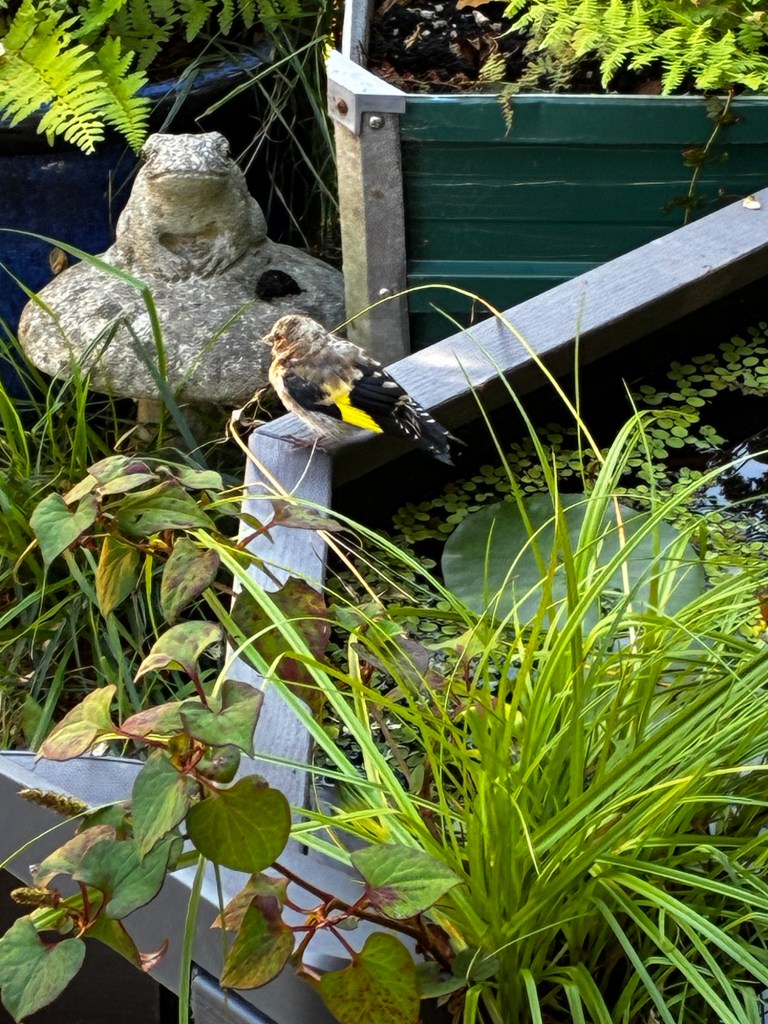
On Friday, with a rare day off, I took the opportunity to spend a little time in the garden. I soaked a handful of mealworms before scattering them across the front lawn and topping up the feeders at the bottom of the garden.

It didn’t take long for word to spread through the local bird community.

Over the weekend, I was fortunate enough to have the camera close at hand as a steady stream of familiar faces—and a few welcome surprises—called in to take advantage of the easy meal. There’s always something special about watching wild birds go about their daily lives, especially when they seem completely at ease, and it’s a privilege to capture a few of those fleeting moments through the lens.

These are just some of the visitors that brightened the garden over the weekend.

Stay Safe

BC

One of our pigeons
Blackbird

Sometimes Turning Around is the Hardest Thing.

What’s a lesson you’ve learned recently that shifted your perspective?

I’ve realised recently that it’s far easier to give up on someone than it is to find a way back to them.

Walking away is easy.

Rebuilding a bridge? That’s the difficult bit.

A little while ago I had a serious falling out with a family member. They’d been rude, self-obsessed and, to make matters worse, £75 disappeared from my bank account. It would have been a lot more had the bank not stepped in. Whether they took it themselves or knowingly allowed someone else to, the trust I’d placed in them vanished overnight.

I confronted them.

They reacted.

I reacted.

Two adults behaving like stubborn children, storming off in opposite directions, both convinced we were in the right.

Now, before anyone starts polishing my halo, let me be perfectly clear.

I’m no saint.

I shouldn’t have flown off the handle. I was angry, hurt and betrayed, and those emotions rarely produce our best work. Looking back, I probably should have left it alone for a couple of weeks, let the smoke clear and the dust settle, then reached out with a simple question.

“Fancy getting the tools out and rebuilding this bridge?”

Maybe the answer would still have been no.

Maybe nothing would have changed.

But at least I’d have known I’d tried.

Life has a habit of reminding us that tomorrow isn’t guaranteed. I’ve promised people I’d see them again, only for life to have other plans. Those are the moments that stay with you, and I’d hate to repeat that mistake because pride got the final say.

Now, don’t get me wrong. Some relationships are genuinely toxic, and walking away is absolutely the right thing to do. This isn’t about putting up with abuse or pretending betrayal doesn’t hurt.

It’s about recognising that not every argument deserves a permanent ending.

Sometimes people make terrible decisions.

Sometimes we say things we wish we hadn’t.

Sometimes we’re both waiting for the other person to make the first move.

The lesson I’ve learned is that forgiveness and reconciliation aren’t signs of weakness. They’re often far harder than anger.

So if you’re in the middle of a row with someone you genuinely care about, perhaps let the dust settle before deciding the bridge needs demolishing.

Because when the emotions have cooled, it’s worth asking yourself one simple question.

In the cold light of day, is this really worth losing someone over?

Sometimes the answer will be yes.

But more often than we’d probably like to admit…

It’s no.

Stay safe,

Bc

A Good Night’s Sleep Doesn’t Happen by Accident

What do you do to improve your sleep?

A good night’s sleep is incredibly important, and I’m sure you’re already aware of many of the benefits. Quality sleep helps bolster your immune system, protects your cardiovascular health, balances the hormones that regulate hunger, and makes it easier to maintain a healthy weight. Mentally, it’s just as important. Sleep consolidates memories, clears waste products from the brain, and improves emotional resilience, helping to reduce stress and anxiety.

So, how do I improve my sleep?

Like many autistic people, I love a good routine, and in this case, I think it has definitely worked in my favour.

About ten or fifteen minutes before I want to go to sleep, I stop whatever I’m watching or doing and put on some calming meditation music. I actually have one particular track on YouTube that I’ve been using for years. Those few minutes allow me to unwind and mentally let go of the day’s frustrations, confrontations and negative thoughts before I even get into bed.

Once I’m feeling more relaxed, I’ll climb into bed and read a few pages from my latest QI Book of Facts. Reading something enjoyable—but not too stimulating—helps signal to my brain that it’s time to switch off.

When it’s finally time to sleep, I ask my smart speaker to play white noise. Personally, I find the sound of heavy rain works best for me. It helps block out background noise and creates a familiar environment that my brain now associates with sleep.

I’ve followed this routine for many years. Is it perfect? No.

I still occasionally wake up screaming or experience night terrors, but I can honestly say that sticking to this routine has reduced both the frequency and severity of those episodes by around 85%. That’s been life-changing for me.

Will this exact routine work for everyone? Probably not. But it’s certainly worth experimenting until you find something that suits you. Sleep isn’t one-size-fits-all, and sometimes the smallest changes make the biggest difference.

The other thing I’ve found incredibly beneficial—and the science backs this up—is keeping a regular sleep schedule.

Going to bed and waking up at roughly the same time every day helps regulate your body’s natural circadian rhythm. Research has shown that consistent sleep patterns can significantly reduce the risk of depression compared with irregular sleeping habits. In fact, maintaining a regular routine is often just as important as getting the recommended seven to nine hours of sleep each night.

For me, good sleep doesn’t happen by accident. It’s something I prepare for.

A simple routine, a calm mind, a good book, the sound of rain, and a consistent bedtime have all helped me sleep better than I ever used to. If you’re struggling with sleep, don’t be afraid to try different approaches until you find your own routine.

Sometimes, the best night’s sleep starts long before your head hits the pillow.

Stay safe

Bc

The Tenant in My Chest Doesn’t Believe in Moving Out

What’s the best way to deal with negative thoughts?

If depression were a person—
I think I’d meet them at dawn.

Not noon,
not when the world is loud with pretending,

but dawn—
when the sky is still deciding
whether it wants to be light.

We’d sit somewhere quiet.
Somewhere the shadows
are still stretching their long black limbs
across the pavement.

And I’d ask—

Coffee?

Black.
Bitter.
The kind that tastes
like the inside of my chest.

And maybe we wouldn’t talk.

Maybe we’d just sit there
with silence
heavy enough
to fold over us like wet laundry.

Because some silences
don’t sit politely between people—

some silences
press down
like a lead blanket
you didn’t ask for
but can’t kick off.

And eventually
I’d look them in the eyes and say—

Why?

Why do you stay so long?

Why do you set up camp
in the corners of my mind
like you’ve signed a lease
with my worst thoughts?

Because you laugh in places
that used to echo with music.

You sit in rooms
that used to be full of friends.

You whisper things like:

You’re not enough.
You’re not enough.
You’re not enough.

And sometimes
I try to fight you.

My fists clench like punctuation marks.
I swing at the air
like anger might connect with something solid.

Every punch saying:

Leave.
Leave.
Leave.

But depression
is the kind of opponent
that doesn’t bruise.

It just waits.

Cold fingers wrapped around the ribs
like it’s checking
to make sure my lungs
remember how to struggle.

And sometimes
I don’t fight.

Sometimes I hide.

Under blankets.
Under excuses.
Under the quiet lie of

“I’m just tired today.”

The world outside becomes muffled—
like life is happening
through three closed doors
and a wall of water.

But the worst part?

You never leave.

You’re not a visitor.
You’re a roommate
who never pays rent.

Sometimes I run.

God, I run.

Feet pounding pavement
like I can outrun the gravity in my chest.

I chase small joys
like they’re fireflies—

laughter with friends
the color of sunrise
the sudden miracle
of feeling okay
for three whole minutes.

But you—

you are always
one breath
behind me.

Breathing doubt
into the rhythm of my pulse.

So I wonder…

What if instead
of fighting
or hiding
or running—

What if I invited you in?

Sat you down.

Poured you tea.

Listened.

Maybe you’d tell me
about all the broken places
you were born from.

Maybe I’d understand
how you twist my memories
into evidence—
how every mistake
becomes another stone
in the pockets of my chest.

And maybe
in that strange understanding
we’d become something like dancers—

two tired souls
moving in a slow, aching waltz
trying not to step
on each other’s pain.

But listen—

If depression were a person
standing in front of me
right now—

I wouldn’t destroy them.

I wouldn’t run.

I’d look them in the eye
and say:

I know you’re hurting too.

But you don’t get
to be my whole story.

And maybe—
just maybe—

we’d call a truce.

A fragile one.

The kind where light
slips through the cracks
in the walls you built.

The kind where hope
doesn’t roar—

it flickers.

Small.

Stubborn.

Like a candle
that refuses
to go out.

(c)BobChristian

Funny How Life Changes You

What do you love now, that you hated when you were younger?

This one is surprisingly easy to answer.

When I was younger, weekends were for going out. Loud music, crowded clubs, late nights, and the belief that if you weren’t out doing something, you were somehow missing out.

These days?

You’ll find me happily doing the exact opposite.

Give me a quiet Friday evening in the garden with Mrs Bob, listening to the birds settling down for the night instead of someone shouting over music that’s three decibels short of causing structural damage.

Give me an early night and eight hours of uninterrupted sleep over crawling into bed just as the sun is thinking about getting up.

Give me staying in over clubbing every single time.

Perhaps the biggest surprise of all is that I’ve learned to appreciate my own company. As an autistic bloke, a veteran, and now a proudly grumpy fifty-year-old hermit, I’ve finally realised that peace isn’t something you find in the middle of a crowd.

Sometimes it’s found in silence.

Sometimes it’s found with a mug of coffee, a good book, or simply watching the garden grow.

And more often than not, it’s found sitting beside Mrs Bob, neither of us saying very much, because after all these years we’ve discovered that the best conversations don’t always need words.

It’s funny how the things we once avoided become the very things we treasure.

Maybe that’s not getting old.

Maybe that’s simply learning what happiness actually looks like.

Stay safe,

Bc

When Your Gut Knows Before Your Head Does

What’s a time you followed your gut and it turned out to be exactly right?

People often say you should trust your instincts, but if we’re honest, that’s much easier said than done.

Logic has a habit of barging into the conversation, armed with spreadsheets, pros and cons, and a long list of reasons why doing something completely mad is… well… completely mad.

Fourteen years ago, I found myself standing at one of those crossroads.

I’d met Mrs Bob and, after we’d been talking for a while, the conversation turned to something that, on paper, seemed utterly bonkers. I would sell up, leave my engineering career at Rolls-Royce Aerospace, and move 250 miles away to the beautifully strange little town of Totnes.

Think about that for a moment.

A secure job.
Family close by.
Friends I’d known for years.
A familiar life.

And I’d be giving it all up for a woman I’d only recently met.

If I’d listened purely to my head, I’d probably still be sat there making lists of reasons why it couldn’t possibly work.

But there was something else.

A quiet feeling deep down that simply said, this matters.

Not because it made logical sense.

Not because there were guarantees.

Just because it felt like the beginning of something incredibly special.

So I took the leap.

Looking back now, fourteen years later, I can honestly say my gut got it absolutely right.

Totnes has become home. I’ve become part of the local community, met some wonderful people, discovered opportunities I could never have imagined, and built a life with Mrs Bob that has been richer than I ever expected.

Of course, following your instincts doesn’t always mean everything is easy. There have been challenges, unexpected turns and moments where we’ve wondered what comes next. That’s just life.

But I’ve never once looked back and wished I’d stayed where I was, simply because it felt safer.

Sometimes your gut isn’t asking you to ignore common sense. It’s asking you to recognise something your heart has spotted long before your brain catches up.

Not every leap works out.

But every now and then, your instincts quietly whisper the truth before the evidence arrives.

Mine certainly did.

And for that, I’ll always be grateful.

Stay safe,

BC