If you could start a new business right now, what would it be?
If I’m being completely honest, the obvious answer would probably be photography.
I love photography.
It’s gone from being something I did with my phone, wandering around taking pictures of anything that caught my eye, to something I genuinely want to get better at.
Nature.
Birds.
Beaches.
People.
Events.
The occasional photograph that makes me stop and think, bloody hell, I actually took that.
I’ve even started doing photography work at events, and there’s something rather lovely about being able to turn something you enjoy into something people are willing to pay you for.
So yes.
If I was being sensible…
A photography business.
Easy.
Except…
I think I’d love to own a comic book shop.
Yep.
A comic book shop.
Because apparently being a bloke in his fifties who already has far too many hobbies, books and bits of geekery apparently isn’t enough.
I need premises.
And stock.
And shelves.
Lots and lots of shelves.
I’ve loved comics and graphic novels for years.
I’ve rambled before about how Watchmen was my first graphic novel and how that started a lifelong love affair with comic books.
And the more I think about it, the more I realise that owning a comic shop wouldn’t really be about selling comics.
Not entirely.
It would be about creating somewhere people actually want to go.
A proper little geeky Aladdin’s cave.
Comics.
Graphic novels.
Maybe some collectables.
Games.
A few bits of nostalgia.
Somewhere you could walk in looking for the latest issue of something and end up having a forty-minute conversation about Batman.
Or Transformers.
Or why the original Teenage Mutant Ninja Turtles were considerably better than they had any right to be.
Somewhere you could discover comics for the first time.
Somewhere adults could rediscover the things they loved when they were younger.
And somewhere people could simply geek out without having to explain themselves.
I think I’d like that.
There’s something quite appealing about having a little shop that feels like your place.
Not some huge corporate business.
Just a little independent shop, run by a bloke who probably knows far too much about fictional characters and not nearly enough about accounting.
So maybe photography is the sensible answer.
It’s something I’m passionate about.
Something I’m already doing.
Something I’m increasingly taking seriously.
But the comic shop?
That’s the one that makes me smile when I think about it.
And perhaps that tells me something.
Because sometimes the business you could build isn’t necessarily the business you’d love to build.
And if I ever do open one…
You’ll probably find me behind the counter with a camera around my neck, a comic in my hand, and absolutely no idea what I’m doing.
Which, if we’re being honest, is pretty much how I approach most things.
That makes them sound as though I’ve discovered some secret formula for life.
I haven’t.
If I had, I’d probably be considerably more organised.
And significantly less likely to walk into a room and immediately forget why the hell I went there.
But over the years, I’ve picked up a few little things that seem to make life slightly easier.
Nothing revolutionary.
No twelve-step morning routine involving seventeen different types of herbal tea.
Just a few things that seem to work for me.
Don’t Carry Everything (The Art of Letting Go)
This is probably the biggest one.
For a long time, I spent an incredible amount of energy carrying things that had already happened, you know.
Arguments.
Regrets.
Things people had said.
Things I wished I’d said.
Things I couldn’t change, no matter how many times I replayed them in my head.
Meditation has helped me with that.
Not by magically emptying my mind.
Anyone who knows me will understand how unlikely that sounds.
Instead, it’s taught me to notice my thoughts without automatically climbing aboard every single one of them.
Sometimes you just have to acknowledge something.
Learn whatever lesson there is to learn.
And then put the bloody thing down.
You don’t have to carry everything just because you once picked it up.
Some things belong in the past.
Leave them there.
Go outside
Another incredibly complicated life hack.
Leave the house.
Go for a walk.
Look at the sky.
Watch the birds.
Stand by the sea.
Get rained on.
Apparently, I’m particularly good at that last one.
There’s something about getting away from four walls and screens that resets the brain.
Sometimes the solution to a problem isn’t another hour staring at it.
Sometimes it’s a walk and a coffee.
Sometimes it’s feeding the crows.
Sometimes it’s standing in the sea with wet shorts and wondering why you thought that was a good idea in the first place.
And sometimes…
that’s enough.
We spend so much time trying to do things that we forget there’s value in simply being somewhere.
Outside.
Breathing.
Looking.
Listening.
Being present.
Write shit down
My brain has always been a noisy place.
So I write.
Sometimes it’s poetry.
Sometimes it’s complete nonsense.
Sometimes it’s a sentence that eventually becomes something.
And sometimes it’s simply a case of getting the thoughts out of my head and onto a piece of paper before they start having a bloody committee meeting in there.
There’s something strangely powerful about seeing a thought written down.
It becomes something outside of you.
You can look at it.
Question it.
Rearrange it.
Understand it.
Or decide that actually, it was rubbish…
…and throw it away.
Writing started for me as a way of processing thoughts and emotions.
Twenty years later, I’m still doing it.
Apparently, I’ve committed to the bit.
And I’m quite glad I did.
Protect you time
We live in a world that seems determined to fill every available second.
Notifications.
Messages.
News.
Social media.
Emails.
Opinions.
More opinions about the opinions.
Sometimes you need to switch the bloody lot off.
Read a book.
Play a game.
Sit in the shed.
Take photographs.
Write.
Watch the birds.
Drink a coffee.
Do absolutely nothing.
And yes, I know that doing nothing sounds like the sort of thing we’re all supposed to feel guilty about.
But doing nothing isn’t necessarily wasting time.
Sometimes doing nothing is exactly what your brain needs.
We don’t have to be productive every minute of every day.
Sometimes the most productive thing you can do is stop.
Fucking ask for help
This one took me far too long to learn.
I’ve still got the scars
I used to think asking for help meant
Not being able to “Man Up”
admitting weakness.
It doesn’t.
Sometimes it means recognising that you’re human.
We aren’t designed to carry everything alone.
If something is too heavy, put it down.
If you don’t know what to do, ask someone who does.
If you’re struggling, tell someone.
That isn’t failure.
It’s being sensible.
There’s a strange idea that we’re somehow supposed to have all the answers.
We’re not.
None of us do.
Sometimes strength isn’t about carrying something until your back breaks.
Sometimes strength is saying:
“I can’t carry this on my own.”
And letting somebody give you a hand.
Finally…
Don’t wait for everything to be perfect before you enjoy your life.
I believe that the things we put out into the world have a habit of coming back to us.
Not necessarily in the mystical, Hollywood sort of way.
I don’t necessarily believe that if someone is horrible to you on Tuesday, the universe will arrange for them to stand on a piece of Lego on Wednesday.
Although…
I’m not entirely ruling it out.
What I mean is something a little simpler.
Our actions have consequences.
The way we treat people matters.
The choices we make shape the person we become.
And sometimes, those choices have a funny way of catching up with us.
I’ve learned that lesson the hard way.
There have been times in my life when anger would have been the easy option.
Someone hurts you.
Someone wrongs you.
Someone treats you badly.
And every fibre of your being screams:
“Go on then.
Give them some of it back.”
I understand that feeling.
I really do.
But I’ve also learned that revenge rarely gives you what you think it will.
It doesn’t undo what happened.
It doesn’t repair the damage.
It doesn’t magically make you feel better.
Sometimes all it does is create another problem.
And another.
And another.
A bit like emotional dominoes, except you’re the idiot who keeps knocking them over.
There’s something I’ve taken from my reading around Buddhism that I find particularly useful.
Not some grand mystical promise that the universe will punish the bad people and reward the good ones.
Something much simpler.
Our intentions and actions matter.
What we cultivate inside ourselves matters.
If I spend my life feeding anger, resentment and hatred, then I’m the one carrying those things around.
Nobody else has to.
I do.
And frankly, I’ve carried enough baggage in my lifetime without deliberately packing another suitcase.
So yes, I believe in karma.
But perhaps my understanding of karma has changed over the years.
I don’t see it as some cosmic courtroom where a celestial judge sits behind a desk handing out sentences.
I see it more as a reminder.
Be careful what you put into the world.
Because your words matter.
Your actions matter.
The way you treat the person who can do absolutely nothing for you matters.
The kindness nobody sees still matters.
The apology nobody expected still matters.
Walking away instead of escalating an argument matters.
Helping someone when you could easily have walked past matters.
And maybe that’s where the universe comes into it.
Maybe there is some great cosmic mechanism at work.
Maybe there isn’t.
I honestly don’t know.
I’m quite comfortable admitting that I don’t have all the answers.
What I do know is that kindness tends to create more kindness.
Anger creates more anger.
Compassion can change the direction of a conversation.
And sometimes choosing peace instead of revenge changes the direction of your entire life.
So if you want to call that karma…
Fine by me.
If you want to call it the universe…
That’s fine too.
If you want to call it simple cause and effect…
You might actually be onto something.
Personally, I’ll probably continue sitting somewhere in the middle.
A little bit spiritual.
A little bit sceptical.
A little bit Buddhist.
And quite a lot of bloke who has made enough mistakes to know that actions have consequences.
Because perhaps karma isn’t about waiting for somebody else to get what they deserve.
Perhaps it’s about making sure that what we put into the world is something we’re happy to live with when it comes back around.
And if the universe wants to throw in the occasional piece of Lego for educational purposes…
How do you write what people actually want to read?
It’s an interesting question.
And, if I’m being completely honest, I’m not entirely sure I do.
I don’t mean that to sound arrogant.
Quite the opposite.
I’m probably one of the least commercially minded writers you’re ever likely to meet.
I don’t sit down at my keyboard thinking:
Right, Bob. What will the internet like today?
What’s going to get the most clicks?
What’s going to go viral?
What will the algorithm be particularly fond of?
If I did, I’d probably have given up years ago.
The truth is, I started writing for a completely different reason.
I needed somewhere to put the stuff rattling around inside my head.
Twenty-odd years ago, my “poetry” was barely poetry at all.
I called them scribbles.
Still do, actually.
They were thoughts, emotions, anger, fear, confusion and occasionally a bit of hope, thrown onto paper because keeping everything inside clearly wasn’t working terribly well.
Writing became a form of therapy.
The scribbles eventually became poems.
The poems eventually became books.
And somehow, along the way, people started reading them.
Which still amazes me.
Because I never really set out to become a poet.
I certainly didn’t start writing because I thought:
One day, thousands of people might read this.
I was just trying to make sense of myself.
And perhaps that’s the answer to the question.
Maybe you don’t write what people want to read.
Maybe you write what you need to say.
And then you hope that somewhere out there, somebody needs to hear it.
That’s certainly how I approach this blog.
Some days I’ll write about mental health.
Some days it might be something completely ridiculous.
Photography.
A walk.
A memory.
A book.
A film.
Something that made me laugh.
Something that pissed me off.
Something that made me stop and think.
And occasionally, for reasons known only to the universe, I’ll write about bloody crows.
There isn’t necessarily a grand content strategy behind it.
It’s just me.
Rambling.
Hence the name.
And yes, I’m aware that there are probably people who read something I’ve written and think:
What the hell was that bloke going on about?
Fair question.
I’ve asked myself the same thing.
But here’s the thing.
I don’t normally write poetry, scribbles, or these ramblings because I want to be liked.
I don’t write them because I want everyone to agree with me.
And I certainly don’t write them because I expect everyone to enjoy them.
I write because it helps.
It helps me process things.
It helps me understand what I’m thinking.
Sometimes it helps me put a name to an emotion I couldn’t quite identify before.
And sometimes, putting something down on paper means I can stop carrying it around in my head.
That’s why the mental health side of my writing has always mattered so much to me.
There have been times when writing wasn’t just a creative outlet.
It was part of keeping my head above water.
Poetry gave me a way of taking all that internal noise and turning it into something I could actually look at.
Something I could shape.
Something I could eventually put down.
And then something rather lovely happened.
Other people started saying:
“I understand that.”
Or:
“I’ve felt like that.”
Or:
“Thank you for writing this.”
And that’s when you realise that something you wrote purely to help yourself can sometimes become useful to somebody else.
That, to me, is the magic bit.
Not the numbers.
Not the views.
Not the likes.
Not whether something gets shared fifty times on Facebook.
Although, obviously, if you do want to share it fifty times, I won’t complain.
I’m not completely bloody stupid.
But that isn’t why I write.
If somebody reads something I’ve written and gets something from it, brilliant.
If somebody laughs, even better.
If somebody sees themselves in one of my poems and realises they aren’t quite as alone as they thought they were, then bloody hell…
That’s worth more than any number on a screen.
So, how do you write what people actually want to read?
I honestly don’t know.
I suspect there are people far cleverer than me who can explain algorithms, audience engagement, SEO, demographics and all the other mysterious machinery that apparently makes the internet go round.
Me?
I just write.
I write what interests me.
I write what bothers me.
I write what makes me laugh.
I write what hurts.
I write what I’m trying to understand.
And sometimes I write complete and utter nonsense because my brain has apparently decided that’s what we’re doing today.
And if people want to read it?
Well…
That’s a happy little accident.
(Bob Ross would approve.)
The funny thing is, though, perhaps the best writing isn’t created by trying desperately to please an audience.
Perhaps it comes from being honest enough to say the thing you actually wanted to say.
Because somewhere, there might be someone who needed those exact words.
I never expected my scribbles to become twenty years of poetry, six books, guest publications and all the other amazing things that have happened along the way.
I certainly didn’t have a five-year plan.
I had a pen.
A head full of noise.
And a desperate need to get some of it out.
Everything else has been a happy little accident.
And I think I’m quite happy keeping it that way.
So I’ll carry on rambling.
I’ll carry on scribbling.
I’ll carry on taking photographs.
I’ll carry on writing about mental health, life, love, the ridiculousness of being human, and whatever else wanders into my head.
If you enjoy it, thank you.
If something I write helps you, even better.
And if you don’t like it…
Well, there are plenty of other blogs on the internet.
No hard feelings.
I’ll still be here tomorrow.
Probably writing something nobody asked for.
And quite possibly enjoying myself immensely while I do it.
What’s the most spontaneous thing you’ve ever done?
Packing two cats and what was left of my house into a car and driving nearly 300 miles to go and live with someone I’d only known for a few months.
Completely sensible behaviour.
Obviously.
In hindsight, I suppose there were a few warning signs.
For starters, I was leaving behind pretty much everything I knew.
Home.
Friends.
Familiar places.
The life I’d built.
And replacing it with a car full of belongings, two probably very confused cats, and a woman I’d known for a few months.
What could possibly go wrong?
To be fair, the cats probably had the biggest adjustment.
They hadn’t exactly been consulted on the matter.
I imagine their conversation went something like:
“Why are we in the car?”
“Where are we going?”
“Why has he packed the litter tray?”
“IS THIS A VET?”
And then several hours of feline outrage.
Meanwhile, I was driving nearly 300 miles towards an entirely new chapter of my life.
I’d met Mrs Bob only a few months earlier.
And somehow, somewhere between those early conversations and whatever bizarre sequence of events brought us to that particular day, I’d reached the point where I thought:
“Yeah.
This seems like a good idea.”
So I loaded up the car.
Cats.
Stuff.
Whatever possessions had survived the previous chapter.
And off I went.
Towards Narnia.
Which, for those who don’t know, is what I affectionately call this part of the world.
Although technically it’s twinned with Totnes.
Which is probably about as close to Narnia as Devon is going to get.
There’s something slightly terrifying about starting again.
We tend to imagine big life changes as these carefully planned things.
You know the sort of thing.
Step one:
Make a five-year plan.
Step two:
Research everything.
Step three:
Make a spreadsheet.
Step four:
Have another meeting about the spreadsheet.
Step five:
Eventually do something.
I apparently skipped steps one through four.
I just got in the bloody car.
And yet…
It turned out to be the best decision I’ve ever made.
The following year, we got married.
And somehow that spontaneous decision turned into more than a decade together.
A marriage.
A family.
A home.
A completely different life.
And eventually, a new career.
There have been ups and downs, obviously.
Life isn’t a Disney film.
There are bills.
There are arguments.
There are days when you wonder why you’ve spent twenty minutes trying to explain to a cat that the cardboard box isn’t actually a suitable substitute for the perfectly good cat bed sitting six inches away.
But that’s life.
It’s messy.
It’s unpredictable.
And occasionally it involves putting everything you own into a car and driving 300 miles because you have a feeling that maybe, just maybe, you’re heading in the right direction.
Looking back now, I sometimes wonder what would have happened if I’d stayed where I was.
What if I’d talked myself out of it?
What if I’d decided it was too risky?
What if I’d waited until everything was perfect?
I probably wouldn’t be sitting here now.
I wouldn’t have Mrs Bob.
I wouldn’t have this life.
I wouldn’t be wandering around Devon with a camera, photographing birds, beaches, cats and whatever else happens to catch my eye.
I wouldn’t have written all the poetry.
I wouldn’t have met all the people I’ve met.
And I certainly wouldn’t be sitting here calling this place Narnia.
Sometimes we spend so much time worrying about making the right decision that we forget something rather important.
There isn’t always a right decision.
Sometimes you just have to make a decision.
Take the leap.
See what happens.
And occasionally, against all odds, it works out rather bloody brilliantly.
So, what’s the most spontaneous thing I’ve ever done?
I packed two cats and what was left of my house into a car.
I drove nearly 300 miles.
I went to live with a woman I’d known for a few months.
And I started a completely new life.
Spoiler alert:
We got married the following year.
And after more than a decade together, I can honestly say that moving in with Mrs Bob and starting that new life and career in Narnia was the best decision I’ve ever made.
Sometimes the biggest adventures don’t begin with a plan.
Sometimes they begin with a full boot, two pissed-off cats and a very questionable sat-nav route.
People keep calling me a hipster. I laugh, obviously, every time. Not because it is funny, but because it proves everything. Because apparently, that is exactly what a hipster would do.
“No, no, no,” I tell them, “I just appreciate craftsmanship.” You hear that? Not denial. Denial dressed in artisan packaging, wrapped carefully – in brown paper, naturally.
I do not wear a pocket watch for quirkiness. I wear it because I appreciate history, sincerely. Actually, give me a second. I need to check something. Yes, the time, like it’s still 1894 somewhere.
I did not grow this beard because it was fashionable. I grew it ironically, which somehow feels much worse now.
Irony has an annoying habit of overstaying its welcome. Leave it long enough, and irony becomes sincerity with lighting— better lighting, usually, and much more expensive beard oil.
I own vinyl, not because it sounds better, necessarily. I just enjoy paying forty quid for technical difficulties. There is something beautiful about music arriving with problems: a little crackle, a little hiss, a little emotional damage.
I drink caramel skinny lattes because coffee needs accessories. If coffee tastes exactly like coffee, then what was accomplished? Why pay six pounds for something that knows its own identity?
I wear charity shop T-shirts and call them vintage, confidently. No, Dave from Torquay donated that in 2018, mate.
I wear a flat cap because my forehead needed branding. I write poetry about societal issues because subtlety failed. I bought a notebook because the paper felt creative. That sentence alone should disqualify me from several conversations.
I collected crystals, insisting they were decorative, nothing more. Then Mercury went retrograde, and suddenly quartz looked suspicious.
I have tattoos, and every one carries meaning, because apparently I cannot get ink without writing commentary. Even my mistakes need footnotes, context, and emotional symbolism.
Somewhere between prayer beads and thrift shops, I started wondering. Between beard wax and obscure Scandinavian bands nobody knows. Thirty-seven monthly listeners, and yes, I checked yesterday. Do not worry. You’ve probably never heard them.
That is important, apparently, because obscurity is credibility.
And somewhere beneath all this carefully curated nonsense, I realised: this was not a phase, an aesthetic, or rebellion. This was a lifestyle subscription, and I somehow renewed it.
I spent years trying desperately not to become labelled. I avoided stereotypes so carefully that I became one.
I accidentally became the human equivalent of a farmers’ market: organic, locally sourced, and somehow charging extra for conversation.
The worst part is not the beard, vinyl, or crystals. It is what happens whenever somebody says it.
“Mate, you are such a hipster.”
And I still answer, “No, I am not.”
Which is exactly, exactly what a hipster would say.
God. I am a hipster.
There. I said it, and somehow the room survived.
I suppose confession is healthy, especially in vintage denim. Maybe I should accept it, like an overpriced emotional diagnosis. Maybe this is simply who I am now.
A man wearing irony until irony started wearing me. And honestly, that is probably the most fashionable tragedy available.
Still, before we finish, I have one final request.
Can we have this confession somewhere with exposed brick? Maybe near a plant, a record player, and gluten-free sourdough.
I think the answer is that I’ve finally realised I have to.
We’re usually pretty good at looking after our physical health.
We eat better.
We try to exercise.
We go to the doctor when something hurts.
We know that our bodies need looking after.
But our minds?
That can be a different story.
For me, I’ve learned that I need to make time for my mental health in exactly the same way.
Not when I’ve completely run myself into the ground.
Not when everything has become too much.
Before that.
Because self-care isn’t about being selfish.
It’s about maintenance.
Much like putting fuel in the car before the warning light comes on.
For me, that maintenance comes in a few different forms.
Sometimes it’s a coffee with friends in the market.
Nothing particularly complicated.
Just sitting down, having a coffee, chatting, laughing, putting the world to rights and generally not rushing off somewhere.
There’s something incredibly therapeutic about good company and a decent cup of coffee.
Then there’s my shed.
My little escape from the world.
There’s something about closing the door, sitting down and having some quality downtime that just works for me. Sometimes I’ll write. Sometimes I’ll tinker. Sometimes I’ll do absolutely nothing.
And sometimes doing absolutely nothing is exactly what you need.
Then there’s Sunday.
Beach day.
Mrs Bob and me, heading down to the sea and switching off from the week.
There’s something about the beach that resets me.
The sound of the waves.
The wind.
The smell of the sea.
Just being there.
Not worrying about what needs doing tomorrow.
Not replaying what happened yesterday.
Just being present for a little while.
And, of course, there’s the camera.
I love going out with my camera.
It gives me an excuse to slow down and actually look at the world around me.
A bird.
A tree.
A strange bit of light.
Something that most people might walk straight past.
Photography makes me stop.
Look.
Notice.
And sometimes that’s self-care too.
Then there’s meditation.
Taking a little time to sit quietly, breathe and simply be.
I’m not going to pretend I’ve suddenly achieved some state of perfect enlightenment.
I’m still me.
I still overthink things.
Probably more than I should.
But those quiet moments help me step back from the noise.
And perhaps that’s what all of these things have in common.
They give me space.
Space to breathe.
Space to think.
Space not to think.
Space to be Bob.
I don’t think self-care has to involve expensive retreats, complicated routines or seventeen different types of herbal tea.
Sometimes it’s a coffee with a mate.
Sometimes it’s sitting in a shed.
Sometimes it’s standing in the sea with Mrs Bob.
Sometimes it’s going out with a camera and looking for something beautiful.
Sometimes it’s simply sitting quietly and breathing.
The important thing, for me, is recognising that these things matter.
They aren’t luxuries.
They’re part of maintaining the balance.
Because life can be bloody noisy.
There’s always something that needs doing.
Someone who needs something.
Another email.
Another job.
Another problem to solve.
And if we’re not careful, we can spend all our time looking after everything and everyone else…
…and forget to look after ourselves.
So I make time.
Not because I have loads of spare time.
I don’t.
I make time because I know I need it.
Because my mental health matters just as much as my physical health.
And because I’ve learned that sometimes the best way to keep moving forward…
What’s the best advice you’d give to someone younger than you?
Don’t worry if, in your twenties, you don’t know where you’re going.
Honestly.
Most of us are making it up as we go along.
There seems to be this unwritten expectation that by a certain age you’re supposed to have everything worked out. A career. A five-year plan. A purpose. A clear idea of who you are and where you’re heading.
Life rarely works like that.
When we’re young, we somehow expect ourselves to have all the answers despite the fact we’ve barely had time to collect the questions.
It’s your first time being alive.
Be kind to yourself.
I didn’t know who I truly was, or what I wanted my life to look like, until I was nearly forty. Looking back, I spent far too much time worrying that I was behind everyone else.
The truth?
Nobody knows what they’re doing quite as much as they pretend to.
And that’s okay.
Because life isn’t really about the final destination anyway.
It’s about the journey.
It’s about the people you meet along the way.
The late-night conversations.
The road trips.
The laughter that leaves your face aching.
The memories you make with friends and family.
Years later, you won’t remember every deadline, every promotion, or everything you thought was a disaster at the time.
You’ll remember the people.
You’ll remember how they made you feel.
You’ll remember the moments.
Another thing I’d tell my younger self is this:
Learn to love yourself.
Not in an arrogant way.
Not in a “look at me” sort of way.
Just learn to be comfortable in your own skin.
Because once you stop trying to be who you think everyone else wants you to be, and start accepting who you actually are, something wonderful happens.
You can breathe.
You stop fighting yourself.
And that feeling is worth more than you can imagine.
I’d also tell you to let go of grudges.
They’re heavy things to carry.
The person who upset you years ago is probably not sitting at home replaying the argument.
Meanwhile, you’re giving them space in your head they haven’t earned.
They don’t deserve to live rent free in there.
Forgiveness isn’t always about them.
Sometimes it’s about freeing yourself.
So be patient.
Be kinder to yourself than you think you need to be.
Take photographs.
Make memories.
Tell people you love them.
Don’t panic if the map isn’t clear.
Most of us are finding the path one step at a time.
And sometimes the scenic route turns out to be the best one.
You know the sort. You go to the opticians, sit in the chair while someone shines various bits of machinery into your eyes, reads out letters that get progressively smaller, and eventually tells you that your eyesight is apparently not quite as good as you thought it was.
Except…
Mine are a little bit different.
One lens is Plano.
In other words, completely plain. No prescription. Nothing.
The other one had a very, very small prescription in it.
And I mean tiny.
So tiny, in fact, that I’ve now outgrown the prescription altogether.
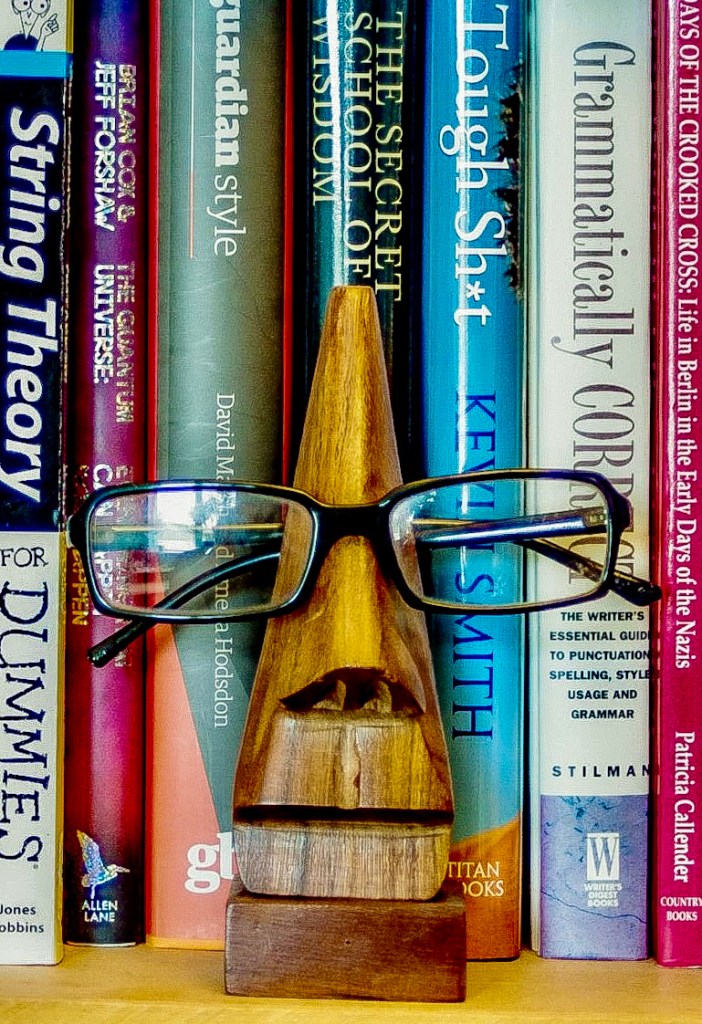
Technically, I don’t need the glasses anymore.
But I still wear them.
Why?
Because they are my Clarke Kent glasses.
Yes.
Really.
Those of you who know me will already know that I’m a massive comic book nerd, so perhaps this shouldn’t come as much of a surprise.
But there’s actually a bit more to it than that.
You see, glasses can create a little physical barrier between me and the world.
Not a huge one.
Nobody looking at me would think, “Blimey, that bloke has constructed a defensive perimeter around himself.”
But they do something.
Much like sunglasses do.
For years, I’ve found sunglasses useful in social situations because they make eye contact easier. They create that tiny bit of separation between me and the person I’m talking to.
I can still see them.
I can still listen.
I can still have the conversation.
But somehow, having something between their eyes and mine makes me feel a little less exposed.
A little less vulnerable.
And that can make a surprisingly big difference.
The problem with sunglasses, of course, is that they’re not exactly practical all the time.
At night?
Not really.
In a dark room?
Probably not.
When it’s raining and the sky looks like it’s personally offended by the existence of daylight?
Definitely not.
And wearing sunglasses indoors can occasionally result in people wondering whether I’m about to perform at a nightclub rather than attend a perfectly ordinary meeting.
So these glasses fill the gap.
They look like normal glasses.
Because, well, they are.
Nobody needs to know that one lens is doing absolutely nothing and the other one is basically on permanent holiday.
They give me that little barrier without making the world around me darker.
And when I’m nervous, particularly if I’m standing on a stage or speaking in front of people, they help.
Stage fright is an odd thing.
You can know exactly what you want to say.
You can have prepared.
You can know that the people in front of you aren’t actually waiting for you to fail.
And yet your brain can still decide:
“Excellent. This is the moment we panic.”
Having my glasses on gives me something.
A tiny bit of confidence.
A little shield.
Perhaps even a psychological costume.
Which brings me back to Clarke Kent.
Because Superman has always fascinated me.
Not simply because he can fly, lift cars and apparently survive being thrown through buildings.
It’s the idea of the alter ego.
Clark Kent puts on a pair of glasses and suddenly he’s just an ordinary bloke.
Nobody looks twice.
Nobody expects him to save the world.
And while I’m certainly not claiming that my glasses give me superpowers
They help me feel like I’m wearing my social armour.
They give me a little bit of distance.
A little bit of protection.
And sometimes, that’s all you need.
I think we all have things like that.
Little routines.
Objects.
Clothes.
Jewellery.
Music.
Something we carry with us that makes the difficult things feel slightly easier.
They might look completely insignificant to somebody else.
But they aren’t insignificant to us.
For me, apparently, it’s a pair of slightly ridiculous glasses with one lens that doesn’t need a prescription and another that doesn’t need one anymore.
To everyone else, they’re just glasses.
To me?
They’re my Clarke Kent glasses.
And sometimes, even when you don’t need a prescription, you still need the glasses.