Today was one of those mornings where work didn’t really feel like work.
I headed into town to have a wander around and look at potential locations for an upcoming photography gig for Totnes Pride.
There’s something about photographing an event that makes you look at familiar places slightly differently. Suddenly you’re not just seeing streets, buildings and corners of town, you’re looking for light, angles, backgrounds and those little spots where a photograph might just come together.
Of course, I took the camera with me.
Because apparently I’m incapable of going anywhere without looking at things through a lens these days.
Once the location scouting was done, it was time for the important stuff.
Coffee.
A slow, relaxing coffee morning in the market, with some good friends, and friends I’d just met, absolutely no rushing about and nowhere particularly urgent to be.
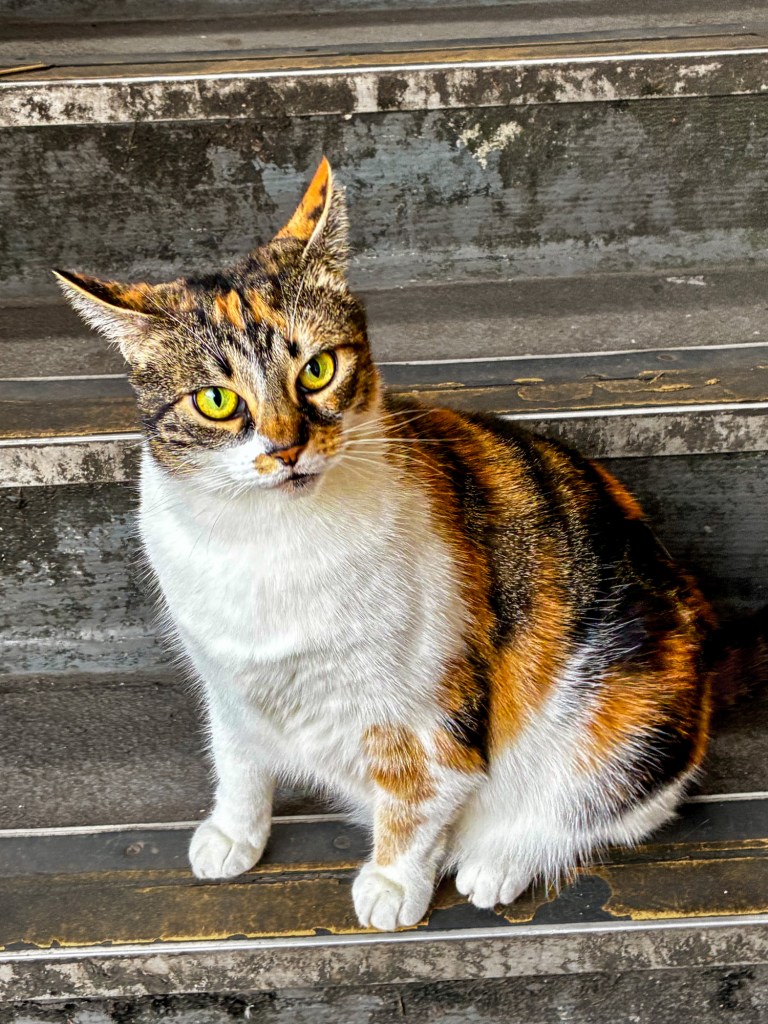
And then, as if The Universe hadn’t already delivered enough, a calico cat wandered down the stairs.
Obviously, I had to say hello.
The cat seemed perfectly happy to accept some fuss, so who was I to argue?
Photography locations sorted.
Coffee enjoyed.
Cat fussed.
All in all, not a bad morning.
Sometimes the best days are the ones where you manage to get a little bit of work done…
…and still find time to stop and enjoy the small stuff.
The sit in your pyjamas with a bowl of cereal while your parents repeatedly tell you to do something useful Transformers.
You see, I’m an old man.
Well…
Gen X.
Which is basically what happens when you leave a child from the 1980s unattended for long enough.
I remember the original series.
Optimus Prime.
Megatron.
Bumblebee.
Starscream.
Soundwave.
The Dinobots.
And that glorious moment when a robot transformed into something completely ridiculous and somehow nobody questioned the physics of it.
Because why would they?
It was a cartoon.
And it was brilliant.
The original series arrived in 1984, alongside the Hasbro and Takara toy lines, and for a generation of kids it became much more than something to watch on a Saturday morning.
It became part of childhood.
There were the toys.
The comics.
The stickers.
And yes…
I had the toys.
I had the stickers.
I probably spent far too much of my pocket money trying to get the ones I was missing.
There was even the Panini sticker album.
256 stickers.
Which sounds perfectly reasonable.
Until you’re a kid and you’re staring at your album with three bloody stickers left to find.
Then the maths changes.
Suddenly 256 seems like an unnecessarily cruel number.
You’d go through your pile.
“Got.”
“Got.”
“Got.”
“Need.”
And then you’d swap with your mates.
Or try to.
Because there was always that one kid who somehow had about fourteen of the sticker you needed.
And absolutely no intention of giving you one.
If you know, you know.
And then there was the VHS.
Google it.
I’ll wait.
For younger readers, VHS was basically YouTube, Netflix and Disney+ rolled into one.
Except you had to physically rewind it.
And if someone forgot?
Well…
You’d find out pretty quickly when you put it in and the bloody thing started halfway through an episode.
And I still have all of mine.
Which probably says something about my inability to throw anything away.
But that’s the thing about Transformers.
When I think about them now, I don’t just remember robots fighting robots.
I remember being a kid.
I remember Saturday mornings.
I remember cereal.
I remember sitting far too close to the television.
I remember that feeling when the theme tune started and you knew you were about to disappear into another world.
For twenty minutes, the rest of the world didn’t matter.
Back then, we didn’t have endless streaming services.
There wasn’t a catalogue containing practically every television programme ever made sitting in your pocket.
If you missed something…
You missed it.
Unless you were lucky enough to have recorded it.
And if you had?
You guarded that VHS tape like it contained the nuclear launch codes.
There was something wonderfully simple about it all.
Good guys.
Bad guys.
Robots.
Cars.
Spaceships.
Dinosaurs.
And a giant transforming robot called Optimus Prime who somehow managed to be incredibly cool while also being strangely reassuring.
Looking back, though, I don’t think Transformers was ever really just about the characters.
It was about what they represented.
Childhood.
Freedom.
Imagination.
That little bit of magic we seem to lose somewhere between being a kid and becoming an adult.
Because that’s the funny thing about growing older.
The toys get packed away.
The sticker albums disappear into cupboards.
The VHS tapes gather dust.
And life carries on.
Work.
Bills.
Responsibilities.
Emails.
Appointments.
All that grown-up nonsense.
Then, completely unexpectedly, you hear a piece of music.
Or see an old toy.
Or find something buried in a box.
And suddenly…
You’re eight years old again.
Sitting on the carpet.
Bowl of cereal beside you.
Pyjamas on.
No responsibilities.
No bills.
No emails.
No bloody grown-up nonsense.
Just Saturday morning.
And for twenty minutes, everything is alright.
I suppose that’s why nostalgia can be such a powerful thing.
We’re not necessarily missing the cartoon.
We’re missing the person we were when we watched it.
The version of ourselves who could be completely absorbed by something as simple as a cartoon about alien robots.
Before life became complicated.
Before we learned that sometimes people leave.
Before we discovered that adults don’t actually have all the answers.
Before we started worrying about mortgages, pensions, politics and whether we’ve remembered to put the bloody bins out.
Back then, Optimus Prime had the answers.
Well…
Most of the time.
So, who is my favourite cartoon character?
Transformers.
Not because they were the greatest cartoons ever made.
Not because the animation was perfect.
And certainly not because every storyline made sense.
It didn’t.
Not even remotely.
But because they were part of my childhood.
And sometimes that’s more important.
Because when something can survive forty-odd years of technological progress, adulthood, responsibilities and everything else life throws at you…
And still make you smile?
That’s more than just a cartoon.
That’s a memory.
And perhaps that’s what was really hiding underneath all those robots, cars and explosions.
Our first trip to the beach in a couple of months.
Two months.
That’s quite a long time when you live close enough to the sea that going to the beach should probably be considered a basic human right.
So, naturally, we did what any sensible couple would do.
We took coffee.
And apples.
The coffee was for us.
The apples were for the crows.
Priorities.
There’s something about getting back to the beach that I find difficult to explain.
It’s not just the sea.
Although, obviously, the sea helps.
It’s the whole thing.
The sound of the waves.
The wind.
The smell of salt in the air.
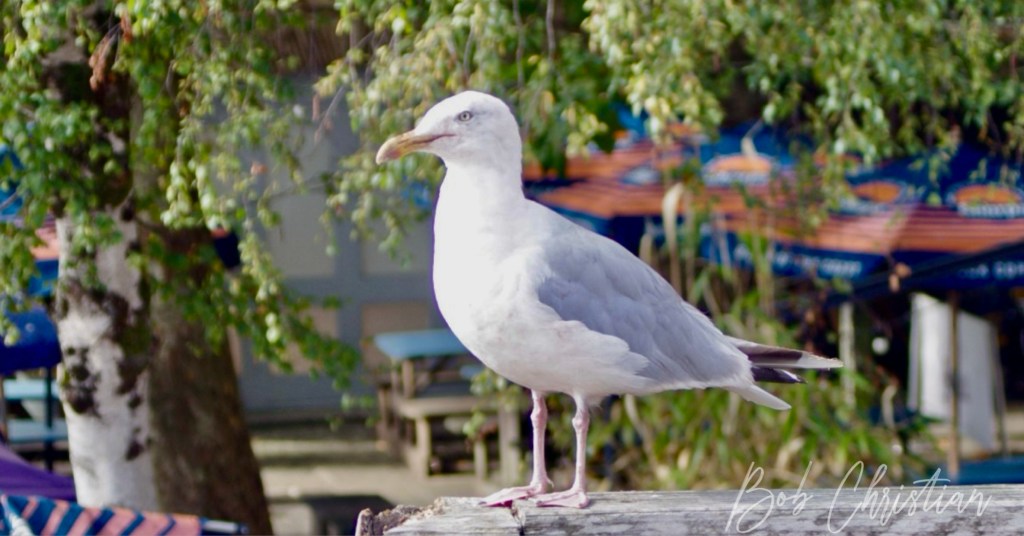
The gulls screaming at each other as though one of them has just insulted the other’s mother.
And, of course, the crows waiting patiently for their breakfast.
Or at least pretending to wait patiently.
They’re not daft.
They know exactly who brings the apples.
There was another little milestone for me today, though.
For the first time this year, I actually got my feet wet.
And by my feet, I mean my feet.
Including the bottoms of my shorts.
Which probably sounds like a ridiculously small thing to celebrate.
But sometimes the ridiculously small things are the ones worth celebrating.
I stood there with the water washing over my feet and realised just how long it had been since I’d done something so simple.
No great adventure.
No grand achievement.
Just standing in the sea.
Feeling the cold water.
Listening to the waves.
Being there.
And perhaps that was exactly what I needed.
Because life has a habit of becoming noisy.
Not necessarily physically noisy.
Although, let’s be honest, the modern world seems determined to shout at us from every possible direction.
Phones (left it behind).
News.
Social media.
Emails.
Other people’s opinions.
Our own thoughts.
Sometimes especially our own thoughts.
We spend so much time thinking about what happened yesterday and what might happen tomorrow that we forget there’s a rather important bit of time sitting between the two.
Today.
Standing in the sea this morning, I didn’t need to solve anything.
I didn’t need to work anything out.
I didn’t need to have all the answers.
I just needed to stand there.
Breathe.
Listen.
Feel the ground beneath my feet and the water moving around them.
There’s a tiny bit of Buddhism in that thought, although I promise I’m not about to start sitting cross-legged on the beach chanting at the seagulls.
It was simply about being present.
For a few minutes, I wasn’t worrying about next week.
I wasn’t replaying last week.
I was just there.
Me.
Mrs Bob.
The sea.
A couple of coffees.
And some very happy crows.
And somehow, that was enough.
By the time we headed home, I felt a little more grounded.
A little calmer.
A little more ready for whatever the week decides to throw at me.
Sometimes we imagine that looking after ourselves requires some huge lifestyle change.
A retreat.
A holiday.
A complicated morning routine involving seventeen different types of herbal tea and an alarm clock that sounds like Tibetan monks.
Maybe sometimes it’s much simpler than that.
Maybe it’s a walk.
A coffee.
A conversation with someone you love.
Feeding the crows.
Or just standing in the sea with wet shorts and remembering that, for all the chaos going on around us, you’re still here.
What’s the bravest thing you’ve ever done when no one was watching?
For me, the answer is surprisingly simple.
I put the razor blade and pills down.
And I asked for help.
Now, I appreciate that might not sound particularly brave to you.
There was no crowd cheering.
No medal.
No dramatic soundtrack playing in the background.
Nobody was watching.
But that moment probably took more courage than anything else I’ve ever done in this life.
Because admitting that I was struggling wasn’t easy.
Admitting that I was teetering on the edge of the abyss, and that I genuinely didn’t know how to climb back from it, meant admitting something I’d spent years trying to hide.
I wasn’t okay.
Not “a bit stressed.”
Not “having a bad day.”
Not something I could simply “man up” and get through.
I was in serious trouble.
And for someone who had spent far too long believing that asking for help was a sign of weakness, reaching out felt bloody terrifying.
But I did it.
I put those things down.
And I spoke to someone.
Looking back now, I realise that was the bravest thing I’ve ever done.
Not because I suddenly became strong.
But because, for once, I stopped pretending that I had to be strong all by myself.
That decision saved my life.
It also taught me something I wish more people understood.
Sometimes courage doesn’t look like standing on a battlefield.
Sometimes it looks like sitting alone in a room and admitting:
“I need help.”
There’s nothing weak about that.
In fact, I’d argue there’s an enormous amount of strength in it.
We’re often taught that bravery means facing something frightening head-on.
But sometimes the bravest thing you can do is choose to stay.
To put down whatever you were going to use to hurt yourself.
To pick up the phone.
To knock on a door.
To tell someone the truth.
Even when your voice is shaking.
Especially when your voice is shaking.
Nobody may see that moment.
Nobody may ever know just how close you came.
But you will.
And sometimes, that one decision becomes the dividing line between the life you thought was ending and the life you hadn’t yet had the chance to live.
I’m still here.
And for that, I’ll always be grateful that on that particular day, when nobody was watching…
What’s something you do completely differently from how you were raised?
Religion.
That’s probably the quickest answer I could give to this question.
I was raised Christian and, like many people, religion was simply part of everyday life.
Sunday meant church.
Not “would you like to go to church?”
Not “shall we discuss your spiritual preferences over breakfast?”
It was more along the lines of: get dressed, we’re going to church.
Then I went to boarding school and the tradition continued, except there it wasn’t really a family decision anymore. We were expected — forced, really — to go to church every week.
So church was something I did for most of my childhood and into my late teens.
And yet, somewhere along the way, I started asking questions.
Lots of questions.
Probably too many questions for some people’s liking.
I’ve never been particularly good at accepting something simply because somebody tells me that’s the way it is.
If someone says, “This is what you must believe,” my immediate reaction tends to be:
“Okay… but why?”
Which isn’t always the most convenient personality trait to have.
As I got older, I started looking beyond Christianity and reading about other religions and spiritual traditions.
And rather than finding one particular religion and deciding, “Right, that’s it, I’ve found the answer to everything,” I ended up doing something slightly more Bob.
I nicked bits I liked from different places.
Not literally, obviously.
Although I suppose spiritually speaking, that’s pretty much what I’ve done.
I’ve developed my own path, which is a mixture of witchcraft and Buddhism.
Now, before anyone imagines me wandering around the house wearing a pointy hat, stirring a cauldron and chanting at the moon, that’s probably not quite how it looks.
Although I’m not ruling anything out.
For me, witchcraft has brought an appreciation of nature, ritual, intention and the idea that what we put into the world matters.
Buddhism, meanwhile, has given me a different way of looking at suffering, attachment, compassion and, perhaps most importantly, myself.
And I’ve found that combination works for me.
That’s the important bit.
It works for me.
I’m not suggesting it should work for you.
And that’s where I think I’ve ended up very differently from how I was raised.
I don’t believe spirituality has to be a one-size-fits-all arrangement.
We’re all different.
We have different experiences.
Different personalities.
Different emotional needs.
Different things that frighten us.
Different things that give us comfort.
Different ways of dealing with grief, loss, love, death and all the other complicated stuff that comes with being a human being.
So why would we all need exactly the same spiritual path?
I’ve got absolutely nothing against organised religion.
If going to church every Sunday gives you comfort, community and a sense of purpose, then fantastic.
If praying helps you get through a difficult day, then pray.
If your faith makes you a kinder, more compassionate person, then I’m certainly not going to criticise it.
What I do struggle with is the constant use of fear.
“You’d better believe this or you’ll burn in hell.”
Really?
Is that honestly the best sales pitch we’ve got?
Imagine if we did that with everything.
“Try this restaurant or you’ll suffer eternal damnation.”
“Remember to renew your car insurance or Satan gets your policy.”
It sounds ridiculous when you put it like that.
And yet, using fear to control people’s beliefs is something that has been around for a very long time.
For me, faith shouldn’t need a threat attached to it.
If something is meaningful, surely it should be able to stand on its own.
That’s probably one of the reasons I’ve enjoyed learning about different religions so much.
The more you look, the more you realise that although people can have wildly different ideas about gods, the universe and what happens after we die, there are some remarkably similar messages running through many traditions.
Be kind.
Help people.
Don’t be a dick.
Look after your community.
Take responsibility for your actions.
Try to become a better person.
I’m paraphrasing, obviously.
Some ancient religious texts are considerably more eloquent than “don’t be a dick.”
But the general idea is there.
And perhaps that’s also why I enjoy Freemasonry so much.
Because when we’re in the temple, we’re not sitting around comparing whose God is bigger.
We’re brothers.
We have different backgrounds.
Different experiences.
Different opinions.
And yes, different ideas about the divine.
But that’s put to one side for the greater good.
I really like that.
Perhaps because I’ve spent so much of my life being told that there was a particular path I was supposed to follow, I appreciate being somewhere where we can acknowledge that other people might walk a completely different path and still sit beside us as equals.
I don’t need you to believe what I believe.
And I don’t expect you to.
You can believe in God.
You can believe in several gods.
You can believe in something else entirely.
You can be deeply religious.
You can be spiritual but not religious.
Or you can sit somewhere in the middle and spend your time wondering what the hell is going on.
Which, if I’m honest, is probably where most of us are.
And that’s okay.
I’ve come to realise that I don’t actually need all the answers.
In fact, I’m increasingly suspicious of anyone who claims they have them.
I’d much rather remain curious.
Read another book.
Ask another question.
Listen to somebody else’s point of view.
Change my mind occasionally.
And continue figuring out what I believe as I go along.
So, what’s something I do completely differently from how I was raised?
I was raised to follow a particular religious path.
I’ve chosen to explore my own.
And perhaps that’s the biggest lesson I’ve taken from all of this:
Your spiritual journey belongs to you.
You don’t have to follow somebody else’s map.
You don’t have to be frightened into believing.
And you certainly don’t have to agree with everyone else.
Just try to be kind.
Try to leave the world slightly better than you found it.
What’s the kindest thing someone has ever done for you?
That’s actually a surprisingly difficult question.
There are plenty of answers I could give.
Someone making me laugh when I desperately needed it.
Someone listening when I needed to talk.
Someone offering a helping hand when I was struggling.
Someone simply being there.
But if I’m being completely honest, there’s really only one answer that feels right.
Mrs Bob.
The kindest thing anyone has ever done for me was choosing to love me.
Not the polished version.
Not the version who has his life together.
Not the bloke who can string a few words together and occasionally convince people he knows what he’s talking about.
Me.
The complicated version.
The version who has spent far too much of his life fighting battles inside his own head.
The version who, at times, couldn’t see any light at the end of the tunnel.
There have been periods in my life when I simply couldn’t fight for myself.
My mental health was so bad that survival could feel like a full-time job. There were times when I couldn’t see my own worth, let alone believe anyone else could.
And then there was this woman.
She didn’t magically fix me.
She didn’t wave a wand and make everything better.
She did something much more important.
She stayed.
She loved me when I wasn’t particularly easy to love.
She believed in me when I couldn’t believe in myself.
And, perhaps most importantly, she fought for me when I couldn’t fight for myself.
That means more to me than I could ever properly put into words.
Because love isn’t just the grand gestures.
It isn’t always flowers, chocolates, romantic meals or expensive presents.
Sometimes love is sitting beside someone in the darkness and saying, in whatever way you can:
I’m still here.
Sometimes it’s reminding someone who they are when they’ve forgotten.
Sometimes it’s holding the line until they have enough strength to hold it themselves.
And sometimes it’s simply refusing to give up on someone who has already given up on themselves.
Mrs Bob has done all of those things.
And I don’t think I’ll ever be able to repay her for that.
Although, knowing her, she’d probably tell me that’s not how love works anyway.
Looking back now, I can see just how much of my life has been shaped by the people who showed me kindness at precisely the moments I needed it most. A book handed to me at the right time changed the direction of my thinking. Writing eventually gave me a way of processing the things I couldn’t say out loud. And the people around me helped me discover that asking for help isn’t weakness.
But Mrs Bob?
She was there for the whole bloody adventure.
The good bits.
The bad bits.
The messy bits.
And all the bits in between.
She didn’t fall in love with some finished product.
She loved the work in progress.
And maybe that’s one of the greatest acts of kindness one human being can give another.
To look at someone and say:
“I see you.”
“I know you’re struggling.”
“I know you don’t believe in yourself right now.”
“But I do.”
So, what’s the kindest thing anyone has ever done for me?
It’s not something someone bought me.
It’s not somewhere someone took me.
It’s not even something someone said.
It’s this:
Mrs Bob chose to love me, and she fought for me when I couldn’t fight for myself.
And every day I get to wake up beside her is a reminder that sometimes the greatest kindness in the world is simply refusing to walk away.
If the salary was the same, what job would you be doing right now and why?
This one didn’t take me long to answer.
I’d probably be working with animals.
There was a brief moment where I considered saying giraffes, because I absolutely love giraffes.
There’s something wonderfully ridiculous about them.
They’re basically proof that nature occasionally just makes things up as it goes along.
But then I thought about it properly.
And there was really only one answer.
Cats.
Definitely cats.
More specifically, I think I’d like to run a foster home for elderly and terminally ill cats that are currently in rescue centres.
Because there’s something about the idea that really gets me.
Imagine being an older cat.
You’ve already spent much of your life being someone’s companion. Maybe you’ve known a warm home, a comfortable sofa and someone who loved you.
Then, for whatever reason, you find yourself in a rescue centre.
Surrounded by unfamiliar smells.
Strange noises.
Other cats.
People coming and going.
And perhaps, because you’re old or poorly, nobody chooses you.
Everyone wants the kitten.
The young cat.
The one with years of life ahead of them.
And I understand that.
I really do.
But those older cats still have something to give.
They still have love.
They still have personalities.
They still deserve a warm lap, a comfortable bed and someone to tell them that they are a very good cat approximately seventeen times a day.
So, if money wasn’t the deciding factor, I think that’s where I’d want to be.
I’d have a house full of elderly and terminally ill cats.
There’d probably be blankets everywhere.
Cosy beds in every room.
Furniture specifically chosen according to feline requirements, obviously.
And enough scratching posts to make the place look like a particularly eccentric furniture shop.
And cats.
Lots and lots of cats.
The giraffes might have to wait.
Because what I’d really want to give those cats is something that every living creature deserves.
Comfort.
Not necessarily more time.
Sometimes we simply can’t give them that.
But we can make the time they have left better.
If a cat has only weeks or months left, I’d rather those weeks or months were spent somewhere warm and safe, surrounded by affection, than sitting in a cage because nobody wanted an old or poorly cat.
And perhaps that’s what appeals to me most about the idea.
You wouldn’t be saving every cat.
You couldn’t.
Nobody can.
But you could make a difference to this one.
And then the next one.
And the next.
Sometimes we get so caught up worrying about whether we can change the whole world that we forget we can make one tiny corner of it better.
For one person.
And if I could spend my working day doing that?
Honestly, I think I’d consider myself incredibly lucky.
There’s that saying:
“Find a job you love, and you’ll never work a day in your life.”
I’m not sure that’s entirely true.
I suspect cleaning litter trays for twelve elderly cats would occasionally feel very much like work.
But if the reward was knowing that, for however long they had left, those cats were warm, comfortable, loved and safe…
I think I’d cope with the litter trays.
After all, what better way could there be to spend a life than making another life a little bit better?
Even if that life happens to shed fur on absolutely everything.
If you could go back and witness any historical event, which one would you pick?
This is one of those questions that sounds incredibly easy.
Until you actually try to answer it.
If I could go back and witness any moment in history, what would I choose?
There are, obviously, quite a few possibilities.
I could go back to the time of the dinosaurs.
Although, having thought about this for approximately three seconds, I suspect I’d spend most of my time hiding behind a tree while something enormous wandered past.
Not exactly the historical experience I had in mind.
I could witness the signing of some great historical document.
I could stand on the sidelines of a famous battle.
I could meet one of the great writers, scientists, artists or thinkers who changed the world.
Or I could go and see something completely ordinary that, at the time, nobody realised would become history.
But there’s one moment I keep coming back to.
Apollo 11.
20th July 1969.
The day human beings first stepped onto another world.
I’ve always had a bit of a thing about space.
Give me an old science-fiction programme, a ridiculously complicated spaceship and the vague possibility that one day humanity might wander around the universe and I’m interested.
I blame Red Dwarf.
Or Star Trek.
Possibly both.
But Apollo 11 feels different.
Because it actually happened.
On 16th July 1969, Neil Armstrong, Buzz Aldrin and Michael Collins climbed aboard a Saturn V and left Earth.
Four days later, Armstrong and Aldrin landed on the Moon while Collins remained in orbit above them.
And then came that moment.
The ladder.
The lunar surface.
The first human footprint in the dust.
I’d want to be there.
Not watching the footage on an old television.
Not seeing it years later in a documentary.
Actually standing there.
Which does raise one or two minor logistical problems.
For starters, I’d need a time machine.
Then I’d have to explain to NASA why a bloke from the future had suddenly appeared at the launch site.
And I imagine that conversation would probably end with somebody asking me where I got the time machine.
At which point I’d have to admit that I hadn’t actually thought that far ahead.
Assuming I got past that part, I’d probably be told not to touch anything.
Which is probably sensible.
Because if you’ve spent years and an enormous amount of money building a machine capable of taking three people to the Moon, the last thing you need is some bloke from 2026 wandering around saying:
“What’s this button do?”
But imagine being there for the launch.
Standing somewhere nearby as that enormous Saturn V came to life.
The noise.
The vibration.
The sheer scale of it.
We sometimes forget just how ridiculous the whole thing was.
Human beings looked up at the Moon and decided they were going to go there.
So they built a machine.
A very, very big machine.
And somehow, it worked.
That alone would be worth seeing.
But I don’t think the bit that would affect me most would necessarily be Armstrong stepping onto the surface.
I think it might be looking back at Earth.
That tiny blue planet sitting in the blackness.
Because Apollo 11 wasn’t just about getting to the Moon.
It changed the way we could see ourselves.
From up there, the borders disappear.
You can’t see countries.
You can’t see political arguments.
You can’t see someone’s bank balance.
You can’t see the things we spend so much of our time arguing about.
You just see Earth.
One small blue world.
And on another world, three human beings.
That thought gets me every time.
And perhaps that’s why I’d choose Apollo 11.
It’s not really because I’m fascinated by rockets.
Although I am.
It’s not because I’d want to meet Armstrong, Aldrin and Collins.
Although, obviously, that would be rather brilliant.
And it’s not even because I’d want to take photographs.
Although knowing me, I’d probably spend half the event worrying about whether I’d brought enough film.
I’d want to be there because it was one of those incredibly rare moments when human beings did something that seemed almost impossible.
Simply because someone decided it was worth trying.
And I think that’s the part I like most.
History tends to remember the names at the front.
Armstrong.
Aldrin.
Collins.
And rightly so.
But Apollo 11 wasn’t built by three people.
It was built by thousands.
Engineers.
Scientists.
Technicians.
Mathematicians.
People checking calculations.
People testing equipment.
People finding problems.
People fixing those problems.
People staying late because something wasn’t quite right.
People doing jobs that, at the time, probably felt like ordinary work.
Until you put all those ordinary jobs together.
Then something extraordinary happens.
That’s probably one of the things I find most fascinating about history.
We like to turn it into stories about individuals.
One person had the idea.
One person made the decision.
One person took the risk.
One person changed the world.
But most of the time, that’s not really how it works.
History is usually thousands of people doing their little bit.
Most of them never becoming famous.
Most of their names never appearing in a school textbook.
But without them, the famous moment wouldn’t happen.
And I think there’s something rather lovely about that.
So yes.
If I could go back and witness any moment in history, I’d choose Apollo 11.
I’d find somewhere safe to stand.
I’d stay out of everyone’s way.
I’d probably take far too many photographs.
I’d try very hard not to touch anything.
And when Armstrong finally stepped down onto the Moon, I suspect I’d just stand there completely gobsmacked.
Because sometimes you don’t need to understand a moment.
You don’t need to be important.
You don’t need to be part of the story.
Sometimes it’s enough just to be there.
To watch something happen that nobody had ever done before.
And to realise, even for a few seconds, that you’re watching history being made.
That’s where I’d like to be.
Right there.
On the sidelines.
Probably with a camera.
And almost certainly wondering how the hell I’m going to get back home.