A Good Night’s Sleep Doesn’t Happen by Accident

What do you do to improve your sleep?

A good night’s sleep is incredibly important, and I’m sure you’re already aware of many of the benefits. Quality sleep helps bolster your immune system, protects your cardiovascular health, balances the hormones that regulate hunger, and makes it easier to maintain a healthy weight. Mentally, it’s just as important. Sleep consolidates memories, clears waste products from the brain, and improves emotional resilience, helping to reduce stress and anxiety.

So, how do I improve my sleep?

Like many autistic people, I love a good routine, and in this case, I think it has definitely worked in my favour.

About ten or fifteen minutes before I want to go to sleep, I stop whatever I’m watching or doing and put on some calming meditation music. I actually have one particular track on YouTube that I’ve been using for years. Those few minutes allow me to unwind and mentally let go of the day’s frustrations, confrontations and negative thoughts before I even get into bed.

Once I’m feeling more relaxed, I’ll climb into bed and read a few pages from my latest QI Book of Facts. Reading something enjoyable—but not too stimulating—helps signal to my brain that it’s time to switch off.

When it’s finally time to sleep, I ask my smart speaker to play white noise. Personally, I find the sound of heavy rain works best for me. It helps block out background noise and creates a familiar environment that my brain now associates with sleep.

I’ve followed this routine for many years. Is it perfect? No.

I still occasionally wake up screaming or experience night terrors, but I can honestly say that sticking to this routine has reduced both the frequency and severity of those episodes by around 85%. That’s been life-changing for me.

Will this exact routine work for everyone? Probably not. But it’s certainly worth experimenting until you find something that suits you. Sleep isn’t one-size-fits-all, and sometimes the smallest changes make the biggest difference.

The other thing I’ve found incredibly beneficial—and the science backs this up—is keeping a regular sleep schedule.

Going to bed and waking up at roughly the same time every day helps regulate your body’s natural circadian rhythm. Research has shown that consistent sleep patterns can significantly reduce the risk of depression compared with irregular sleeping habits. In fact, maintaining a regular routine is often just as important as getting the recommended seven to nine hours of sleep each night.

For me, good sleep doesn’t happen by accident. It’s something I prepare for.

A simple routine, a calm mind, a good book, the sound of rain, and a consistent bedtime have all helped me sleep better than I ever used to. If you’re struggling with sleep, don’t be afraid to try different approaches until you find your own routine.

Sometimes, the best night’s sleep starts long before your head hits the pillow.

Stay safe

Bc

The Tenant in My Chest Doesn’t Believe in Moving Out

What’s the best way to deal with negative thoughts?

If depression were a person—
I think I’d meet them at dawn.

Not noon,
not when the world is loud with pretending,

but dawn—
when the sky is still deciding
whether it wants to be light.

We’d sit somewhere quiet.
Somewhere the shadows
are still stretching their long black limbs
across the pavement.

And I’d ask—

Coffee?

Black.
Bitter.
The kind that tastes
like the inside of my chest.

And maybe we wouldn’t talk.

Maybe we’d just sit there
with silence
heavy enough
to fold over us like wet laundry.

Because some silences
don’t sit politely between people—

some silences
press down
like a lead blanket
you didn’t ask for
but can’t kick off.

And eventually
I’d look them in the eyes and say—

Why?

Why do you stay so long?

Why do you set up camp
in the corners of my mind
like you’ve signed a lease
with my worst thoughts?

Because you laugh in places
that used to echo with music.

You sit in rooms
that used to be full of friends.

You whisper things like:

You’re not enough.
You’re not enough.
You’re not enough.

And sometimes
I try to fight you.

My fists clench like punctuation marks.
I swing at the air
like anger might connect with something solid.

Every punch saying:

Leave.
Leave.
Leave.

But depression
is the kind of opponent
that doesn’t bruise.

It just waits.

Cold fingers wrapped around the ribs
like it’s checking
to make sure my lungs
remember how to struggle.

And sometimes
I don’t fight.

Sometimes I hide.

Under blankets.
Under excuses.
Under the quiet lie of

“I’m just tired today.”

The world outside becomes muffled—
like life is happening
through three closed doors
and a wall of water.

But the worst part?

You never leave.

You’re not a visitor.
You’re a roommate
who never pays rent.

Sometimes I run.

God, I run.

Feet pounding pavement
like I can outrun the gravity in my chest.

I chase small joys
like they’re fireflies—

laughter with friends
the color of sunrise
the sudden miracle
of feeling okay
for three whole minutes.

But you—

you are always
one breath
behind me.

Breathing doubt
into the rhythm of my pulse.

So I wonder…

What if instead
of fighting
or hiding
or running—

What if I invited you in?

Sat you down.

Poured you tea.

Listened.

Maybe you’d tell me
about all the broken places
you were born from.

Maybe I’d understand
how you twist my memories
into evidence—
how every mistake
becomes another stone
in the pockets of my chest.

And maybe
in that strange understanding
we’d become something like dancers—

two tired souls
moving in a slow, aching waltz
trying not to step
on each other’s pain.

But listen—

If depression were a person
standing in front of me
right now—

I wouldn’t destroy them.

I wouldn’t run.

I’d look them in the eye
and say:

I know you’re hurting too.

But you don’t get
to be my whole story.

And maybe—
just maybe—

we’d call a truce.

A fragile one.

The kind where light
slips through the cracks
in the walls you built.

The kind where hope
doesn’t roar—

it flickers.

Small.

Stubborn.

Like a candle
that refuses
to go out.

(c)BobChristian

The Right Book at the Right Time

What’s a piece of media (book, movie, song) that changed how you see the world?

This is a very tough choice, truth be told.

There’s obviously The Watchmen, my first ever graphic novel, which started a lifelong love affair with comic books that’s still going strong today.

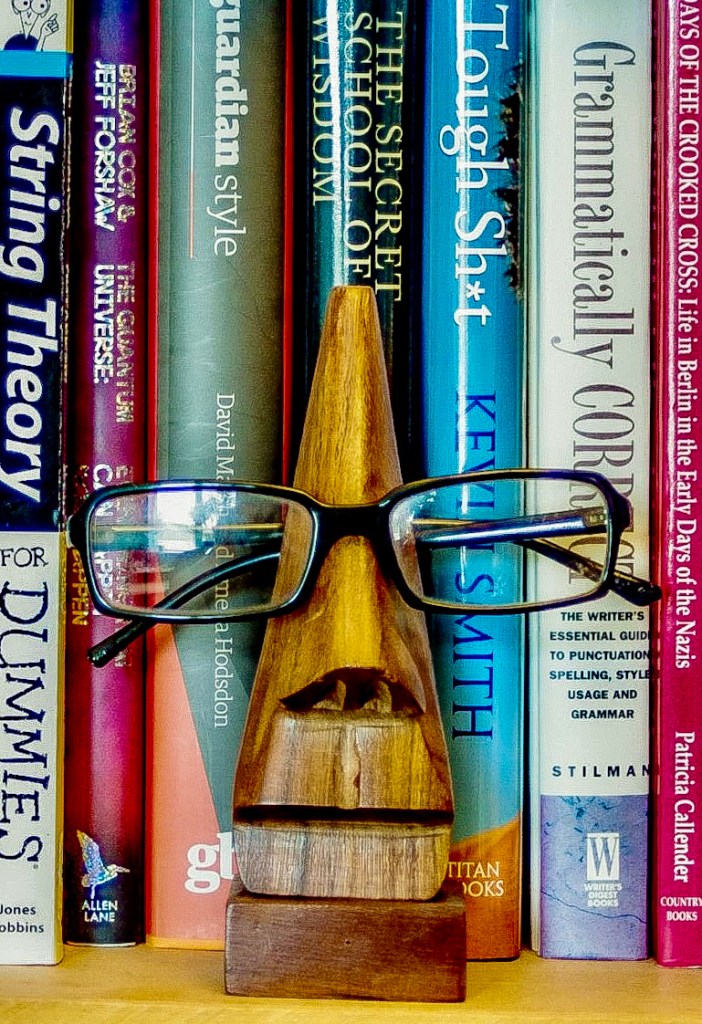
Then there’s String Theory for Dummies, the book that accidentally sparked a conversation with what is now Mrs Bob.

Both of those deserve posts of their own, and I’m fairly sure I’ve rambled about them before.

But if I had to choose the one piece of media that genuinely changed the direction of my life, it would be…

Wicca: A Guide for the Solitary Practitioner by Scott Cunningham.

This book came into my life at exactly the right moment.

At the time, my life was an absolute mess. I was going through a particularly nasty breakup, carrying around a lot of anger, hurt and resentment. Looking back, I also realise I was an autistic man who hadn’t yet been diagnosed, trying to make sense of emotions I simply didn’t have the tools to process.

Then someone showed me kindness.

A witch, who had once found comfort in the very same book herself, passed it on to me.

It wasn’t a book about casting spells that changed me.

It was a book about responsibility.

About balance.

About understanding that every action has consequences.

The lesson that has stayed with me happened shortly afterwards.

My ex broke into my home, took a lot of our belongings and trashed much of what she left behind.

The old me would probably have jumped in the car, driven straight over there and made the whole situation infinitely worse.

Instead, something clicked.

For the first time, I understood that anger wouldn’t repair my home.

It wouldn’t replace what had been stolen.

It wouldn’t heal what had happened.

All it would do was make me ill, and give the people who had hurt me the satisfaction of knowing they’d got exactly the reaction they wanted.

Walking away wasn’t weakness.

It was peace.

That one lesson changed everything.

It led me to read more about Wicca, which in turn eventually led me towards Mahāyāna Buddhism. Although they’re very different paths, both encouraged me to slow down, look inward and understand that my mental and physical wellbeing are deeply interconnected.

Those philosophies helped me become a calmer person.

A happier husband.

A better father.

A better grandfather.

They’ve also influenced the way I write, the way I see people, and the compassion I try to show others.

Without that one book…

Without the kindness of the woman who first placed it into my hands…

I honestly don’t know where I’d be.

There’s every chance I’d have let my anger make decisions for me.

And when anger starts making your decisions, the ending is rarely a good one.

Sometimes the books that change your life aren’t the bestselling novels or the classics everyone studies at school.

Sometimes they’re simply the right book…

Arriving at exactly the right time.

Stay safe,

Bc

Most Storms Pass

What’s the best advice you’d give to someone younger than you?

The older I get, the more I realise that life isn’t about avoiding mistakes.

It’s about surviving them.

When we’re young, every setback feels enormous. Every wrong decision feels permanent. Every failure feels like the end of the world.

It isn’t.

Trust me.

You will make mistakes.

Some small.

Some spectacular.

Some that will keep you awake at three in the morning replaying conversations that happened years ago.

At the time, those mistakes will feel overwhelming. You’ll be tempted to react immediately, to panic, to assume everything is ruined.

But very rarely is anything as catastrophic as it first appears.

Pause.

Take a moment.

Evaluate the situation before reacting.

Ask yourself what can be learned from it.

Because that’s really all any of us can do.

Learn.

Adapt.

Move forward.

The same applies to relationships.

At some point, someone will break your heart.

At another point, if you’re honest with yourself, you may end up breaking someone else’s.

Neither experience is pleasant.

Both hurt.

And in those moments it can genuinely feel as though the world has ended.

It hasn’t.

The sun still rises.

Life keeps moving.

And eventually, so will you.

What feels unbearable today often becomes the lesson you’re grateful for tomorrow.

That doesn’t mean the pain isn’t real.

It is.

But pain has a strange habit of becoming wisdom if we allow ourselves to learn from it.

Looking back, many of the experiences I once wished had never happened turned out to be the very things that helped shape me into who I am today.

The failures taught resilience.

The heartbreak taught empathy.

The mistakes taught humility.

None of it was wasted.

So if I could offer one piece of advice, it would simply be this:

Don’t sweat the little stuff.

Life is going to throw enough challenges your way without you carrying the weight of every minor inconvenience as well.

Most things work themselves out.

Most storms pass.

Most worries never become reality.

As a Buddhist mantra reminds us:

Dhairyaṁ, kṣaṇa kṣaṇa, siddhiḥ.

Patience, moment by moment, brings accomplishment.

Sometimes growth doesn’t happen in giant leaps.

Sometimes it happens one difficult day at a time.

One lesson at a time.

One breath at a time.

Keep going.

You’ll get there.

Stay safe,

Bc

To My Younger Self

What is something you wish you could tell your 20-year-old self?

If I could tell my 20-year-old self one thing, it would be this: keep going. Life feels confusing, overwhelming, and at times completely impossible right now, but things do get better.

 The struggles you’re facing aren’t because you’re broken, weak, or failing. The truth is, it’s not schizophrenia or bipolar disorder at all — it’s autism, and understanding that will eventually make so much of your life make sense. 

So stick at it. One day you’ll look back and realise you survived far more than you ever thought you could.

Stay safe,

BC

The Poetry That Saved My Life

What are you passionate about?

People often ask me what I’m passionate about.

The answer usually surprises them.

Sure, I love comic books. I love photography. And I’m definitely passionate about Mrs Bob—but that’s a story for another day.

The thing that truly sets my soul on fire is poetry and mental health awareness.

At first glance, they might seem like two completely different worlds. One is art. The other is survival.

But for me, they’re inseparable.

Because poetry helped save my life.

More than twenty years ago, I wasn’t the happy, well-adjusted bloke many people know today. In truth, I was a mess. My mental health was spiralling dangerously out of control. I was drinking heavily, drowning emotions I didn’t understand, and convincing myself that I had to carry every burden alone.

Like many men of my generation, I believed I had to “man up.”

Keep quiet.

Stay strong.

Don’t talk about it.

But silence can be a dangerous thing.

There were times when the darkness became so overwhelming that I tried to end my life. More than once.

Eventually, after waking up in the resuscitation room of my local hospital following one particularly close call, something shifted inside me. Looking back now, I realise it was a crossroads.

I could continue pretending everything was fine until it killed me.

Or I could ask for help.

I chose help.

Not because I was brave.

Not because I suddenly had all the answers.

But because I looked at my two young children and realised I couldn’t leave them growing up without a father.

For the first time in my life, I stopped trying to fight alone.

One of the professionals helping me suggested I start writing down my thoughts and emotions. The idea was simple: get the chaos out of my head and onto paper so I could begin to understand it.

At first, I filled notebook after notebook with late-night scribbles. Thoughts. Fears. Anger. Pain. Hope. Anything that was bouncing around inside my head.

Then something unexpected happened.

As I read back through those pages, I started arranging some of the words into verses. The emotions were still raw and chaotic, but now they had rhythm and shape.

It wasn’t poetry as I know it today.

It was closer to rap lyrics.

But it was the beginning.

The real turning point came when I wrote a piece for a family member’s naming ceremony. Afterwards, people kept asking me where I’d found the poem.

When I told them I’d written it myself, they seemed genuinely surprised.

And so was I.

For the first time, I allowed myself to think:

Maybe I’m a poet.

Over the following two decades, I spent countless hours learning, practising, refining and developing my craft. Every poem taught me something new—not just about writing, but about myself.

In the early days, poetry was my pressure valve.

A way of releasing everything that threatened to consume me.

My work was dark.

Unflinching.

Sometimes uncomfortable.

I wrote about depression, self-harm, suicide and the realities of living with poor mental health. Topics many people preferred not to talk about.

But those conversations mattered.

They still do.

Today, my writing covers a wider range of subjects. There’s more light alongside the darkness. More hope alongside the pain.

Yet mental health remains close to my heart.

Particularly men’s mental health.

I’ve been inspired by some incredible slam poets and advocates who have used their voices to challenge the outdated belief that men should suffer in silence. The idea that being strong means never showing vulnerability. The lie that asking for help is weakness.

Because it isn’t.

Real strength is speaking up.

Real strength is reaching out.

Real strength is staying.

The truth is that there are countless blokes out there who are fighting battles nobody else can see. Men who smile on the outside while struggling desperately on the inside. Men who believe they’re alone.

They’re not.

And that’s why I keep writing.

Because somewhere, someone might be reading these words and recognising a piece of themselves.

Someone who feels exhausted.

Someone who feels trapped.

Someone who is standing closer to the edge than anyone realises.

If my poetry, my story, or my words can make just one person pause for a moment and choose to talk to someone—anyone—instead of suffering alone, then every difficult chapter of my journey has been worthwhile.

Because poetry didn’t just give me a voice.

It gave me a future.

And if sharing that future helps someone else find theirs, then I’ll keep writing for as long as I have words left to write.

Stay safe

Bc

How to Build a Coffin Out of Silence

They keep saying “Man Up”

Like silence is some kind of sacrament.

Like swallowing your grief whole

Is how you earn your stripes.


But I’ve seen what that silence does.

I’ve seen it wrap around a neck,

Like a necktie turned noose.

I’ve seen boys hide their hearts, and call it manhood.


Boys don’t cry.

Nah.  They just punch walls.

Break their own knuckles.

Drink, hoping for a solution

Until it’s someone else’s problem.

Until it’s their funeral.


And we call that strength?


Eighty percent. That’s not a number.

That’s a mass grave. A choir of voices

That were only echoes. 

Just statistics.


Just “He was such a good guy.

He was always laughing…

Even after the desert stopped being a location

And started being an emotional state.”


We’re told to be tough,

But we’re never taught to be whole. 

Told to carry the weight,

Yet we’re never told how to put it down.


They call it manhood. I call it emotional malpractice.

And I’m done treating tenderness like a threat.

Done pretending that depression wears a hoodie.

And not a three-piece suit or a uniform.


Because mental health is not a solo act.

It’s a group text at 2am…

It’s “You good?

It’s “Nah, but thanks for asking.”

It’s therapy without shame.

It’s community without competition.

It’s crying in the open, but not being called broken.


So yeah… Man down is not a defeat.

It’s a signal flare.

A Mayday call.

A prayer we are finally brave enough to say out loud.


And if you’ve made it this far; your heart is still beating

Under all that armour (real or remembered),

And this is your permission…

To rest. To rage. To reach.


This is your poem. This is your mirror.

This is your reason to stay.

Because feeling isn’t failing.

It’s fighting back.

The Most Dangerous Words Men Still Hear.

I’ve been thinking about two words recently.

Two tiny words.

Two words that have probably done more damage to men than we would ever care to admit.

Man up.

Simple, right?

Harmless, even.

Just a phrase.

Except it isn’t.

It’s a command.

An order.

A warning.

A lesson many of us were taught long before we were old enough to understand what it meant.

You fell over and hurt yourself?

Man up.

Heart broken?

Man up.

Scared?

Man up.

Depressed?

Man up.

Anxious?

Man up.

Struggling to carry the weight of the world on your shoulders?

You guessed it.

Man up.

Somewhere along the way, many of us learned that being a man meant being silent.

We learned that tears were weakness.

That vulnerability was dangerous.

That asking for help was somehow failure.

So we became experts at hiding.

We hid behind humour.

Behind work.

Behind alcohol.

Behind anger.

Behind “I’m fine.”

Especially behind “I’m fine.”

Because that’s the magic trick, isn’t it?

The greatest performance most men ever give.

Standing there with a smile on their face while their world burns quietly behind their eyes.

The trouble is, pain doesn’t disappear just because you refuse to acknowledge it.

It doesn’t pack its bags and leave.

It moves in.

Unpacks.

Makes itself comfortable.

What starts as sadness becomes exhaustion.

Exhaustion becomes frustration.

Frustration becomes anger.

Anger becomes isolation.

And isolation becomes a place far darker than most people realise.

I’ve known men who could rebuild engines.

Men who could run businesses.

Men who could walk into burning buildings.

Men who would give the shirt off their back to help a stranger.

Yet those same men couldn’t say three simple words.

“I need help.”

Not because they were weak.

Because they’d spent decades being taught that strength meant suffering in silence.

What a cruel lie that is.

Real strength isn’t pretending you’re invincible.

Real strength isn’t bottling everything up until the pressure becomes unbearable.

Real strength is honesty.

It’s having the courage to say:

“I’m struggling.”

“I’m tired.”

“I’m not okay.”

And perhaps most importantly:

“I can’t do this alone.”

The strongest men I’ve ever met weren’t fearless.

They weren’t emotionless.

They weren’t made of stone.

They were human.

Beautifully, imperfectly human.

They cried when life hurt.

They talked when things became too heavy.

They reached out when they needed support.

And because of that, they survived storms that silence would never have allowed them to survive.

The reality is that men’s mental health isn’t a men’s issue.

It’s everyone’s issue.

Every husband.

Every father.

Every brother.

Every son.

Every friend sitting quietly at the end of the table laughing at the jokes while fighting battles nobody can see.

We lose far too many good men because they believed they had to carry everything alone.

Because they believed asking for help made them less of a man.

Because somebody, somewhere, taught them that “man up” was the answer.

Maybe it’s time we retired the phrase.

Maybe instead of telling men to man up, we should tell them to speak up.

To open up.

To reach out.

To show up exactly as they are.

Not as society expects them to be.

Not as some impossible version of masculinity demands.

Just as themselves.

Because there is nothing brave about suffering in silence.

And there is nothing weak about asking for help.

If you’re reading this and things feel heavy right now, I want you to know something.

You don’t have to carry it all today.

You don’t have to win every battle before breakfast.

You don’t have to have all the answers.

And you certainly don’t have to pretend.

Talk to someone.

A friend.

A partner.

A family member.

A professional.

Anyone.

Just don’t sit alone in the darkness convincing yourself that silence is strength.

It isn’t.

Never was.

The bravest thing some men will ever do is speak.

And maybe that’s what being a man should have meant all along.

Stay safe.

BC